How climate change is reshaping Africa's malaria risk
Researchers say warming temperatures are altering malaria transmission patterns across Africa, creating new challenges for health systems and disease control. For decades, global efforts towards
Researchers say warming temperatures are altering malaria transmission patterns across Africa, creating new challenges for health systems and disease control. For decades, global efforts towards the eradication of malaria, especially in sub-Saharan Africa, have focused essentially on West and Central Africa where the disease is most endemic. The WHO African Region accounts for about 95% of global malaria cases and deaths. More than half of all malaria deaths in the region occur in Nigeria (31.9%), the Democratic Republic of Congo (11.7%) and Niger (6.1%). Children under 5 years of age account for about 76% of malaria deaths in the region. To stem the tide of malaria cases across Africa, the global health body has recommended a wider use of the RTS,S/AS01 malaria vaccine among children living in regions with moderate to high malaria transmission by the Plasmodium falciparum — a parasite that causes 95% of all malaria infections in Africa. It's transmitted to humans through the bites of infected female Anopheles mosquitoes. The WHO warned in April 2025 that recent funding cuts were jeopardising malaria control efforts, with more than half of malaria-endemic countries surveyed reporting moderate or severe disruptions to malaria services. A study published in The Lancet found that the RTS,S/AS01 malaria vaccine reduced all-cause mortality among vaccine-eligible children by 13.2% in pilot programmes in Ghana, Kenya and Malawi.
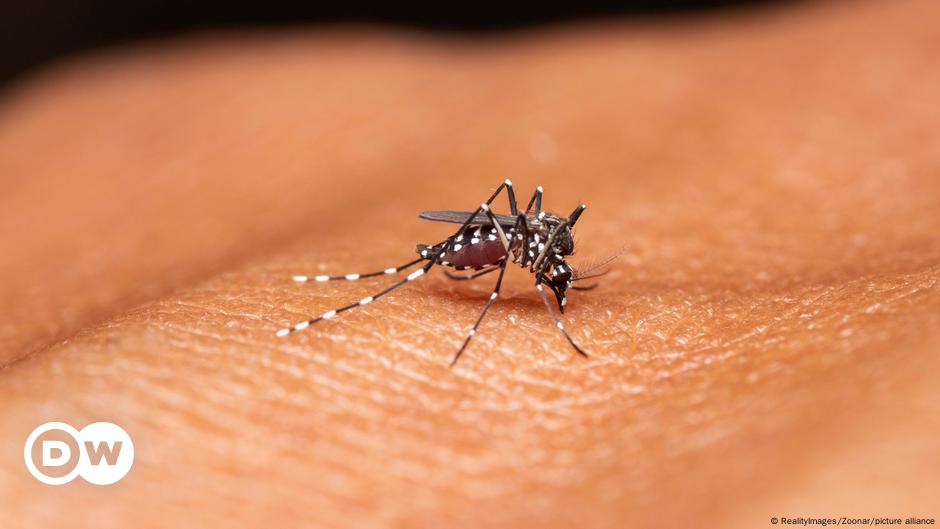
A changing disease landscape Malaria transmission is most efficient within temperature ranges common across many tropical regions of West and Central Africa, according to a new study by nature. Tanzania's bold experiment against malaria To view this video please enable JavaScript, and consider upgrading to a web browser that supports HTML5 video Malaria transmission by mosquitoes usually peaks at temperatures of around 25 degrees Celsius (77 Fehrenheit) and becomes much less likely when temperatures drop below 16 degrees or rise above 34 degrees Celsius, largely because the malaria parasite must complete part of its life cycle inside the mosquito, a process that is highly temperature-dependent.. Because of this, malaria transmission has historically been most favourable across many tropical parts of West and Central Africa, where temperatures frequently fall within the range most suitable for transmission. In contrast, some parts of Southern Africa and the highlands of East Africa have historically remained cool enough to keep the spread of malaria at bay, preventing the disease from becoming a major public health burden. That, however, is beginning to change. The nature study found that rising temperatures are making parts of southern Africa and high-elevation areas of East Africa increasingly suitable for malaria transmission, while parts of West Africa are becoming too hot for optimal transmission.
 The BriefWire