One man spent decades transforming a barren Kenyan quarry into a wildlife sanctuary
The Kenyan quarry left barren by limestone mining The man who refused to give up on the wasteland Haller experimented with an entire ecosystem The
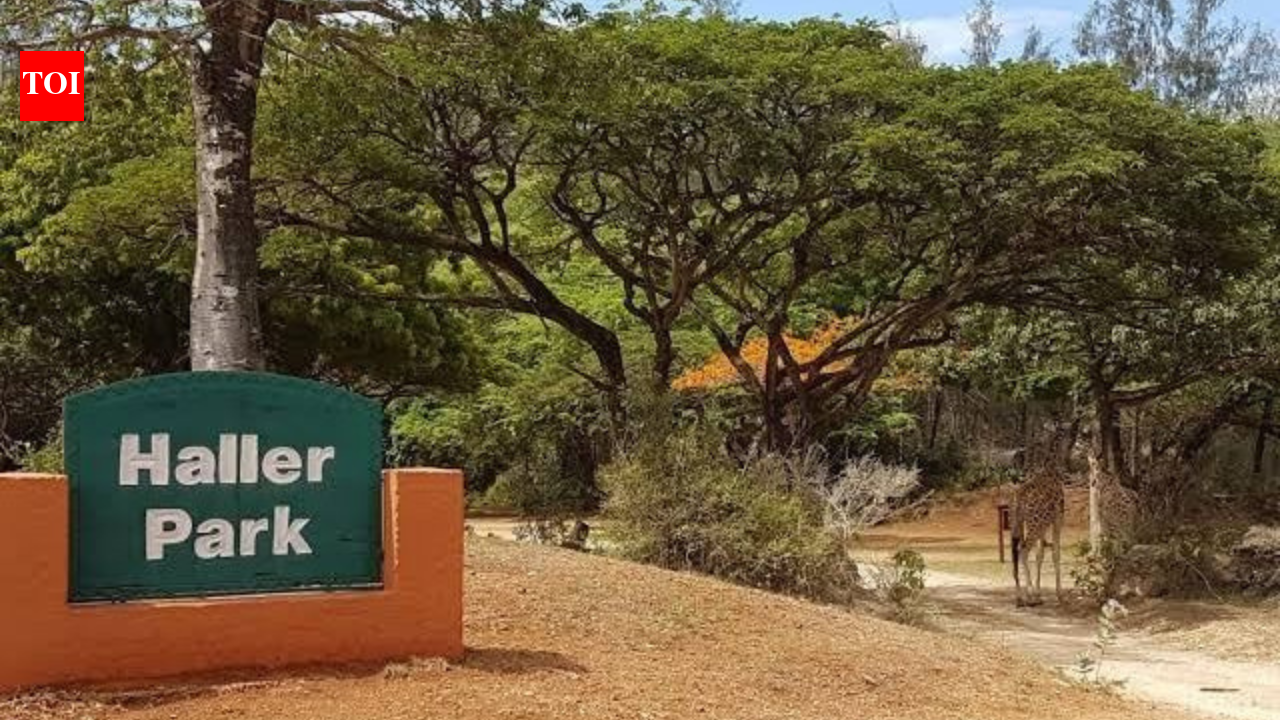
The Kenyan quarry left barren by limestone mining The man who refused to give up on the wasteland Haller experimented with an entire ecosystem The barren quarry slowly became green Wetlands emerged from the old quarry pits Wildlife returned to the restored landscape The quarry became Haller Park A wildlife sanctuary now stands where mining once dominated Haller's experiment became an environmental model The restoration continues today A landscape near Mombasa, Kenya, once looked almost impossible to restore. Decades of limestone quarrying had left the ground hard, hot and largely devoid of vegetation, while salty groundwater made growing plants even more difficult. Then Dr René Haller, a Swiss-born naturalist and agronomist working with Bamburi Cement, began an ambitious experiment in ecological restoration. Starting in the early 1970s, he tested plants, rebuilt soil and studied how organisms could work together to bring life back to the exhausted quarry. What followed was a decades-long transformation. The barren industrial site gradually developed into forests, wetlands, ponds and habitats for wildlife, eventually becoming what is now known as Haller Park.Bamburi Cement began quarrying limestone near Mombasa in the 1950s to supply its cement works. By the early 1970s, large areas had been heavily altered by extraction. The quarry floor was described as barren and hard, with temperatures reaching about 40°C, while saline groundwater created another major obstacle for plants.The challenge was not simply to plant trees. The land had lost much of the biological system needed to support vegetation.There was little organic material, poor soil and very little shade.For Haller, this meant the quarry could not be restored through conventional landscaping alone. He needed to find a way to rebuild the ecological processes that allowed an ecosystem to support itself.Haller began working on the rehabilitation project in 1971, testing different tree species on the degraded quarry land. According to the Haller Foundation, he initially planted 26 varieties of saplings, but only three survived the harsh conditions.One of those survivors was the casuarina tree, which proved capable of tolerating the difficult environment. It gave Haller a starting point, but the trees soon created another problem.
Their fallen needles were difficult to break down, meaning nutrients were not returning to the developing soil quickly enough.In a healthy ecosystem, fallen vegetation is broken down by insects, fungi, bacteria and other organisms, returning nutrients to the soil. But the quarry had lost much of this natural cycle.Haller therefore began looking for a natural way to restart it. That search led him to one of the most unusual characters in the entire restoration story.The red-legged Mombasa millipede became an unexpected ally.The millipedes fed on the fallen casuarina material, while microorganisms associated with their droppings helped break down the plant matter into humus. Over time, this contributed to the formation of a richer layer of soil.It was a small but important breakthrough. Haller was beginning to understand that restoring the quarry was not simply about putting trees back into the ground. He needed to rebuild the relationships between plants, soil and organisms that made an ecosystem function.The trees provided organic material. The millipedes helped process it. Microorganisms continued the decomposition, and the developing soil could then support more vegetation.Slowly, the quarry began developing its own ecological cycle.With the soil gradually improving, Haller's experiment expanded beyond trees and millipedes.He and his team began studying the roles different plants and animals could play in the developing environment. The Haller Foundation describes the process as one of trial and error, with different organisms introduced or encouraged according to the ecological functions they could perform.Ants helped with nutrient cycling, while dung beetles contributed to decomposition. Bushpigs disturbed the soil as they searched for food, while grazing animals helped influence vegetation.Each element became part of a much larger effort to move the landscape away from an artificial plantation and towards a functioning ecosystem.The transformation took years rather than months.As vegetation became established, the once-exposed quarry floor gradually became greener. According to the Haller Foundation, more than one million trees were eventually planted across the quarry.With the vegetation came other forms of life. Insects and butterflies found food and shelter, birds began using the developing habitats and the increasingly diverse landscape became capable of supporting mammals and other wildlife.The contrast became increasingly difficult to ignore.
 The BriefWire