BJP-Akali Dal Through The Years: Leaders, Deals And Break-Ups That Shaped A Si Decade Alliance
News explainers BJP-Akali Dal Through The Years: Leaders, Deals And Break-Ups That Shaped A Si Decade Alliance BJP-Akali Dal Through The Years: Leaders, Deals And
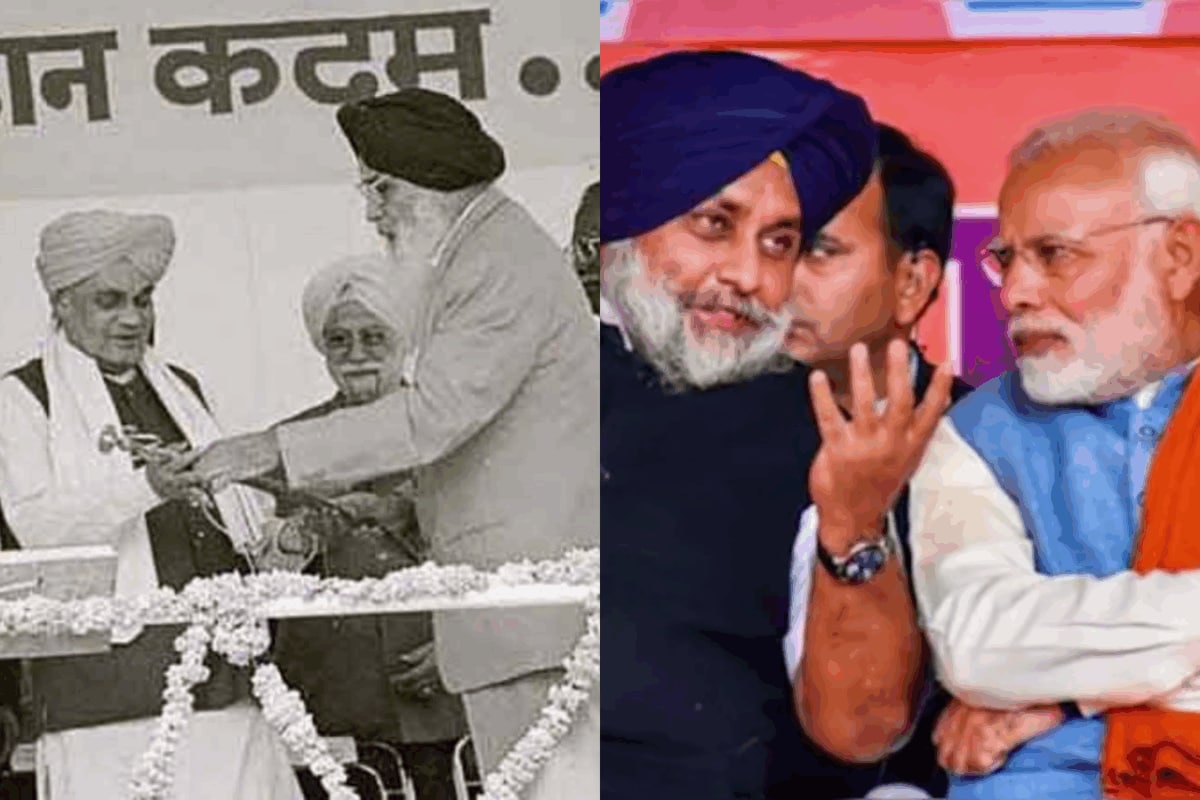
News explainers BJP-Akali Dal Through The Years: Leaders, Deals And Break-Ups That Shaped A Si Decade Alliance BJP-Akali Dal Through The Years: Leaders, Deals And Break-Ups That Shaped A Si Decade Alliance Published By, Last Updated: August 10, 2026, 14:55 IST The history of the relationship goes back much further than BJP. Its roots lie in the political cooperation between the Shiromani Akali Dal and the Bharatiya Jana Sangh. Rapid Read Parkash Singh Badal and senior BJP leaders including Atal Bihari Vajpayee and LK Advani helped transform the old, often tactical cooperation into a structured political partnership. Prime Minister Narendra Modi’s recent meeting with Shiromani Akali Dal president Sukhbir Singh Badal has revived an alliance that once seemed almost inseparable from Punjab politics. The meeting lasted only around 10 minutes, but its timing has given it much greater political significance. Punjab is heading towards the 2027 Assembly election, and the SAD and BJP – once among the country’s most durable political allies – have spent the past six years on opposite sides. There is still no formal announcement of an alliance, and the BJP’s state leadership has publicly maintained that it is preparing to contest all 117 Assembly seats on its own. Yet the Modi-Sukhbir meeting has reopened the question if the old partnership can be revived. The history of the relationship, however, goes back much further than the BJP. Its roots lie in the political cooperation between the Shiromani Akali Dal and the Bharatiya Jana Sangh, the BJP’s predecessor. 1950s-60s: The Jana Sangh The Shiromani Akali Dal was already an established political force in Punjab, while the Bharatiya Jana Sangh, founded in 1951, was building a support base among Hindu voters, particularly in urban areas. The two parties came from different ideological and social traditions. Yet Punjab’s electoral arithmetic gave them an obvious reason to cooperate: the Akalis had a predominantly Sikh and rural base, while the Jana Sangh was stronger among urban Hindus. The first significant political cooperation came in 1967, when the Akalis joined hands with the Jana Sangh as part of a broader non-Congress coalition in Punjab. Parkash Singh Badal emerged as one of the important Akali leaders in this era. This was not yet the polished BJP-SAD alliance that would emerge decades later. But it established the basic political formula that would endure: different constituencies, a common opponent and enough political space for both parties to coexist. 1969-70s: Parkash Singh Badal Becomes The Bridge If one leader can be credited with giving the relationship longevity, it is Parkash Singh Badal. Badal was a political pragmatist who repeatedly found ways to work with parties that were not natural ideological partners of the Akalis. After Punjab’s reorganisation in 1966, he forged multiple coalitions with the Jana Sangh despite their ideological differences. That mattered because the relationship could easily have collapsed under disagreements over religion, federalism and the Centre-state relationship. Instead, Badal helped establish a political culture in which cooperation was possible even when the two parties did not agree on everything.
 The BriefWire