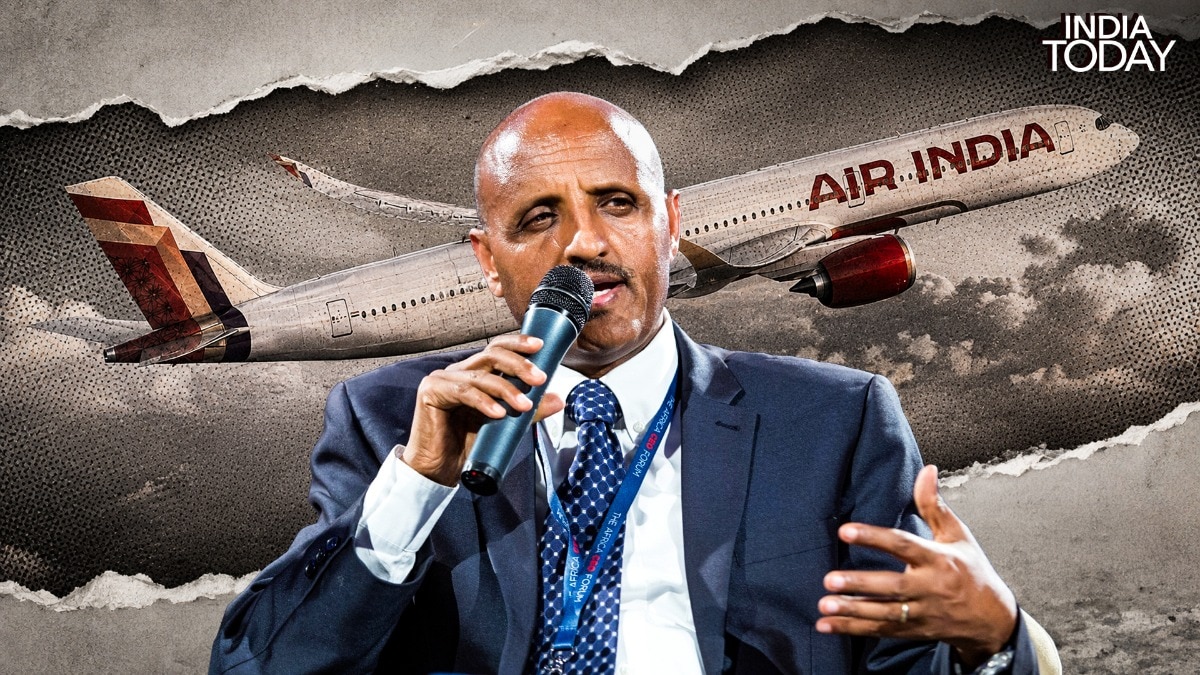
Turbulence, 'failed' dope test, watchdog probe: New Air India CEO's bumpy start
A serious mid-air incident, a pilot’s “failed” dope test and a regulatory probe have greeted Tewolde GebreMariam within days of taking charge as Air India’s
A serious mid-air incident, a pilot’s “failed” dope test and a regulatory probe have greeted Tewolde GebreMariam within days of taking charge as Air India’s new CEO, making for a particularly bumpy start at the airline. Gebremariam, an Ethiopian aviation executive, replaced Campbell Wilson, who stepped down as CEO in April. He inherits an airline facing regulatory scrutiny, operational disruptions and mounting financial pressures, while still dealing with the fallout of last year's fatal Ahmedabad crash. Read Full Story The latest incident involved Air India flight AI2379, an Airbus A320 operating from Phuket to Delhi on August 4. The aircraft suffered a sudden loss of altitude of around 300 feet while cruising, after which it stabilised and continued its journey before landing safely at Delhi airport. The aircraft was carrying 137 passengers, including three infants and eight crew members. Several people on board were injured. A total of 13 passengers and four cabin crew members were taken to hospital, with the four injured crew members suffering spinal and neck injuries. The incident has taken on an additional dimension after the Directorate General of Civil Aviation (DGCA) confirmed that both pilots underwent prescribed psychoactive substance screening following the occurrence. According to the regulator and the Civil Aviation Ministry, the screening test of the pilot-in-command indicated a result that required further confirmatory testing. Samples have been sent to a designated laboratory and the final report is awaited. Pending the investigation and completion of the prescribed process, both pilots have been taken off the roster by the DGCA. Air India told India Today TV that post-flight screening tests had been conducted on the pilots in accordance with applicable protocols, but said the airline had not been given the results.
“We are aware that a post-flight screening test was conducted on the pilots in accordance with applicable protocols. However, the results of the test have not been shared with Air India and we are therefore not in a position to comment on any findings,” an Air India spokesperson said. The airline also said it conducts regular drug testing of crew members in compliance with civil aviation regulations, independently of any particular flight or operational incident. The civil aviation regulator has classified the turbulence occurrence as a “serious incident” and ordered an investigation by the Aircraft Accident Investigation Bureau (AAIB). The aircraft’s Flight Data Recorder and Cockpit Voice Recorder have been secured for examination. The aircraft has also been moved to a hangar as investigators examine the circumstances surrounding the sudden loss of altitude. Air India said the aircraft experienced a “momentary event” during cruise but continued to operate normally before landing safely in Delhi. The airline said it was cooperating with the investigation and had informed the aircraft manufacturer. A DIFFICULT INHERITANCE FOR GEBREMARIAM The turbulence incident is only the latest challenge confronting GebreMariam as he takes over an airline that operates a fleet of 198 aircraft and nearly 5,000 weekly flights to 91 destinations in India and abroad. The airline has been struggling to complete its transformation even four years after the Tata Group took it over from the government. At the time of Wilson’s resignation as CEO in April, N Chandrasekaran, chairman of Tata Sons and Air India, said the airline had completed its initial phase of stabilisation and was entering a “critical execution and expansion era”. Gebremariam has been tasked with leading that next phase while the airline continues to grapple with heavy losses and operational pressures.
 The BriefWire