Akali Dal-BJP relationship: A complex love-hate journey since 1952
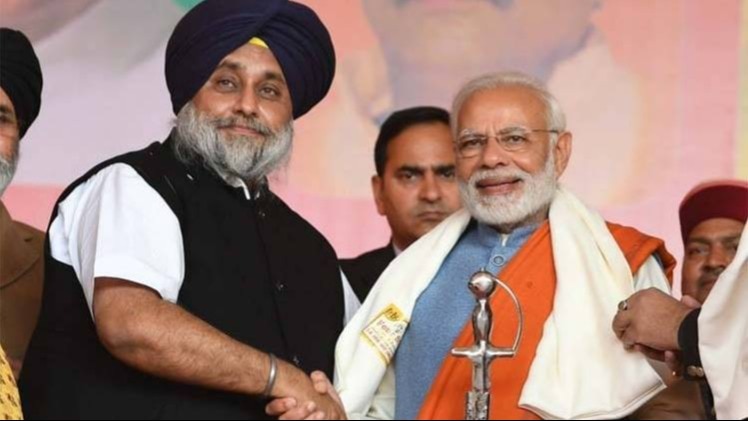
Shiromani Akali Dal (SAD) president Sukhbir Singh Badal’s recent meeting with Prime Minister Narendra Modi in Delhi, followed by the party’s support for key bills
Shiromani Akali Dal (SAD) president Sukhbir Singh Badal’s recent meeting with Prime Minister Narendra Modi in Delhi, followed by the party’s support for key bills, has reignited speculation about a possible BJP-SAD alliance ahead of the 2027 Punjab Assembly elections. The meeting, the first significant public engagement between the two sides since their split over the farm laws in 2020, has also brought renewed attention to a relationship that has rarely been straightforward. While political exchanges between the two parties had remained strained in Punjab over the past several years, the relationship between the Shiromani Akali Dal and the Jana Sangh, and later the BJP, has historically oscillated between confrontation and cooperation. Read Full Story Their political journey reflects decades of shifting alliances, ideological disagreements and electoral compulsions. It also offers insight into the roots of mistrust towards the BJP among sections of the Sikh community. At the core of the relationship was not necessarily ideological convergence, but a shared opposition to the Congress. This common ground, at various points, also brought the Akalis closer to Left parties despite significant ideological differences. THE RELATIONSHIP DATES BACK TO 1952 The political engagement between the Akalis and the Jana Sangh can be traced to the first general elections of 1952 and the political developments that followed in Punjab.
There were periods when the Akali Dal worked with the Congress, while the Jana Sangh opposed such arrangements. The Hindi-Punjabi language divide later emerged as one of the most significant points of contention between the two parties. HINDI AGITATION AND PUNJABI SUBA MORCHA The demand for a Punjabi Suba became one of the biggest fault lines in the relationship. While the Akali Dal strongly advocated for a Punjabi-speaking state, the Jana Sangh firmly opposed the demand. The language issue became deeply intertwined with Punjab’s politics and widened the ideological and political divide between the two sides. The Nehru-Tara Singh agreement also became a source of disagreement. Jana Sangh leader Atal Bihari Vajpayee questioned aspects of the understanding, reflecting the party’s broader opposition to the Akali position on Punjab’s political and linguistic demands. FROM CONFRONTATION TO COALITION GOVERNMENTS Despite their differences, political compulsions eventually brought the Akali Dal and the Jana Sangh together. The two parties formed coalition governments in Punjab at different points, with their partnership largely driven by the objective of challenging Congress dominance. Punjab Chief Minister Justice Gurnam Singh’s observations on the Jana Sangh’s role in coalition politics provide important insight into the nature of this alliance. However, the partnership remained fragile and often vulnerable to disputes over regional and identity-related issues.
 The BriefWire