Scientists Found A Fungus In A Pakistan Landfill That Can Break Down One Of The World's Toughest Plastics
News world Scientists Found A Fungus In A Pakistan Landfill That Can Break Down One Of The World's Toughest Plastics Scientists Found A Fungus In
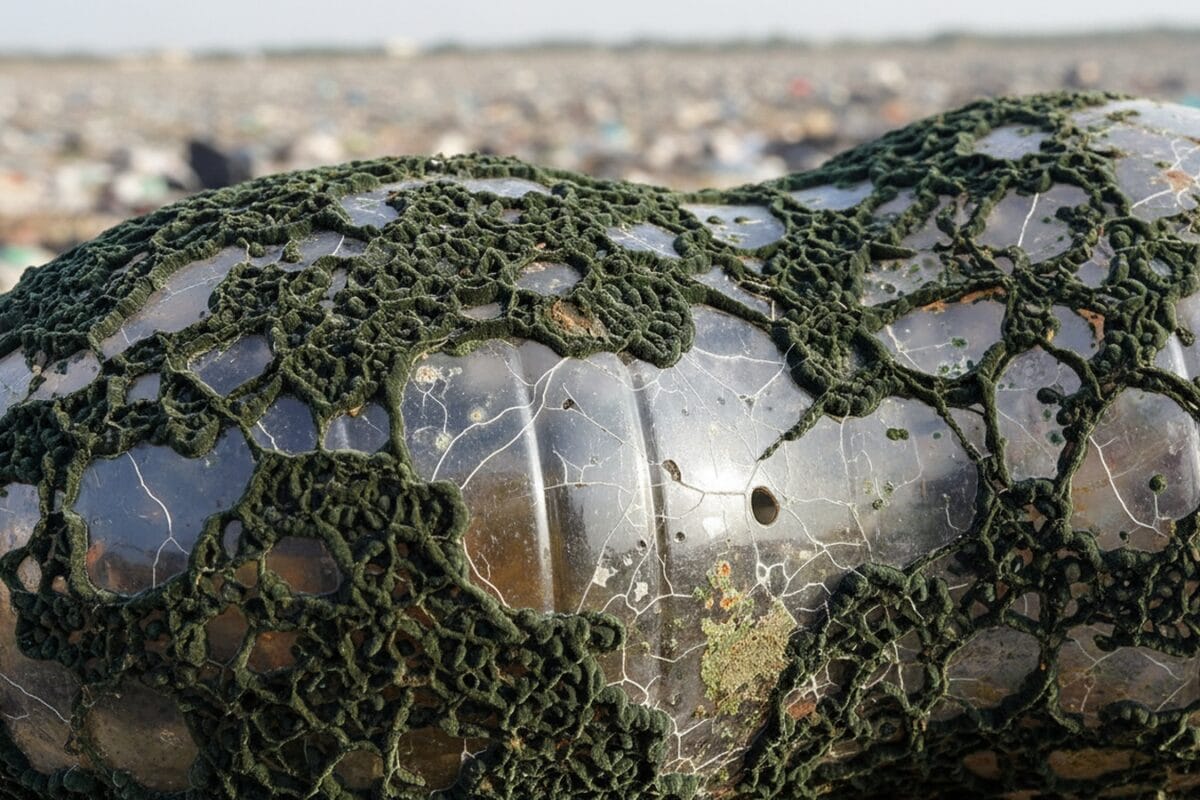
News world Scientists Found A Fungus In A Pakistan Landfill That Can Break Down One Of The World's Toughest Plastics Scientists Found A Fungus In A Pakistan Landfill That Can Break Down One Of The World's Toughest Plastics Published By, Last Updated: August 09, 2026, 21:41 IST Scientists found Aspergillus tubingensis in Islamabad that can degrade polyester polyurethane in laboratory tests, offering a potential route for plastic waste treatment. Scientists found that Aspergillus tubingensis, isolated from soil at a waste disposal site in Islamabad, can degrade polyester polyurethane in laboratory experiments. What if one of the world’s most stubborn plastics had a natural enemy and that enemy was a fungus growing in a waste dump? Scientists have found that Aspergillus tubingensis, a fungus isolated from soil at a municipal waste disposal site in Islamabad, Pakistan, can break down polyester polyurethane (PU), a durable plastic widely used in products ranging from synthetic leather and coatings to cushions, insulation and other industrial materials. The finding was reported in a 2017 study published in Environmental Pollution, titled “Biodegradation of polyester polyurethane by Aspergillus tubingensis." Researchers tested the fungus against polyurethane using laboratory cultures and soil burial experiments.
How Does The Fungus Break Down Plastic? The fungus first grows across the surface of the polyurethane. Researchers using scanning electron microscopy found visible signs of damage, including surface scarring, cracking, erosion and pore formation. The team also used ATR-FTIR spectroscopy to detect changes involving the chemical bonds in the polyurethane, providing evidence that the material was being chemically degraded rather than merely physically damaged. The researchers identified esterase and lipase activity during the experiments, enzymes that can play a role in breaking down components of the polymer. The most striking result came from the liquid-culture experiment. After two months, the polyurethane film had been broken down into smaller pieces, with the researchers describing it as totally degraded under those experimental conditions. That does not mean a discarded polyurethane mattress or shoe would simply disappear after two months in the environment. The experiments were conducted under controlled laboratory conditions, and breaking the plastic into smaller pieces is not the same as demonstrating that all of its carbon has been converted into harmless end products.
 The BriefWire