Why a Swiss woman spent 15 years in rural Bengal building a school she never planned
A two-and-a-half-hour train ride. Then a boat, timed to the tides, cutting across a river to a cyclone-prone island most aid organisations wouldn't touch. This
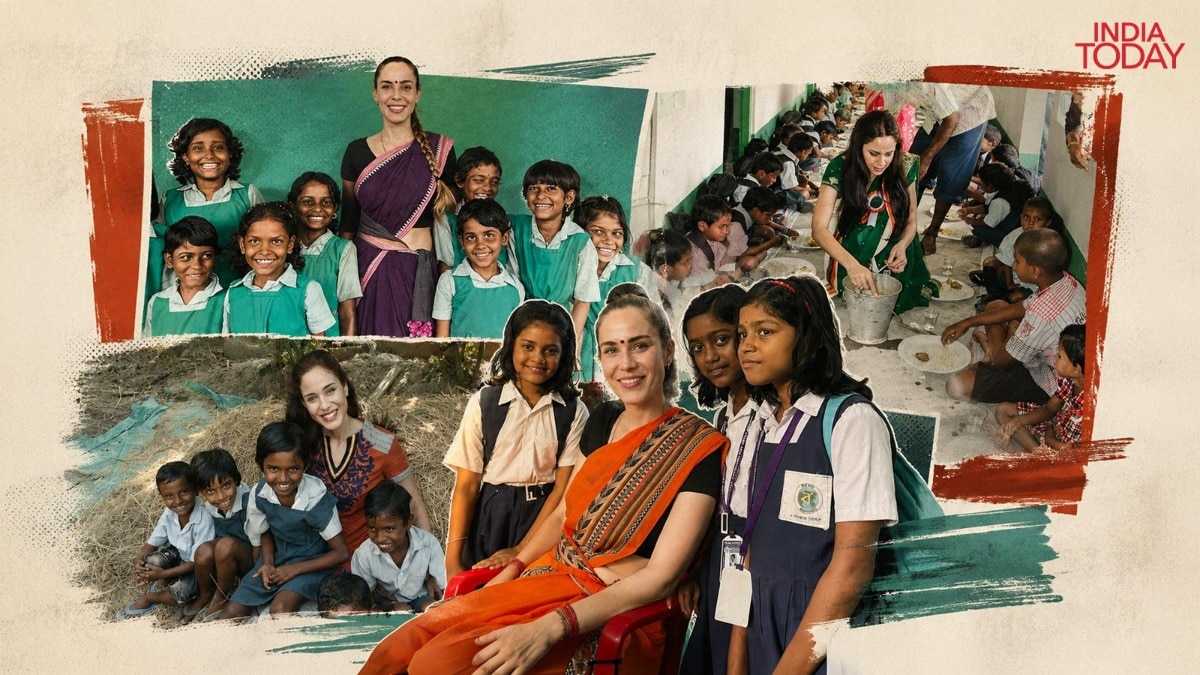
A two-and-a-half-hour train ride. Then a boat, timed to the tides, cutting across a river to a cyclone-prone island most aid organisations wouldn't touch. This was not a detour on Sandra Lavie Gojkovic's journey through rural Bengal's Sagar Island in the Sunderbans; it was the destination. 15 years ago, the Swiss-born humanitarian arrived here with no blueprint, no funding pitch, and no fixed plan. She came to listen. Read Full Story Parents told her their children had nowhere reliable to study. Families spoke about needs no one had thought to ask about. So, she began by building a primary school. Since then, her education programmes have pushed board exam pass rates from 50 per cent to 100 per cent, a child protection initiative that has trained 112 youth leaders and reached 20,000 people across 30 villages, and a women's empowerment project turning vocational skills into independent incomes. Sandra Lavie Gojkovic with the students of her school. But long before the numbers, there was just a woman willing to sit with strangers on a remote island in Sunderbans and ask what their lives were like. In a conversation that ranges from the malaria that almost sent her home to the quiet, deliberate choice never to name the school after herself, Sandra explained why, of all the places in the world, rural Bengal is the one she chose to call home. THE SEARCH BEFORE THE ANSWER Sandra didn't set out to build a school. She arrived in India with a sum of money she had set aside to donate, expecting the task ahead of her to be straightforward. It wasn't. "It didn't take long to realise that the need was everywhere," she told India Today Digital. "The more I saw, the harder it became to answer one simple question: Where could I make the biggest difference?”, she added. Rather than handing over a cheque and moving on, she chose to slow down. "I volunteered with local NGOs, doing everything from washing clothes for children with disabilities to helping with day-to-day activities. It gave me a chance to understand the realities people faced and how different organisations operated,” Sandra mentioned. It took a lot of research since 2012 to lay the foundation of the school in a remote village of rural Bengal. At first, she assumed the answer was simple: find good organisations already doing the work, and support them. But the closer she looked, the less convinced she became. "As I spent more time in the sector, I also witnessed challenges such as poor financial accountability and projects that sometimes missed the priorities of the communities themselves," she said. "That experience led me to believe that lasting change needed to be transparent, locally driven, and built alongside the people it was intended to serve," she added. Rural Bengal, when she eventually found it, wasn't a random landing spot. It was the result of a deliberate search. THE VILLAGE NO ONE ELSE WOULD REACH That search eventually led her across the river crossing and the tidal island already described; a place she says stood out the moment she arrived. "It was very remote, and simply getting there meant crossing a river by boat. Access depended entirely on the tides and the boat schedule, making the journey difficult and unpredictable," she said. "I assume because of that, no other NGO wanted to work there, it was simply too far and too challenging to reach. On top it is very prone to cyclones." It was not just a project for Sandra Lavie Gojkovic as the school in Sagar Island became her home since 2013. One concern came up repeatedly: education. Government primary schools existed, but teachers often did not turn up. Many children were therefore left without regular access to learning. The conversations shaped her next steps. They led to the school she founded 15 years ago and continues to guide the organisation’s work today. She had arrived looking for where she could help. The community gave her the answer. MALARIA, AND A RETURN THAT WAS NEVER A QUESTION The commitment wasn't without cost, almost from the start. Long before the school existed, Sandra was seriously ill with malaria and had to leave India altogether. "The first time I had to leave India, it wasn't because of my visa, it was because I contracted malaria.
 The BriefWire