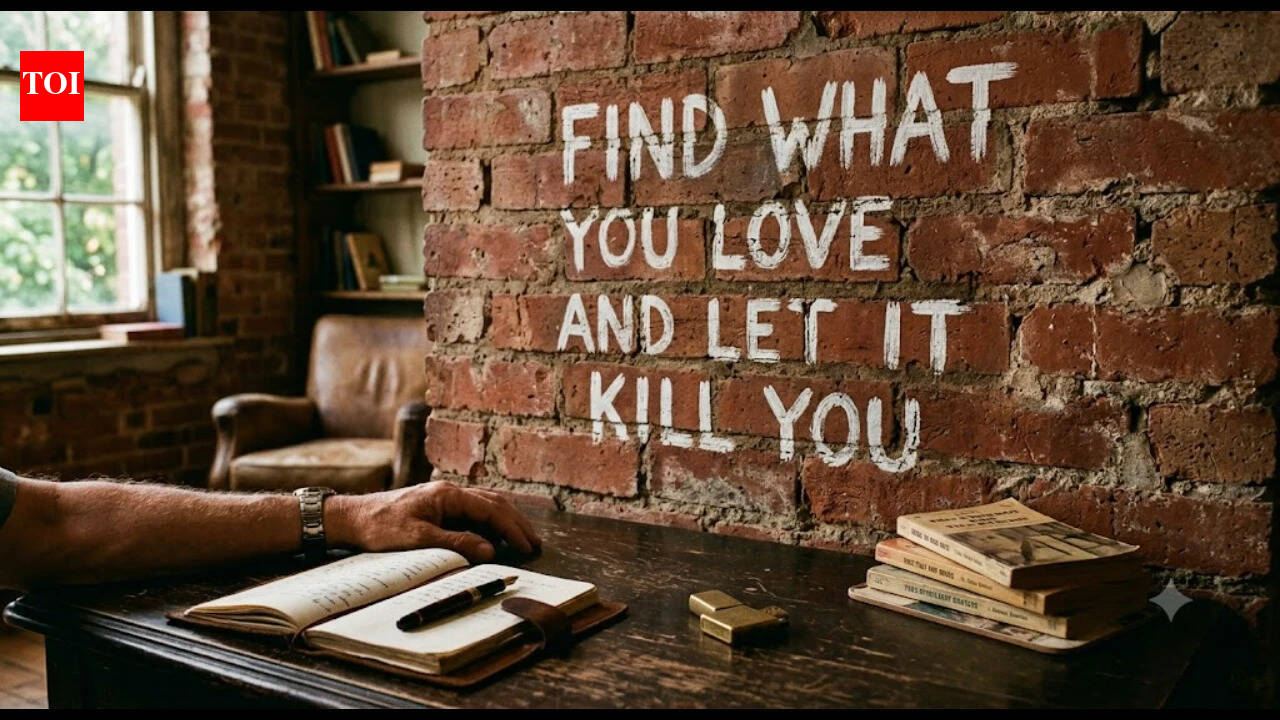
Quote of the day on love: 'Find what you love and let it kill you'
Quote of the day on love, its meaning and origin. The meaning of the quote Who was Kinky Friedman? The famous line "find what you
Quote of the day on love, its meaning and origin. The meaning of the quote Who was Kinky Friedman? The famous line "find what you love and let it kill you" is almost universally attributed to Charles Bukowski, though history tells a slightly more complicated story. Literature scholars and researchers have found no evidence that Bukowski ever wrote or spoke those exact words in his books, poems, or letters. The phrase actually originated with the Texas musician and author Kinky Friedman in the 1980s. Yet, despite being a misattribution, millions of people attach the quote to Bukowski.The earliest documented appearance of the phrase came from an interview in April 1998, when musician Van Dyke Parks quoted his longtime friend: "It's like my friend Kinky Friedman said: 'You've got to find what you love and let it kill you.
I don't think any of us should ever forget that.'" When asked about the origin of the line, Friedman confirmed that it was a pure "Kinky-ism" of his own creation.At its core, the quote presents a bold idea: since time eventually wears down every human life, individuals should consciously choose the passion or obsession that consumes their limited years.Human existence is inherently temporary. Everyone gives away energy, hours, and health to something over time.Many people drift through life allowing dull routines, meaningless stress, or unwanted obligations to drain their vitality without receiving anything fulfilling in return. This quote urges a rejection of that passive decay. Instead of letting life wear you away by accident, it encourages you to pour your spirit into a cause, craft, or passion that truly matters to you.To let something kill you, in this figurative sense, does not mean seeking physical harm.
It means surrendering comfort, safety, and self-doubt to serve a singular purpose. It describes a devotion so intense that it absorbs your daily focus, shapes your choices, and defines your legacy. Whether that pursuit is creative work, deep relationships, scientific discovery, or a lifelong belief, the statement suggests that giving everything to a meaningful obsession gives direction to an otherwise random existence.The phrase also acts as a warning against safe indifference. Living a cautious life where you never risk failure or heartbreak might protect you from disappointment, but it also deprives you of deep passion. The quote argues that a life spent burning brightly for something you genuinely care about is far superior to a quiet, prolonged life spent in total detachment.Ultimately, this idea challenges everyone to audit their priorities and ask a fundamental question: what is worthy of your time and energy?
 The BriefWire