Inside Portugal’s 19th-century goat tower, where dwarf goats climb a spiral ramp
19th-century goat tower PC: Wikipedia Why the Aveleda family built their goats a tower instead of a field How the tower's design actually works for
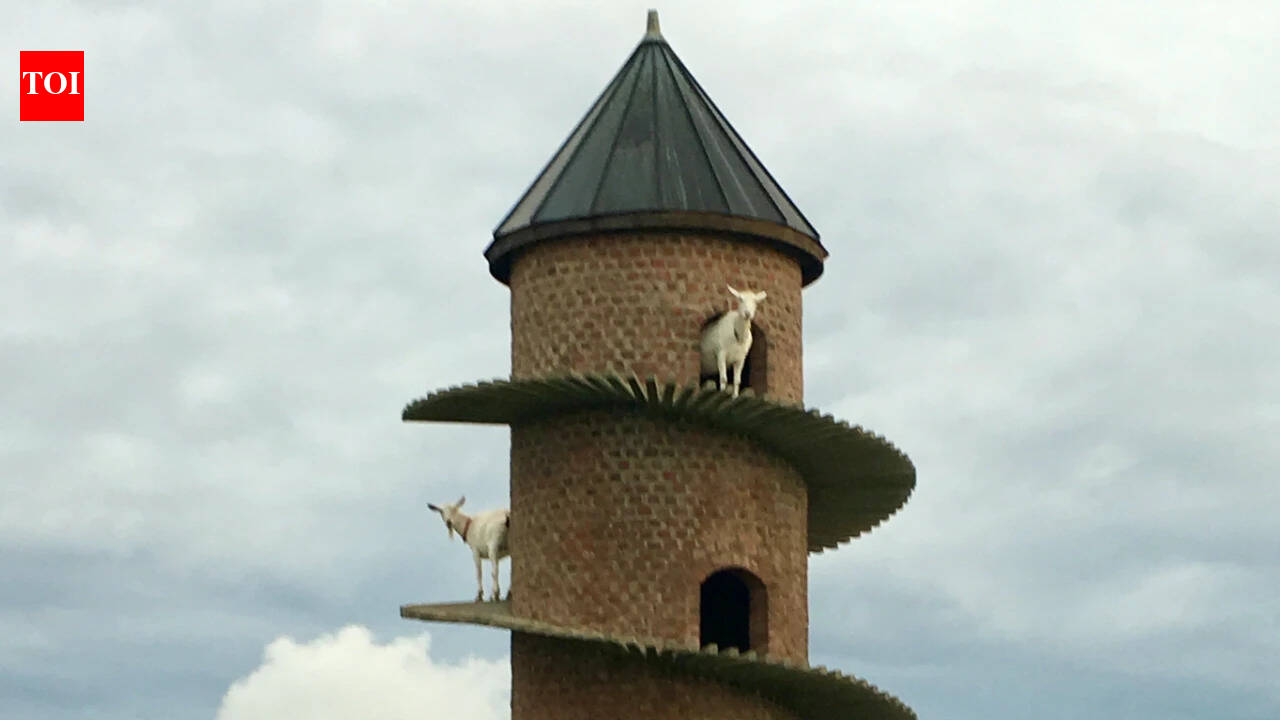
19th-century goat tower PC: Wikipedia Why the Aveleda family built their goats a tower instead of a field How the tower's design actually works for the goats living in it How one family's garden folly inspired goat towers around the world Why the tower remains one of Aveleda's most distinctive features today At Quinta da Aveleda, a historic wine estate in Portugal's Vinho Verde region near Penafiel, a three-storey stone tower stands among the property's romantic gardens, built not for people but for goats. Known as the Torre das Cabras, or Tower of the Goats, it was constructed in the late 19th century by Fernando Guedes da Silva da Fonseca, a member of the family that has owned the estate since the 17th century. Rather than leaving the estate's dwarf goats to graze on flat ground, the family built them a miniature mountain instead, complete with a wooden ramp spiralling around the outside so the animals could climb from the ground floor to the top.Quinta da Aveleda was founded as a wine-producing estate in 1870 by Manoel Pedro Guedes, though the family's connection to the property stretches back to the 17th century. According to accounts of the estate's history published by the family, the Torre das Cabras was conceived as an ode to nature and to earlier generations of the Aveleda family, a three-storey structure built specifically to house dwarf goats within the estate's gardens.In Portuguese folk tradition, the goat is associated with fertility and abundance, and the family has described the animal as embodying the idea of land that has always been able to produce its finest fruit.The tower belongs to a broader category of structure known as a folly, an ornamental building constructed with no strictly practical purpose beyond aesthetic or symbolic value, a tradition especially popular in European garden design through the 18th and 19th centuries.
Aveleda's gardens contain several such follies scattered throughout the property, including a Victorian-style tea house and a 16th-century Manueline window relocated to the grounds, but the goat tower has become by far the most recognisable.The Torre das Cabras stands three storeys tall, built from stone with a wooden ramp that spirals around the tower's exterior, allowing the goats housed inside to move freely between floors under their own power. This design lets the estate's owners give their goats something closer to the varied, elevated terrain the animals would naturally seek out in the wild, rather than confining them to the flat gardens surrounding the tower.The tower continues to serve this same function today. Small dwarf goats still live in and around the structure, and visitors touring Aveleda's gardens regularly encounter them making their way up and down the spiral ramp, much as they have for well over a century.For decades, Aveleda's tower remained a largely local curiosity, admired mainly by visitors to the estate itself. That changed after a member of the Guedes family, travelling abroad, encountered a second goat tower entirely by chance at Fairview Wine and Cheese in South Africa, unaware at the time that any connection existed between the two.
 The BriefWire