Freedom fighter Thakur Roshan Singh's UP village gets bridge, ends monsoon isolation
The birthplace of immortal revolutionary martyr Thakur Roshan Singh, who kissed the noose with a smile while laying down his life for India's independence, continued
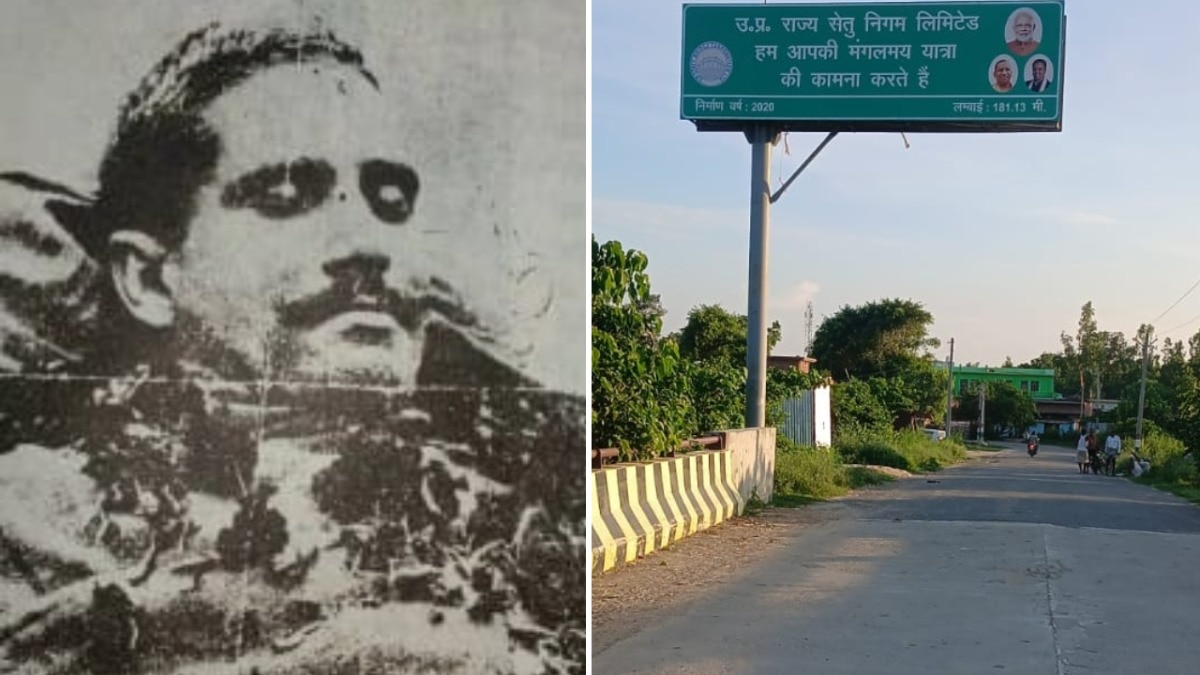
The birthplace of immortal revolutionary martyr Thakur Roshan Singh, who kissed the noose with a smile while laying down his life for India's independence, continued to suffer for decades even after Independence, remaining cut off from the mainstream of development. The village whose soil gave the country such a brave son saw three generations remain cut off from the rest of the world every year during the monsoon season. Governments changed, but their pain remained. Eventually, Chief Minister Yogi Adityanath addressed their plight. After the matter was brought to his attention following the formation of his government in Uttar Pradesh, he had a permanent bridge constructed over the Khannaut River in place of the pontoon bridge. Read Full Story Not only this, the Chief Minister himself reached the martyr's ancestral village, Nawada, for the inauguration of the bridge and met Thakur Roshan Singh's family. Tears welled up in the eyes of the villagers present, who expressed their gratitude to the Chief Minister. This was not merely the inauguration of a bridge, but an emotional moment that marked recognition of the martyr's sacrifice and the end of years of neglect. The name of revolutionary Thakur Roshan Singh is recorded among the immortal martyrs of India's freedom struggle. He was born on December 19, 1892, in Nawada village of Shahjahanpur district to Thakur Jangi Singh and Kaushalya Devi. From childhood, he was exceptionally courageous, a skilled wrestler and an unerring marksman.
In his youth, he joined Mahatma Gandhi's Non-Cooperation Movement and later became an active revolutionary of the Hindustan Republican Association (HRA). During a protest in Bareilly in 1922 against the Chauri Chaura incident, the British resorted to a lathi charge. Roshan Singh pushed through the crowd, moved forward and snatched the gun of a British officer. He fired in the air and forced the lathi charge to stop. Following the incident, the British government sentenced him to two years of rigorous imprisonment. After his release from jail, he became fully committed to the revolutionary movement and emerged as a major thorn in the side of the British government. In December 1924, the HRA carried out an operation in Bamrauli village of Bisalpur tehsil in Pilibhit to raise funds for the organisation. During the operation, one person was killed in the firing. A murder case was registered against Thakur Roshan Singh, but he was not captured by the British. Later, following the Kakori incident of 1925, the British government arrested Roshan Singh as well and included him in the trial. Although he was not directly present during the Kakori train robbery, he was convicted along with Pandit Ram Prasad Bismil, Ashfaqulla Khan and Rajendra Nath Lahiri because of his association with the organisation. When he was being sentenced in court under various sections, Roshan Singh fearlessly said, "Give me the same punishment that was given to Bismil." Eventually, the judge sentenced him to death.
 The BriefWire