Pandemics, Wars And 24x7 Scrutiny: How PM Modi's Challenges Differed From Nehru's
Pandemics, Wars And 24x7 Scrutiny: How PM Modi's Challenges Differed From Nehru's Published By, Last Updated: June 04, 2026, 15:11 IST PM Modi is governing
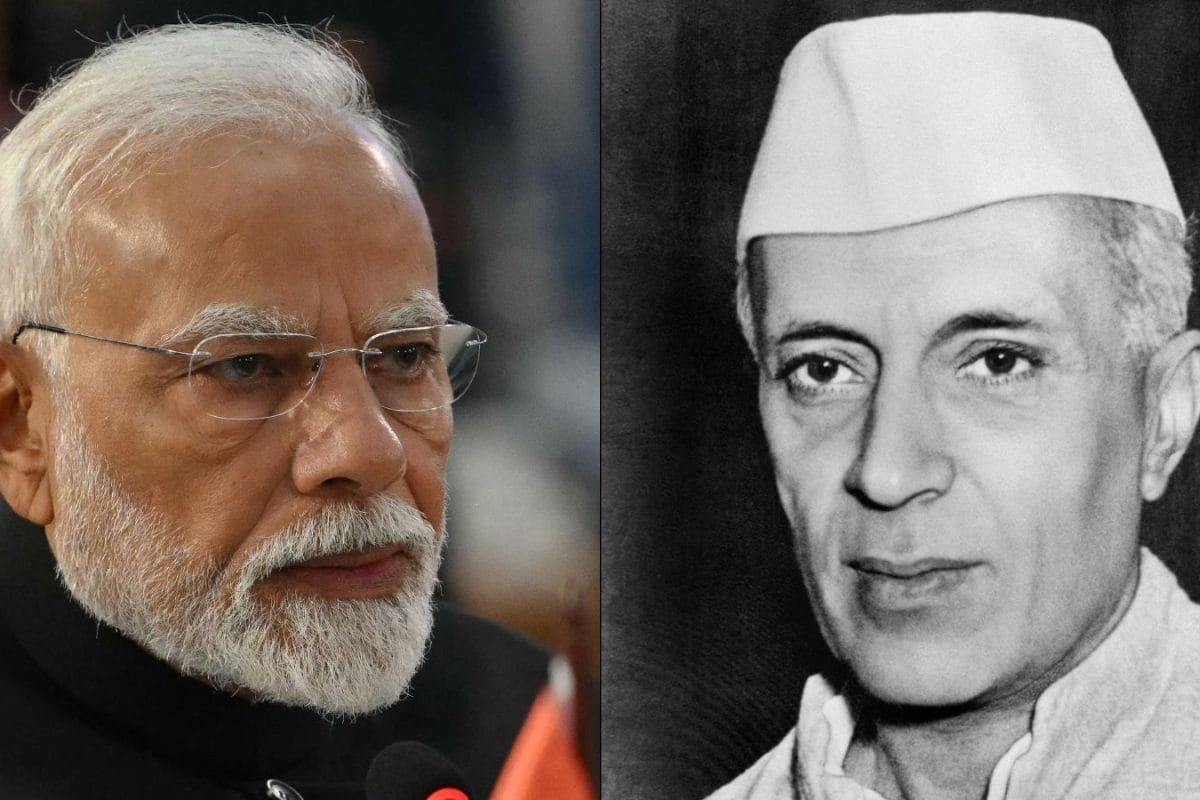
Pandemics, Wars And 24x7 Scrutiny: How PM Modi's Challenges Differed From Nehru's Published By, Last Updated: June 04, 2026, 15:11 IST PM Modi is governing an India that is larger, more interconnected with the global economy, more politically competitive, and more exposed to international developments. Rapid Read PM Narendra Modi and India's first PM Jawaharlal Nehru. File image/AFP Prime Minister Narendra Modi is set to surpass Jawaharlal Nehru’s record as India’s longest continuously serving democratically elected Prime Minister on June 10, 2026. Both have occupied the office during transformative periods in India’s history, but the challenges they confronted were markedly different. Nehru led a newly independent nation seeking political stability, institution-building, and economic self-reliance after centuries of colonial rule. PM Modi, meanwhile, has governed an India that is larger, more interconnected with the global economy, more politically competitive, and more exposed to international developments than ever before. The comparison is therefore less about who faced greater challenges and more about how the nature of crises evolved across decades. Read More: Beyond Nehru’s Record: Why ‘Jan Bhagidari’ May Be Defining Legacy Of Modi’s 12 Years In Power Leadership In The Age Of Covid One of the defining features of PM Modi’s tenure has been the frequency and complexity of global disruptions. The most significant was the Covid-19 pandemic, a once-in-a-century crisis that simultaneously created public health, economic, social, and logistical challenges. Governments across the world were forced to make rapid decisions under conditions of uncertainty. In India, managing healthcare demands, economic recovery, welfare delivery, and vaccination efforts became central priorities.
Unlike previous eras, such crises unfolded in real time before a digitally connected population. Government decisions were scrutinised continuously through television, social media, and online platforms, creating a level of public visibility that earlier leaders did not experience. An Uncertain Global Environment The international landscape has also changed dramatically since Nehru’s time. Nehru governed during the early decades of the Cold War, when the world was largely organised around two major power blocs. Today’s geopolitical environment is more fragmented and fluid. Major conflicts such as the Russia-Ukraine war, the Israel-Hamas conflict, the US-Iran fight, have had ripple effects on energy markets, food security, trade routes, and global diplomacy. For India, these developments have required balancing national interests amid competing global powers while safeguarding economic growth and strategic autonomy. From Non-Alignment to Multi-Alignment Foreign policy challenges have evolved alongside the international system. Nehru was one of the principal architects of the Non-Aligned Movement, which sought to preserve India’s independence from Cold War rivalries. In contrast, contemporary diplomacy operates in a world where countries often maintain relationships across multiple power centres simultaneously. Under PM Modi, India has expanded engagement with the United States, Europe, Russia, West Asian nations, and the Global South while seeking to maintain strategic flexibility. The objective has been to navigate a multipolar world where economic, technological, and security interests are increasingly interconnected. Security Challenges Have Changed security concerns today differ significantly from those of the 1950s and 1960s. Nehru’s tenure witnessed major conventional military conflicts, including the first Indo-Pak war and the Sino-Indian conflict of 1962.
These events shaped India’s early security outlook. The contemporary security environment, however, extends beyond traditional warfare. Governments must contend with terrorism, cyber threats, border tensions, disinformation campaigns, supply-chain vulnerabilities, and emerging technologies. Security is now defined not only by territorial defence but also by economic resilience, technological capability, and strategic preparedness. Managing a Much Larger and More Complex India The scale of governance has expanded considerably since Independence. When Nehru became Prime Minister, India had a population of roughly 34 crore. Today, the country has more than 140 crore citizens. The electorate, economy, media ecosystem, and political landscape have all grown exponentially. India’s democratic structure is also more competitive than in the early decades after Independence. politics today involves strong regional parties, coalition dynamics in many states, and a highly engaged electorate. Governing such a vast and diverse democracy requires navigating a wider range of interests, aspirations, and expectations. The Era of Continuous Accountability Perhaps the most significant difference between the two eras is the information environment. Nehru governed in a period when communication was largely mediated through newspapers, radio, and limited television coverage. PM Modi operates in a 24-hour news cycle where information travels instantly and public opinion can shift rapidly. Citizens today expect governments to deliver not only economic growth but also digital services, infrastructure, welfare programmes, national security, environmental protection, and international influence. These expectations have expanded the scope of governance in ways that were difficult to imagine in the early decades of the Republic.
Two Leaders, Two Historical Moments Both Nehru and Modi have led India during pivotal periods, but the circumstances surrounding their leadership were fundamentally different. Nehru’s central challenge was building the foundations of a newly independent nation. PM Modi’s tenure has been shaped by managing India through a period of global turbulence marked by pandemics, geopolitical conflicts, economic disruptions, technological transformation, and heightened public expectations. As PM Modi approaches a historic milestone in office, the comparison with Nehru offers an opportunity to reflect not only on leadership but also on how India’s place in the world, and the challenges facing its Prime Minister, have changed over time. News18 Newsletter Handpicked stories, in your inbox A newsletter with the best of our journalism submit About the Author News Desk The News Desk is a team of passionate editors and writers who break and analyse the most important events unfolding in India and abroad. From live updates to exclusive reports to in-depth explainers,... Read More First Published: June 04, 2026, 15:11 IST News india Pandemics, Wars And 24x7 Scrutiny: How PM Modi's Challenges Differed From Nehru's Disclaimer: Comments reflect users’ views, not News18’s. Please keep discussions respectful and constructive. Abusive, defamatory, or illegal comments will be removed. News18 may disable any comment at its discretion. By posting, you agree to our Terms of Use and Privacy Policy Loading comments...
 The BriefWire