Project Cheetah: How A Species Declared Extinct During Nehru Era Returned To India Under Modi Govt
Project Cheetah: How A Species Declared Extinct During Nehru Era Returned To India Under Modi Govt Published By, Last Updated: June 04, 2026, 15:34 IST
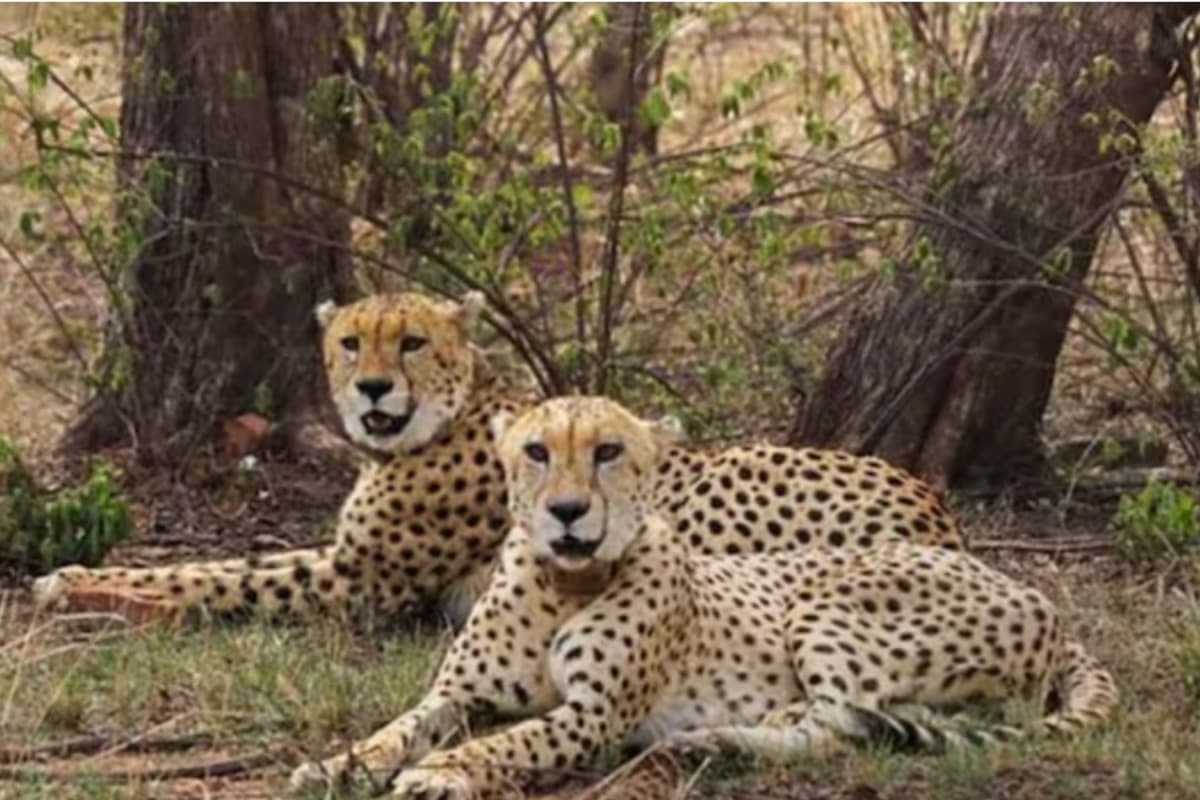
Project Cheetah: How A Species Declared Extinct During Nehru Era Returned To India Under Modi Govt Published By, Last Updated: June 04, 2026, 15:34 IST Declared extinct in India in 1952, the species returned seven decades later through Project Cheetah, with the first batch from Namibia released at Kuno Park in 2022. Rapid Read File photo of two cheetahs at Kuno Park. In 1952, the Government of India officially declared the cheetah extinct, making it the only large carnivore species to have gone extinct in independent India. For decades after that, the animal remained a symbol of what India had lost from its wild landscapes. That absence began to be reversed on September 17, 2022, when Prime Minister Narendra Modi released the first batch of eight cheetahs brought from Namibia into Kuno Park in Madhya Pradesh. The moment marked the formal launch of Project Cheetah, described by the government as the world’s first intercontinental translocation of a large carnivore. For India, it was not merely the arrival of an animal. It was an attempt to restore a missing ecological link and give a new shape to a long-pending wildlife ambition. As PM Modi nears the milestone of surpassing Jawaharlal Nehru as India’s longest democratically elected, continuously serving Prime Minister on June 10, 2026, here is a look at Project Cheetah, one of the most visible conservation initiatives associated with his government. How Did The Cheetah Disappear From India? The cheetah’s disappearance was not sudden. Historically, the Asiatic cheetah ranged across large parts of India, occupying scrub forests, dry grasslands, savannas and semi-arid landscapes. The animal was also associated with royal hunting traditions, where cheetahs were captured and trained for coursing.
The last confirmed sighting of wild cheetahs in India was in 1947, when three animals were shot in the forests of Koriya district in present-day Chhattisgarh. Five years later, in 1952, the species was officially declared extinct in the country. The loss was caused by several overlapping pressures. Excessive hunting and poaching severely reduced the population. Agricultural expansion, habitat degradation and the species’ low reproductive rate added to the crisis. Unlike tigers or leopards, cheetahs need large open landscapes, making them especially vulnerable when grasslands and savannas are treated as wastelands or converted for other uses. What Changed Under Project Cheetah? For decades after Independence, the idea of bringing the cheetah back remained under discussion. Project Cheetah turned that long-running idea into action. Kuno Park in Madhya Pradesh was selected as the first reintroduction site after assessments by experts. The location had already undergone village relocation earlier, creating space for inviolate habitat and making it suitable for the reintroduction effort. The first batch of eight cheetahs from Namibia arrived in September 2022. A second batch of 12 cheetahs from South Africa followed in February 2023. Together, these 20 cheetahs formed the founder population for India’s reintroduction programme. The project was designed with a long-term objective: to establish a viable metapopulation of 60 to 70 cheetahs across the Kuno-Gandhi Sagar landscape, spread over nearly 17,000 sq km. Gandhi Sagar Wildlife Sanctuary has been prepared for the next phase, with the long-term plan aimed at expanding beyond Kuno and creating a larger landscape-based conservation model. The Birth Of Cheetah Cubs The most important biological test for any reintroduction project is whether the species can adjust, survive and reproduce in its new environment.
On that count, Project Cheetah has registered several notable milestones. As of December 2025, India had a total of 30 cheetahs — 12 adults, nine sub-adults and nine cubs. This included 11 founder animals and 19 India-born cheetahs. The birth of cubs at Kuno has been presented as a major sign that the landscape can support the species. Among the significant developments was Mukhi, the first cheetah cub born on Indian soil, becoming a mother herself to five healthy cubs in November 2025. That made the milestone especially important because it indicated second-generation viability — a key marker in any reintroduction programme. Other females have also contributed to the growing population. Jwala, a Namibian female, gave birth to eight cubs across two litters. Aasha, also from Namibia, had three cubs. Gamini, from South Africa, had six cubs. Nirva and Veera also had litters, adding to the India-born population. These births do not mean the project is free from challenges. Large carnivore reintroduction is complex, and cheetahs remain vulnerable to stress, disease, territorial pressures and adaptation challenges. But the fact that multiple females have reproduced in India has given the programme a strong conservation signal. India’s Wider Conservation Push The cheetah project has unfolded alongside India’s broader efforts to position itself as a leader in big cat conservation. In April 2023, Prime Minister Modi launched the International Big Cat Alliance during the commemoration of 50 years of Project Tiger. The alliance is aimed at strengthening cooperation for the conservation of seven big cat species, including the cheetah. From Wildlife Protection To Ecological Restoration The reintroduction of the cheetah is still a work in progress.
Its long-term success will depend on survival rates, genetic diversity, prey availability, disease control, landscape expansion and the ability to build a self-sustaining population over time. The target of 60 to 70 cheetahs across the Kuno-Gandhi Sagar landscape by 2032 remains ambitious and will require careful management. But the project has already given India’s conservation story a powerful new marker. It fits into a wider conservation push that PM Modi highlighted on World Wildlife Day, when he reiterated India’s commitment to wildlife protection, sustainable practices and habitat conservation. He pointed to India’s larger wildlife record, noting that the country hosts over 70 per cent of the world’s tiger population, the largest population of one-horned rhinoceros and the largest number of Asiatic elephants. News18 Newsletter Handpicked stories, in your inbox A newsletter with the best of our journalism submit About the Author Karishma Jain Karishma Jain, Chief Sub Editor at News18.com, writes and edits opinion pieces on a variety of subjects, including Indian politics and policy, culture and the arts, technology and social change. Follo... Read More First Published: June 04, 2026, 15:34 IST News india Project Cheetah: How A Species Declared Extinct During Nehru Era Returned To India Under Modi Govt Disclaimer: Comments reflect users’ views, not News18’s. Please keep discussions respectful and constructive. Abusive, defamatory, or illegal comments will be removed. News18 may disable any comment at its discretion. By posting, you agree to our Terms of Use and Privacy Policy Loading comments...
 The BriefWire