For Brazil’s Indigenous youth, visibility is resistance
They are watching rising temperatures, vanishing food sources, devastating wildfires and the accelerating loss of ancestral territory – but they are also claiming new space
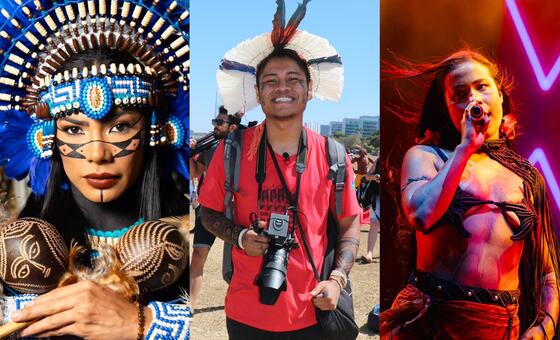
They are watching rising temperatures, vanishing food sources, devastating wildfires and the accelerating loss of ancestral territory – but they are also claiming new space online, using social media, music, photography and dance as tools of resistance. Ahead of the UN day celebrating the world’s Indigenous Peoples on 9 August, three young Indigenous leaders shared how they are using their voices – and their creativity – to reach millions of people. Among them are dancer and entrepreneur Marciele Albuquerque, from the Munduruku people; singer-songwriter Kaê Guajajara, from the Guajajara people; and photographer and communicator Cristian Wariu, from the Xavante people. All three are members of the UN’s Verified initiative, which works to counter climate-related misinformation. © UNICEF/Paulo Diogenes ‘The forest no longer provides’ Marciele grew up in Juruti, in the Brazilian Amazon, where childhood meant swimming in rivers and gathering fruit steps from her village. Returning home today tells a different story. “We can feel it’s getting hotter every year,” she said. “The fruits are no longer as abundant as they used to be. We once found them close to the village, right in the forest.
Now we have to walk much farther, and even then there isn’t the same quantity. Droughts have become extreme, and so have the floods.” Wildfires reshape the Cerrado Cristian Wariu comes from the Parabubure Indigenous Territory in Mato Grosso state, where increasingly intense wildfires are transforming the Cerrado biome and disrupting daily life. “Life has become increasingly unsustainable because these fires are now uncontrollable,” he said. “They severely affect the Xavante people’s food chain, and that also makes it easier for foods that are not good for our people to enter our communities. One problem leads to another, and eventually it reaches our health.” The UN estimates more than 370 million Indigenous people worldwide are already experiencing the impacts of climate change, as global temperatures continue to rise. Marcelo Camargo/Agência Brasil Songs of displacement Kaê Guajajara, born in Mirinzal in Maranhão state, believes today’s environmental crisis reflects a development model imposed on Indigenous peoples. For her, distinguishing fact from misinformation is critical to helping vulnerable communities prepare for climate threats before they strike – and music has become an act of resistance in itself. “Our traditional songs once celebrated the beauty of nature and our relationship with it,” she said.
 The BriefWire