Europe's Wildfires Are Exposing An 'Explosive' Threat: Thousands Of Buried Wartime Bombs
News world Europe's Wildfires Are Exposing An 'Explosive' Threat: Thousands Of Buried Wartime Bombs Europe's Wildfires Are Exposing An 'Explosive' Threat: Thousands Of Buried Wartime
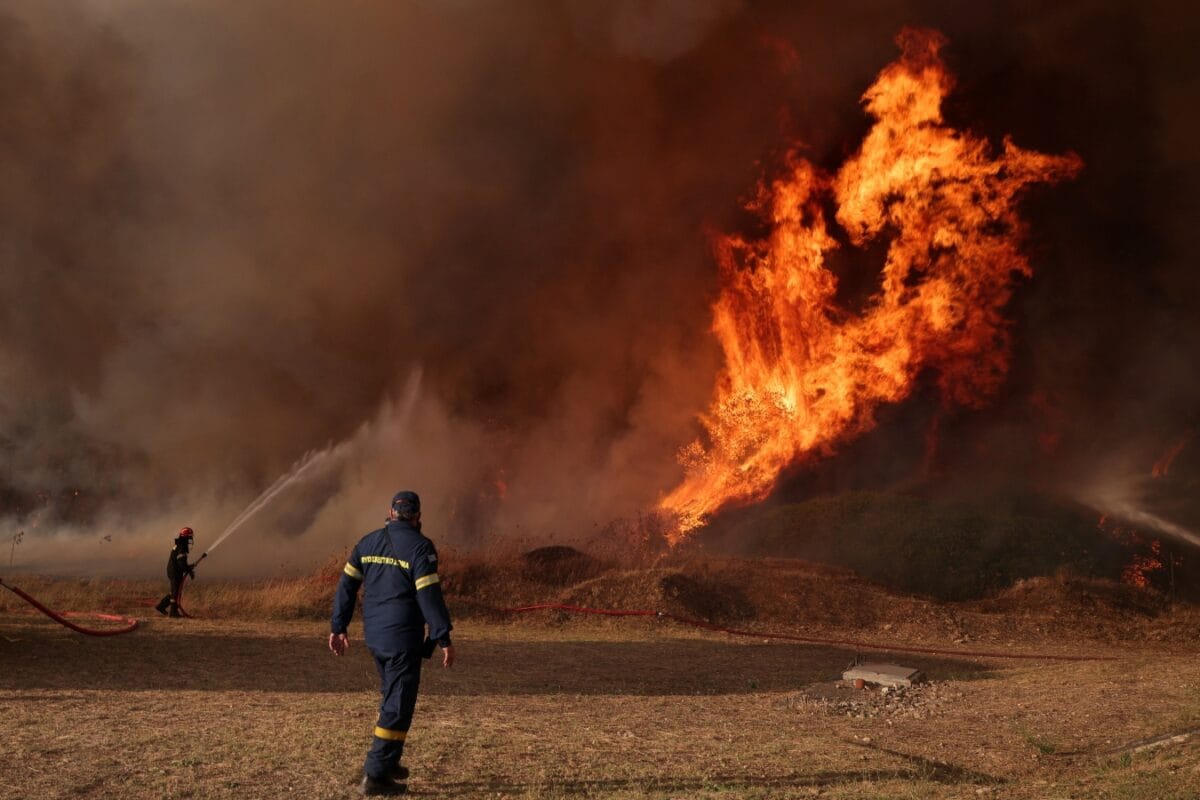
News world Europe's Wildfires Are Exposing An 'Explosive' Threat: Thousands Of Buried Wartime Bombs Europe's Wildfires Are Exposing An 'Explosive' Threat: Thousands Of Buried Wartime Bombs Published By, Last Updated: August 08, 2026, 13:36 IST Wildfires in parts of Europe have exposed dozens of old shells, with some detonating after decades underground. Rapid Read Firefighters work on a burning area near Loumpa, as wildfires hit West Attica, Greece, August 3, 2026. (REUTERS) Europe’s worsening wildfire crisis is exposing a danger buried beneath forests and fields for decades: unexploded bombs and shells left behind by the Second World War and the Cold War. Increasingly intense and prolonged wildfires are reaching areas where old munitions remain buried, creating fresh risks for firefighters, residents and bomb disposal teams. The danger was evident in Germany in July, when a wildfire broke out in Müritz Park in the country’s north-east. Firefighters were unable to approach some parts of the blaze because the forest floor was contaminated with Cold War-era munitions, forcing bomb disposal teams to work alongside emergency crews, The Conversation reported. Soon afterwards, a wildfire in France’s Gironde region burned through around 42,000 hectares and exposed a cache of Second World War-era shells near the village of Le Porge. At least 75 shells were recovered from the scorched ground. Several of them detonated during the fire, while one projectile punched through the wall of an evacuated house, according to The Conversation. The discovery also highlighted another difficulty confronting authorities: in many cases, there is no reliable record of where such munitions remain buried. Le Porge mayor Martial Zaninetti said the municipality had no record of the weapons being present.
Why Wildfires Can Trigger Buried Bombs Unexploded ordnance can remain underground for decades without detonating if it is left undisturbed. Wildfires, however, can dramatically change those conditions. The danger comes largely from sustained heat. Explosive material inside old shells can ignite or detonate once it reaches sufficiently high temperatures. Decades of corrosion can also leave casings, detonators and fuses more unstable than when the weapons were originally manufactured. A fast-moving surface fire may not always transfer enough heat into the soil to trigger buried explosives. But fires that continue for hours or days — particularly those that penetrate peat or other dry organic material and continue smouldering underground — can heat buried munitions for far longer. That creates the possibility of explosions even after the most visible flames have passed. The danger was demonstrated during the 2025 Langdale Moor fire in North Yorkshire in the UK, where flames burning through deep peat triggered more than 20 buried WWII shells over a si week period. Wildfires can also create risks without directly heating ammunition enough to detonate it. By burning away vegetation and layers of soil, fires can expose shells, mines and other explosives that had remained hidden underground. Once uncovered, they pose a fresh hazard to residents, firefighters and clearance teams entering affected areas. That is what happened near Le Porge, where dozens of shells suddenly became visible after the landscape had burned. A Continent Still Filled With Wartime Explosives Europe continues to contain vast quantities of unexploded ammunition from the First and Second World Wars, as well as decades of Cold War military activity.
 The BriefWire