Ebola in DR Congo: Childhood deaths rise; hopes raised over new vaccine
Children and women continue to bear a disproportionate share of the outbreak in Ituri, the most affected province, according to the UN Office for the
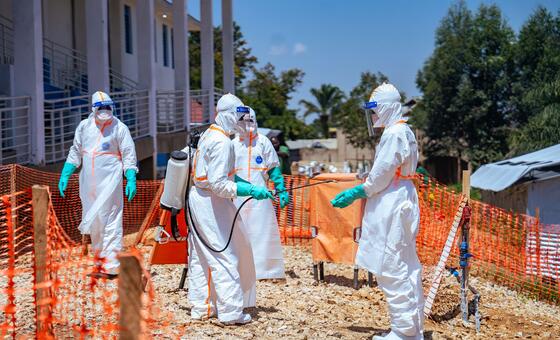
Children and women continue to bear a disproportionate share of the outbreak in Ituri, the most affected province, according to the UN Office for the Coordination of Humanitarian Affairs (OCHA). The health crisis is unfolding in a province where nearly one million people have been displaced by conflict, with women and children accounting for around 80 per cent. Young lives lost The outbreak emerged in mid-May and since then, more than 300 children have succumbed to the virus, the UN Children’s Fund (UNICEF) said. Moreover, children make up nearly a quarter of confirmed cases, but almost a third of all deaths, the agency added. Earlier this week, the UN reported that the outbreak is also severely disrupting essential healthcare. “In the hardest-hit areas, use of health services has dropped by more than 40 percent in recent months, as fear of infection keeps people away,” UN Deputy Spokesperson Farhan Haq told journalists in New York.
Pregnant women in peril This fear, combined with overstretched health services, is preventing many pregnant women from seeking care. The warning by the UN’s sexual and reproductive health agency, UNFPA, comes as maternal deaths in Ituri have nearly doubled since the outbreak began. Roughly six women die each week from childbirth-related complications, while Ebola infection during pregnancy remains associated with almost universal fetal loss. Humanitarians stressed that restoring community confidence is key. In this regard, some 13,000 community workers have been deployed by the Congolese health ministry and partners, including the Africa Centres for Disease Control (Africa CDC), UNICEF and sister UN agency the World Health Organization (WHO). Tweet URL The community workers have reached more than 2.4 million people with information on Ebola prevention and early detection. They have also carried out over 500,000 household visits to counter misinformation, in addition to encouraging people to seek care early.
New vaccine trial Meanwhile, an expert panel convened by (WHO) has recommended that a single licensed Ebola vaccine be evaluated in a randomised clinical trial for Bundibugyo virus disease. The WHO Technical Advisory Group on candidate vaccine prioritisation for Bundibugyo virus disease recommended Ervebo in a new report issued on Friday. This follows new preliminary data from animal studies suggesting that the vaccine may offer some cross-protection against the species, particularly against causing fatalities. Ervebo is the only licensed vaccine against the main form of Ebola virus disease, also known as Ebola Zaire. WHO convened advisory groups after the Bundibugyo species outbreak in the DRC was declared a Public Health Emergency of International Concern on 16 May. The experts held two meetings to review the vaccine and “treatment landscape” for the species and issued an initial set of recommendations. At that time, they recommended that Ervebo should not be used outside carefully designed research settings so that its performance against Bundibugyo virus disease could be assessed.
 The BriefWire