Pralhad Joshi urges BRICS unity on education, five-point declaration adopted
Union Education Minister Pralhad Joshi on Friday urged BRICS countries to work together to deal with common challenges in education, saying issues such as resilience
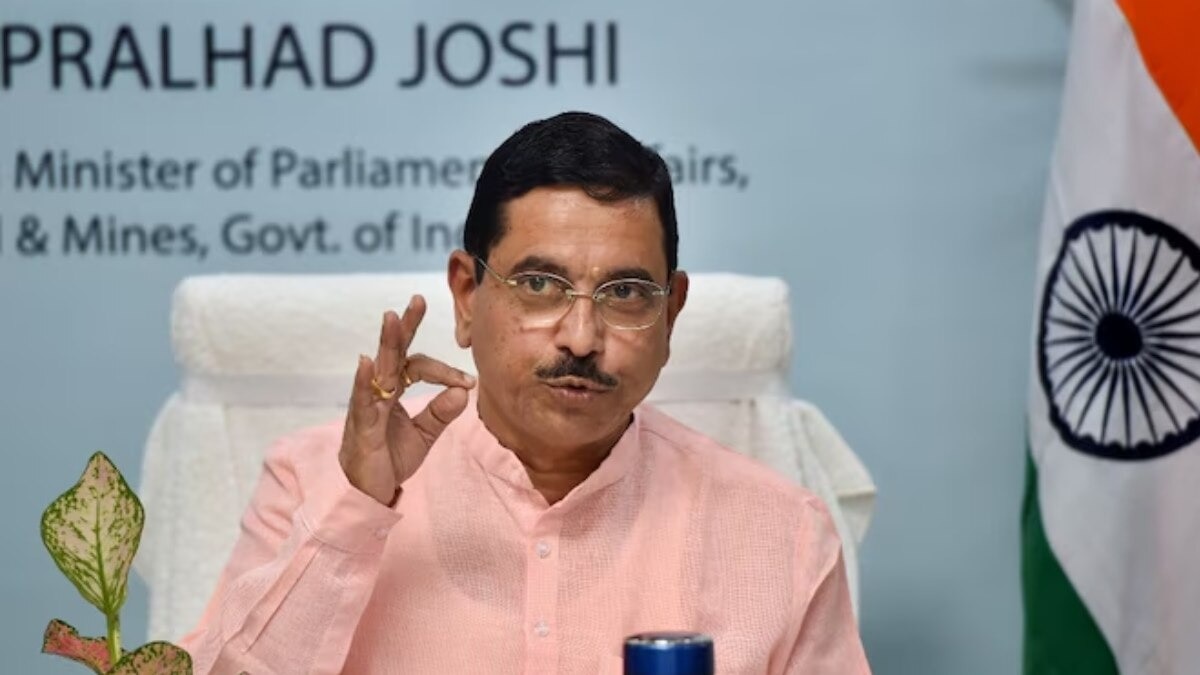
Union Education Minister Pralhad Joshi on Friday urged BRICS countries to work together to deal with common challenges in education, saying issues such as resilience, innovation and sustainability cannot be addressed separately. He was chairing the 13th BRICS Education Ministers' Meeting, which ended with the adoption of a five-point BRICS Education Ministers' Declaration. Joshi said India's chairship was guided by the principles of resilience, innovation, cooperation and sustainability, and reaffirmed India's commitment to a people-centric and humanity-first approach to BRICS cooperation. He said the declaration reflected the collective commitment of BRICS nations to strengthen cooperation across five priority areas in education. Read Full Story Explaining the importance of resilience, Joshi said education systems must be able to withstand disruptions caused by pandemics, economic uncertainty, climate-related challenges and the fast pace of technological change. On innovation, he said education systems cannot remain static. "This is because the world around us is changing rapidly.
Education systems must continue to evolve to meet the aspirations of each new generation and prepare our young people for opportunities that may not even exist today," he said. Stressing collaboration, Joshi said cooperation and sustainability were essential to address shared challenges. "More of us can meet these challenges, but none of us can address them in isolation. The knowledge we create, the technology we develop and the institutions we strengthen must serve not only the present generation but also the generations to come," he said. He added that education systems must prepare young people for emerging opportunities while remaining rooted in human values, and said learners, teachers, researchers and young people should remain at the centre of policymaking and international cooperation. Joshi also underlined the need to preserve and promote traditional and indigenous knowledge systems, saying innovation and heritage complement each other. "The rich civilisational traditions of BRICS nations presented a unique opportunity to preserve traditional knowledge, study it rigorously, and pass on its value to future generations," he said.
The meeting was attended by ministers, senior officials and delegates from BRICS member countries, including Brazil, Russia, China, South Africa, Indonesia, Iran, Ethiopia and the United Arab Emirates, to advance cooperation under the BRICS Education Track. The five priority areas adopted at the meeting included strengthening early childhood care and education and foundational literacy and numeracy. "It was agreed to promote universal and inclusive access to quality ECCE, strengthen school readiness, and encourage the use of age-appropriate digital solutions for early learning," an official said. The second area agreed upon was stronger cooperation in skill development and Technical and Vocational Education and Training. The declaration also noted India's initiative to undertake an International Skill Gap Study, with interested BRICS members taking part voluntarily. The meeting further adopted a proposal to strengthen research, innovation and start-up ecosystems. Under this, BRICS countries will promote joint research, encourage the safe, ethical and human-centred use of artificial intelligence in education, strengthen innovation-led entrepreneurship, and deepen collaboration among higher education institutions, researchers and start-up ecosystems.
 The BriefWire