India steps up border rail push, but much of it stays on paper
Nine years after the Doklam standoff highlighted the strategic premium on rapid military movement in the eastern Himalayas, India is renewing its push for key
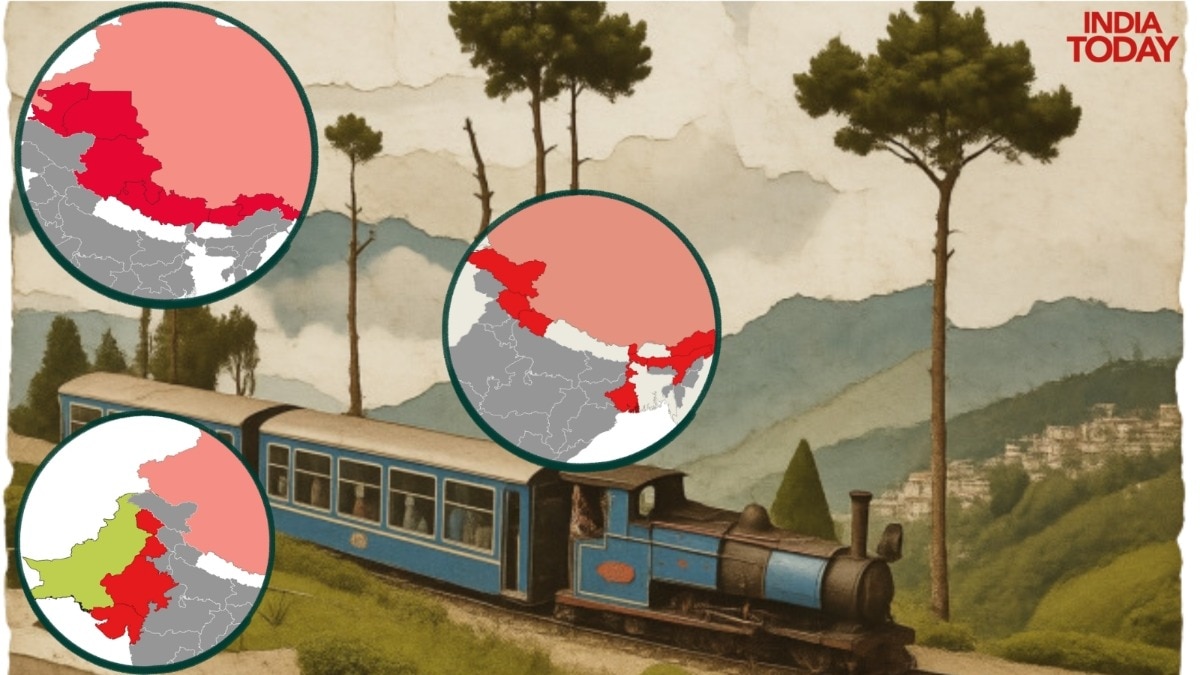
Nine years after the Doklam standoff highlighted the strategic premium on rapid military movement in the eastern Himalayas, India is renewing its push for key railway projects across three border fronts. The military understood the challenge long before the confrontation with China at Doklam in 2017 or the deadly Galwan clash three years later. In 2010, the proposal for 28 strategic railway lines along the northern borders was sent by the Army headquarters to defence ministry. By 2016, however, none of the 28 had moved into construction. Railways considered many commercially unviable; ministries debated who should pay. Strategic necessity repeatedly ran into the economics of building tracks through some of the world’s most difficult terrain. Read Full Story That calculation has changed. An India Today Open Source Intelligence (OSINT) analysis of official railway releases, parliamentary replies, project documents, tenders and government railway plans found 22 Indian rail projects and upgrades along the China-facing arc and 19 along the Pakistan-facing arc since 2021. However, across those 41 Indian projects, only two are completed. Another 11 are in the under-construction stage or have moved into funded execution, while 12 have reached the sanctioned or advanced-design stage. Sixteen remain proposals or recent announcements. This means at least 28 rail-linked projects remain on paper and have not yet materialised into any verifiable physical presence on the ground, while 13 are either operational or under construction. In other words, the map shows momentum, but not parity. Border rail infrastructure is expanding across all three fronts, though much of the network remains in planning, approval or construction stages. In the above graphic, proposal covers announced or survey-stage projects without execution funding; Sanctioned covers projects where the Final Location Survey (FLS), Detailed Project Report (DPR) or design work has advanced, but construction has not begun; Under Construction includes both projects under physical construction and fully funded projects that have entered execution-stage pre-construction; and Completed refers to finished, operational projects. A Bloomberg report this week said India plans to invest as much as 450 billion, or about 45,000 crore, in railway upgrades along its borders with China, Pakistan and Bangladesh, citing people familiar with the plans. Details of the proposed project has not been officially announced. Indian Railways has a capital expenditure of 2.93 lakh crore for 2026-27. Overall, the development or actual network expansion through new tracks, doubling of lines and gauge conversion has about 79,072 crore, or roughly 27% of the budget. The strategy is to build stronger rail arteries behind the border. India's fundamental disadvantage against China is geographical. According to a think-tank Carnegie India study citing Vijay Gokhale, former foreign secretary of India, "The Indian side is also disadvantaged by the north-to-south alignment of the ranges and ridge lines from the main Himalayan watershed, which makes inter-valley (lateral) movement quite difficult in the Middle and Eastern sectors.
 The BriefWire