Myanmar's Min Aung Hlaing seeks legitimacy in Thailand
Bangkok rolled out the red carpet for the Myanmar leader, but experts say the former junta chief still faces major obstacles in his bid for
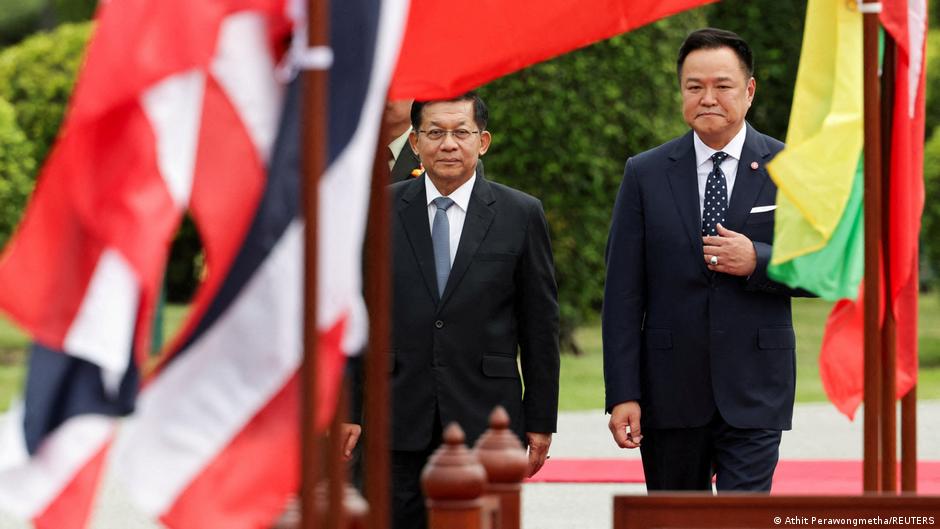
Bangkok rolled out the red carpet for the Myanmar leader, but experts say the former junta chief still faces major obstacles in his bid for regional acceptance. Myanmar's junta chief turned president Min Aung Hlaing wrapped up a two-day visit to Thailand on Friday. His first visit to the neighboring nation as civilian leader was aimed at recasting himself as the leader of a civilian government after years of diplomatic isolation, experts told DW. His reception on landing in Bangkok on Thursday had all the pomp and circumstance befitting a visiting head of state — red carpet, honor guard, blaring national anthems and smiling photo ops with Thai Prime Minister Anutin Charnvirakul. "Naypyidaw equates engagement with acceptance," said Moe Thuzar, head of the Myanmar Studies Program at Singapore's ISEAS-Yusof Ishak Institute, referring to Myanmar's capital. "Min Aung Hlaing is seeking to leverage Naypyidaw's space in bilateral relations with neighbours' specific interests to secure greater acceptance of his administration from external partners." Min Aung Hlaing has pledged to pursue peace and improve ties with the 11-member ASEAN bloc Image: Athit Perawongmetha/REUTERS Since the retired general seized power in a 2021 coup that toppled a democratically elected government, a brutal civil war between the military and armed resistance groups has killed an estimated 100,000 people and displaced well over 3 million. Western countries have imposed several rounds of sanctions on Min Aung Hlaing's regime over alleged war crimes and other human rights abuses, charges the government rejects.
In 2024, the then-chief prosecutor of the International Criminal Court requested an arrest warrant for Min Aung Hlaing himself for crimes against humanity committed against Rohingya Muslims. The Association of Southeast Asian Nations (ASEAN), which traditionally emphasizes non-interference in another member's domestic affairs, has barred him or his foreign minister from attending its leaders' summits. Hoping to break out of its growing isolation, Myanmar held staggered elections in December and January that were widely criticized by the United Nations and Western governments as a sham designed to legitimize continued military rule. The military-aligned Union Solidarity and Development Party won more than 80% of seats, paving the way for parliament to elect Min Aung Hlaing president in April. What is Thailand's role in Myanmar's reengagement? Myanmar's government rejects criticism of the electoral process, saying the elections were part of a transition to civilian rule and a return of power to the people. Since becoming president, Hlaing has paid official visits to India, China, Laos and now Thailand, as Bangkok pushed for peace efforts in Myanmar's civil war and its reengagement with ASEAN. "For Min Aung Hlaing, visiting Thailand is also [about] finding legitimacy in the ASEAN region, because Thailand is a … founder of ASEAN and has [a] big voice in ASEAN," said Wai Yan Phyo Naing, a visiting scholar at Taiwan's Academia Sinica who studies Myanmar. "He can show the [other] ASEAN members that Thailand is treating me like this, Laos already treated me like this.
 The BriefWire