India doesn't endorse comments made at Sheikh Hasina media event, says MEA
The Ministry of External Affairs (MEA) on Friday clarified that the Government of India had no role in a media interaction featuring former Bangladesh prime
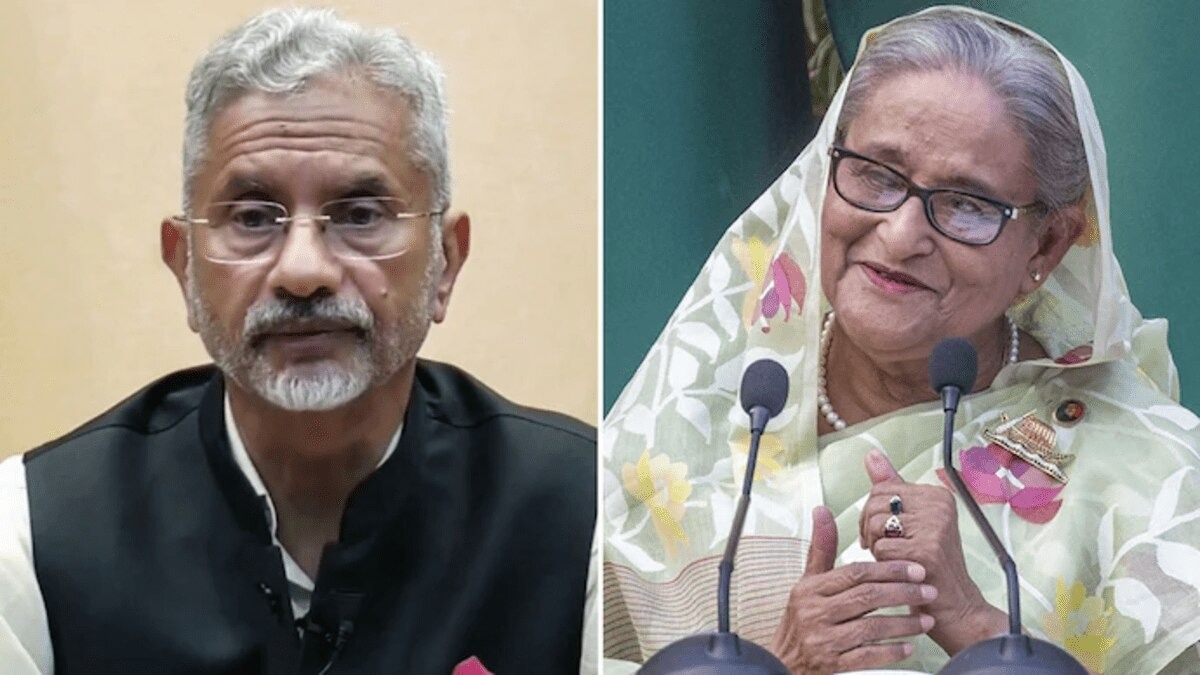
The Ministry of External Affairs (MEA) on Friday clarified that the Government of India had no role in a media interaction featuring former Bangladesh prime Minister Sheikh Hasina on August 5 and said it does not endorse the remarks made during the event. Addressing the issue, MEA spokesperson Randhir Jaiswal said, "The government had no role to play in what was an event by a private media entity, and it does not endorse anything said at the forum, especially with regard to the duly constituted government of Bangladesh." Read Full Story Jaiswal's remarks came in response to questions on Sheikh Hasina's media interaction held on August 5. The MEA reiterated that the event was organised by a private media entity and not by the Government of India. During the media interaction on Wednesday, Hasina declared that she was determined to return to Bangladesh in December to put the country on the "right track" by restoring democracy despite the possibility of imprisonment or a death sentence.
The former Bangladesh prime minister made the remarks during an audio-only virtual press conference, her first public media interaction since fleeing to India on August 5, 2024, following a massive protest. Attendees heard only her voice. "I know, they may put me in jail or kill me. I will go back home to be with my people," Hasina said. She said her return was not about regaining power but about restoring Bangladesh's path of development, secularism, stability and prosperity. "Whatever fate awaits me, I will return to my people. I cannot stay away while my beloved countrymen are suffering," she said. Hasina also ruled out any back-channel negotiations with the Bangladesh Nationalist Party (BNP) government over her return. She demanded that the ban on the Awami League be lifted, political prisoners be released, false cases be withdrawn, freedom of speech and media freedom be restored, and judicial independence be guaranteed. Calling India a "great friend" of Bangladesh, Hasina said New Delhi had always stood by her country in difficult times.
She also appealed to the international community to support the people of Bangladesh in their struggle for democracy, justice and peace, saying the country's crisis could affect regional peace, security, trade and development. Hasina alleged that the July-August 2024 protests that led to the fall of her government were not a spontaneous student movement but were orchestrated by organised groups to create a path to power outside the electoral process. She also said Bangladesh needed national reconciliation and healing but insisted that those responsible for crimes should face justice through due legal process. Last November, a special tribunal in Dhaka sentenced Hasina to death in absentia for alleged crimes against humanity linked to her government's crackdown on student-led protests in 2024. Since the verdict, Bangladesh has urged India to extradite her under the 2013 India-Bangladesh Extradition Treaty. Hasina's son, Sajeeb Wazed Joy, alleged during the media interaction that political killings had been legalised in Bangladesh since August 2024. He claimed Bangladesh had become a failed state and alleged that it had become "another Pakistan" on India's eastern border.
 The BriefWire