How RSS ticked all the boxes that BJP crossed on Gen Z outreach
The Rashtriya Swayamsevak Sangh (RSS) is the ideological fount of the Bharatiya Janata Party (BJP). And when the RSS Sarsanghchalak (chief) speaks, the message inevitably
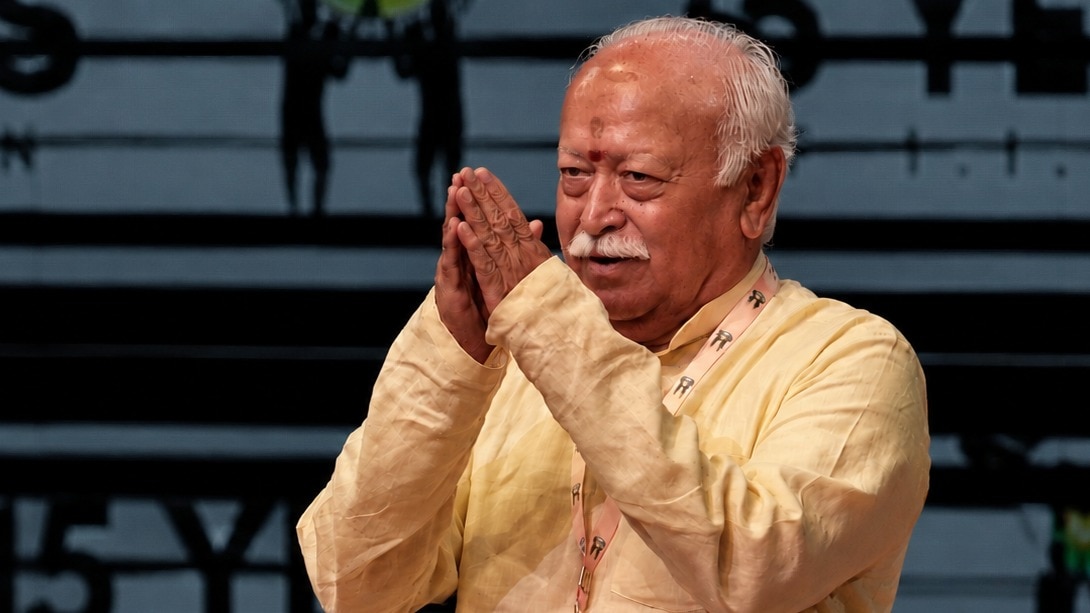
The Rashtriya Swayamsevak Sangh (RSS) is the ideological fount of the Bharatiya Janata Party (BJP). And when the RSS Sarsanghchalak (chief) speaks, the message inevitably travels into the political establishment of the BJP. Sometimes the messages are seen as an endorsement of the BJP's policies, while at times, they are perceived to be hinting at a course correction. So, when RSS chief Mohan Bhagwat interacted with Gen Z and Gen Alpha in Mumbai on Thursday (August 6), the messages between the lines couldn't be missed. Read Full Story Coming weeks after the Cockroach Janta Party (CJP) protests at Jantar Mantar, the timing of the interaction itself was a big signal. So were Bhagwat's responses, choice of language and body language. The reading is that the RSS has clocked it even as the BJP has failed, and is now trying to woo Gen Z. Bhagwat's outreach event comes after weeks of student protests that exposed a widening disconnect between the BJP-led Central government and a generation increasingly willing to question authority, demand answers and take its grievances to the streets. At a gathering of around 2,000 Gen Z and Gen Alpha participants in Mumbai's Nita Mukesh Ambani Cultural Centre, Bhagwat did something that the BJP's political leadership had struggled to do during the protests, which was that, the RSS chief listened without first questioning the patriotism of the protesters. He rarely speaks in English, but on Thursday he did. He also did some Gen Z gestures. He acknowledged their grievances. He defended their right to protest. He rejected the idea that protesting youths should automatically be branded "anti-national". He spoke about unemployment, education, reservation and the dignity of labour. Most importantly, he recognised something fundamental about the new generation: "It asks questions and expects logical answers". That is precisely where the RSS, which is the ideological fountainhead of the BJP, appears to be ticking the boxes that the saffron party crossed out during the agitation led by the Cockroach Janta Party (CJP), which culminated with the resignation of Dharmendra Pradhan as the Union Education Minister on July 25. THE FIRST BO THE DISMISSAL OF GEN Z PROTESTERS The 75-year-old's most politically significant intervention was his refusal to equate dissent with disloyalty. "If Gen Z is protesting, it is not anti-national. They are our people, our next generation,” he said, adding that Gen Z and Gen Alpha are more honest than the present generation and respond to appeals based on patriotism and service.
The contrast with the language used by several BJP leaders during the CJP-led student agitation could hardly be sharper. The protesters were variously described as disruptive, anarchic, politically motivated, influenced by outsiders or part of an "anti-India" ecosystem. Then Union Education Minister Dharmendra Pradhan described the CJP as a "B-team" of disruptive elements like the "dehshatgardon", while BJP President Nitin Nabin attacked the protesters using the very imagery associated with the movement's name during Bihar's Bankipur bypoll, the seat which the BJP lost after 30 years. BJP MP Bansuri Swaraj accused protesters of displaying "anarchy", while party leader Jaiveer Shergill alleged that the NEET agitation had been hijacked by an "Anti-India Anarchist" gang. Union Parliamentary Affairs Minister Kiren Rijiju also questioned the movement's intentions and its alleged links with "anti-India forces". Political parties routinely attack movements that challenge them. But the problem for the BJP was not merely that some of its leaders criticised the protests. It was that the criticism often appeared to begin with an assumption about the protesters rather than an attempt to understand the grievance that brought them onto the streets. Bhagwat, in contrast, began from the opposite premise. THE SECOND BO RIGHT OF PROTESTING AND LESSON OF DEMOCRACY RSS Chief Bhagwat did not say that Gen Z should stop protesting. In fact, he made a point of saying that protest itself can be a form of democratic dialogue. "Protest is also the way of dialogue," he said, arguing that when dialogue does not happen, protest becomes a way of forcing issues back into discussion. That distinction made by the Sarasanghchalak matters. Bhagwat was not endorsing every method used by protesters. He specifically invoked BR Ambedkar, saying that there are ways agitation should be conducted. But even that qualification came after acknowledging that young people were protesting because they faced real problems. "The agitation should be looked at from this perspective and resolved," he said. This is a politically useful distinction for the Sangh. It separates the legitimacy of a grievance from the legitimacy of every action taken during a protest. The BJP's response during the CJP agitation often blurred this very distinction. The result was that a protest that began over examination irregularities and NEET-UG paper leaks increasingly became a broader argument about whether young Indians had the right to question the system at all.
 The BriefWire