Testosterone and fertility: the trade-off men aren't told about
Testosterone is trending in gyms, on social online and in politics. US Defense Secretary Pete Hegseth even wants troops screened for low testosterone. But taking
Testosterone is trending in gyms, on social online and in politics. US Defense Secretary Pete Hegseth even wants troops screened for low testosterone. But taking supplements can shut down the body's natural production. Making sperm is, in large part, what testosterone is for. Which is why it is ironic when a man who doesn't need it starts taking it anyway: his brain registers an unusually high level of the hormone in his blood, concludes his body has made too much, and sends the order to stop. The testes go silent. Sperm production goes off with them. Testosterone is having a moment. It is all over social media, gym culture and wellness forums, sold by online labs, gym contacts and telehealth services, and the information surrounding it ranges from oversimplified to outright dangerous. Men are taking more of it than ever, in pursuit of feeling more like men. In doing so, they may be telling their bodies to stop producing it themselves. Here is what the science says – what testosterone does, who genuinely needs treatment, and what it can cost the men who take it without needing it. How does taking testosterone stop sperm production? Your body regulates testosterone the way a thermostat regulates heat.
When the brain detects abnormally high levels of the hormone in the bloodstream, it sends a signal to the testes to stop producing it naturally. The testes effectively go offline, and because sperm production depends on what happens inside them, that shuts down too. Some men who self-medicate with testosterone push levels more than four times the clinical lower threshold, and the consequences include blood clotting disorders, cardiovascular stress, mood instability and, in some cases, irreversible fertility damage. What's sold as a shortcut to strength and libido can, unsupervised, cost a man his fertility. What are normal testosterone levels by age? Testosterone peaks during puberty, typically between 13 and 15. After that, it declines slowly for the rest of a man's life. A lower level at 40 than at 15 isn't a disorder – its aging. What counts as low testosterone? The threshold that doctors use is 300 nanograms per deciliter of blood. But this threshold comes with a condition: it must be confirmed by at least two blood tests taken at different times of the day because levels fluctuate. Below that number, a doctor may begin to consider treatment. Above 300, there is no clinical basis for intervention.
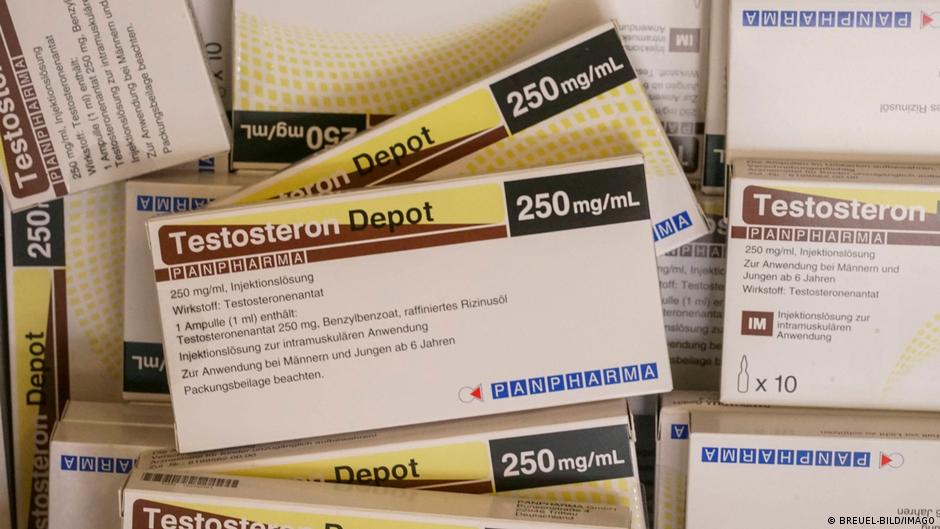
How can you increase testosterone naturally? Before any medical treatment is considered, four key lifestyle factors should be examined: sleep, alcohol consumption, smoking and drug use, and chronic stress. Each of these has a measurable impact on testosterone levels. Addressing them may be all that's needed and carries none of the risks of hormonal therapy. What is testosterone replacement therapy (TRT) and who actually needs it? Testosterone replacement therapy, or TRT, treats a diagnosed hormonal deficiency. It's a legitimate medical procedure – injections, pills, creams – that works for men who need it. But plenty of men taking it don't have that deficiency. Men with normal testosterone levels are increasingly seeking TRT out anyway, not as treatment but as a performance enhancer. They're getting it from unregulated online labs, from gym contacts, from telehealth services that write prescriptions without adequate medical assessment. Can testosterone therapy cause permanent infertility? In some cases, yes. Men who stop taking testosterone are likely to recover their own production within months. But not all of them. Depending on the dose and how long a man has been using, research puts the share who never recover at somewhere between one in ten and one in five.
 The BriefWire