AI Creates Functioning Viruses For First Time: Why Scientists Say It Is Both Promising And Risky
News world AI Creates Functioning Viruses For First Time: Why Scientists Say It Is Both Promising And Risky AI Creates Functioning Viruses For First Time
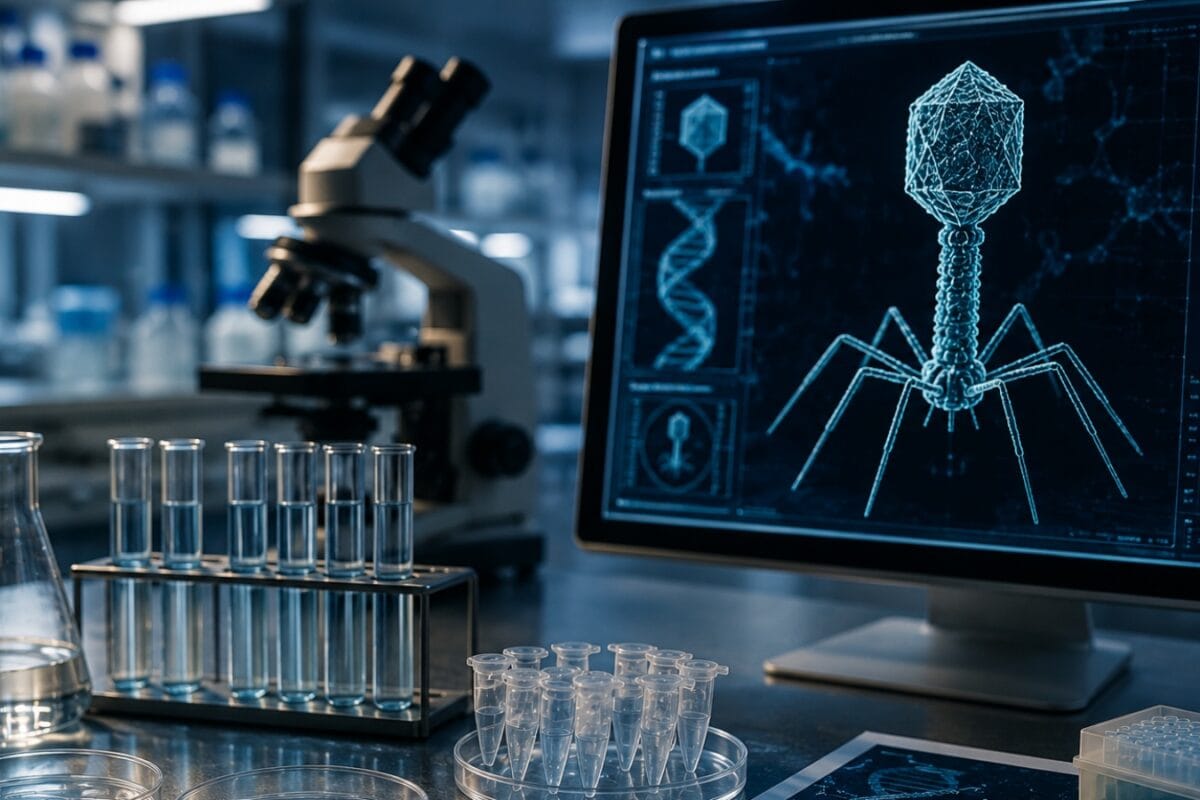
News world AI Creates Functioning Viruses For First Time: Why Scientists Say It Is Both Promising And Risky AI Creates Functioning Viruses For First Time: Why Scientists Say It Is Both Promising And Risky Published By, Last Updated: August 07, 2026, 14:16 IST Scientists created 16 functioning viruses using AI, offering new hope for medicine but also raising fresh biosecurity concerns. Rapid Read The AI-designed viruses are bacteriophages, or phages — viruses that attack bacteria. (AI-generated image) Scientists have used artificial intelligence (AI) to design functioning viruses that do not exist in nature, marking a scientific first and opening up possibilities for new medical treatments. The experiment does not involve a virus that can infect humans. The AI-designed viruses are bacteriophages, or phages — viruses that attack bacteria. But the study has drawn attention because it shows that generative AI can now design an entire viral genome capable of producing a functioning virus. That is where the excitement, and the concern, begins. What Exactly Did Scientists Create? Researchers from Stanford University and the Broad Institute of MIT and Harvard used AI models to generate thousands of possible viral genomes. A genome is essentially the complete set of genetic instructions needed to build and operate an organism or virus. The team used naturally occurring phages as a starting point and then asked AI systems called Evo1 and Evo2 to generate new genetic sequences. According to The Guardian, the models had been trained on genetic data from around two million bacteriophages.
The researchers selected nearly 300 AI-generated genomes and chemically synthesised them in the laboratory. Most did not work. Only 16 produced viable viruses. What Did The AI-Designed Viruses Do? The researchers tested the new phages against E coli bacteria. A mixture of the AI-designed viruses was able to kill strains of E coli that had become resistant to naturally occurring phages. The researchers found that the synthetic-virus cocktail performed better against the bacteria than the viruses used as a natural comparison in the experiment. That is where the medical potential lies. Phages naturally attack bacteria and have been explored as a possible treatment for bacterial infections, particularly as antibiotic resistance becomes a growing problem. The difficulty is that bacteria can also evolve resistance to phages. If AI can quickly design new phages tailored to specific bacteria, researchers believe it could make phage therapy more effective. The authors wrote in Science that their approach “lays out a path for generating adaptive and resilient phage therapies against rapidly evolving pathogens". Can These AI-Made Viruses Infect Humans? No. The viruses created in this experiment infect bacteria, not people. The researchers also took precautions while training the AI. Genetic data from viruses capable of infecting humans, animals or plants was deliberately excluded from the models’ training material in an effort to reduce the risk of generating dangerous designs. Why Are Scientists Talking About Biosecurity? The significance of this experiment is that AI was able to generate the genetic blueprint for a complete functioning virus, raising questions about how such capabilities should be governed as the technology develops.
 The BriefWire