Who Counts As ‘Backward’? Amid Debate On Creamy Layer, A Look At How Founding Fathers Viewed It
News india Who Counts As ‘Backward’? Amid Debate On Creamy Layer, A Look At How Founding Fathers Viewed It Who Counts As ‘Backward’? Amid Debate
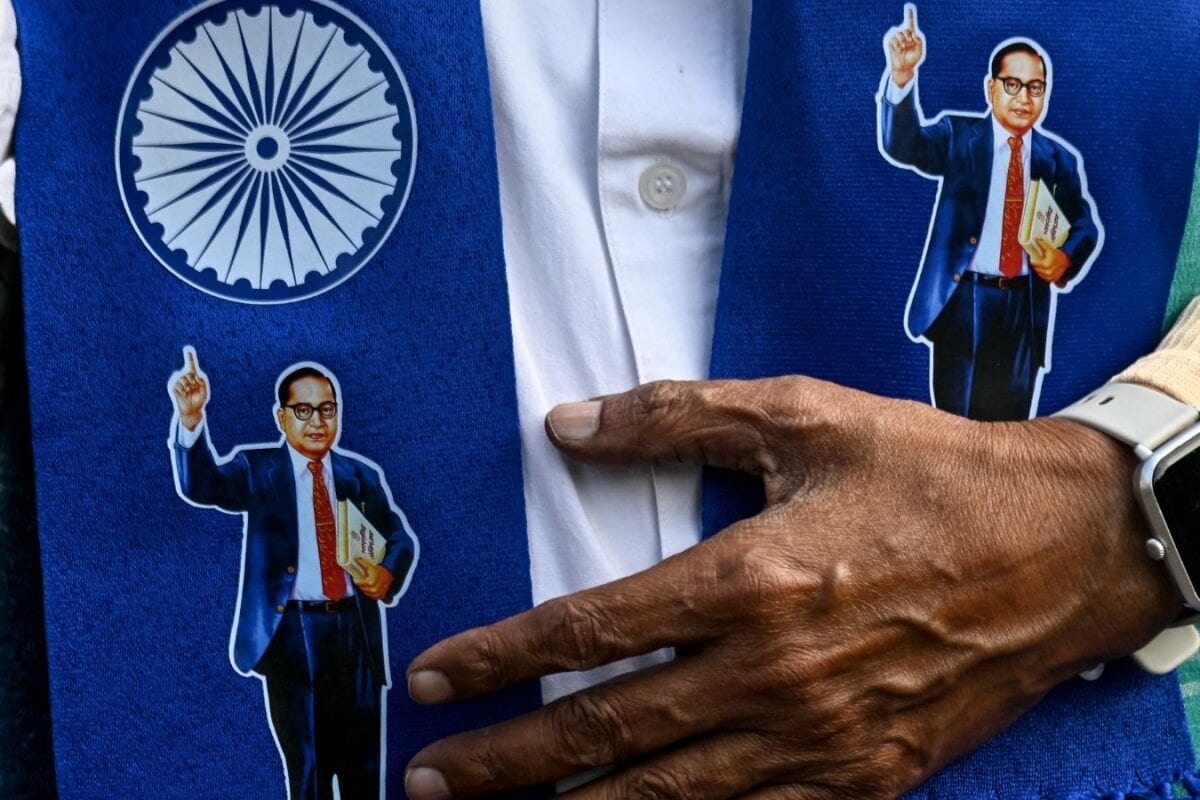
News india Who Counts As ‘Backward’? Amid Debate On Creamy Layer, A Look At How Founding Fathers Viewed It Who Counts As ‘Backward’? Amid Debate On Creamy Layer, A Look At How Founding Fathers Viewed It Published By, Last Updated: August 07, 2026, 13:05 IST As Centre tells Supreme Court that the creamy layer concept does not apply on SCs and STs, it assumes importance to understand how the founding fathers of India viewed the matter. Rapid Read Amid discussions on who should really be considered 'backward', it becomes telling how sticky this conversation is as the founding fathers debated it in Constituent Assembly too. (Image source: AFP) The government on Thursday informed the Supreme Court of India that the concept of a “creamy layer" cannot be extended to the reservation framework for Scheduled Castes (SCs) and Scheduled Tribes (STs). It maintained that this principle has consistently been applied only to Other Backward Classes (OBCs) and not beyond. The submission came in response to a petition that sought the introduction of an income-based sub-quota within the existing reserved categories.
This debate is not entirely new. Similar questions had even come up during debates in the Constituent Assembly of India. Who Are The Backward Classes? On November 30, 1948, members debated Draft Article 10, which allowed reservations in government jobs for “backward classes" not adequately represented in the services of the state. The phrase itself caused confusion and disagreement among members. T. T. Krishnamachari criticised the term as vague and unclear, according a transcript of a podcast on the subject, posted on constitutionofindia.net, an initiative of Centre for Law and Policy Research. He questioned who exactly would qualify as a “backward class." In response, B. R. Ambedkar defended the wording. He said the ambiguity was intentional and that governments should decide who falls within the category. The Assembly eventually accepted this formulation. It became part of Article 16 in the Constitution. However, the lack of clarity soon created problems in practice. In the early 1950s, court rulings struck down some reservation policies framed by state governments.
This prompted the Union government to act. It introduced the First Amendment to clarify the scope of reservations. The amendment allowed special provisions for “socially and educationally backward classes," which were categorised as Scheduled Castes and Scheduled Tribes. This marked a shift from vague wording to more specific categories. By then, Ambedkar’s own position had evolved. As Law Minister, he stated that backward classes were essentially identifiable caste groups. What stands out is what was not included in these debates. Economic criteria alone was never seen as sufficient to define backwardness. Reservations, as shaped through these discussions, were tied to social and educational disadvantage. The current case will test whether that long-standing understanding can change. How, When Was The Creamy Layer Introduced? The “creamy layer" idea emerged in the late 1970s and gained legal force in the early 1990s. It was shaped by the Indra Sawhney v. Union of India judgment, which upheld OBC reservations but said the more advanced sections within them should be excluded.
 The BriefWire