Meet Arya Satheesh: High school student invents plant-based plastic that removes microplastics
How Arya Satheesh's Eco Purge removes microplastics as it naturally breaks down Why Arya Satheesh decided to invent Eco Purge ChatGPT helped her source a
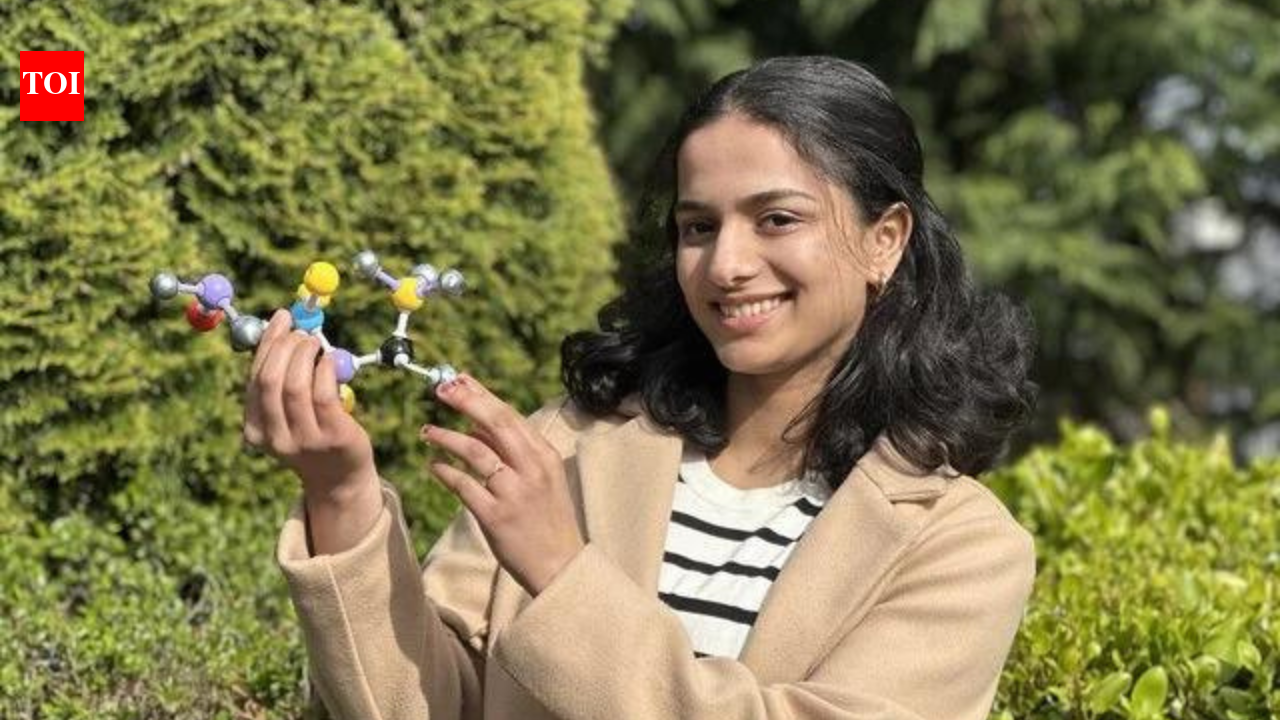
How Arya Satheesh's Eco Purge removes microplastics as it naturally breaks down Why Arya Satheesh decided to invent Eco Purge ChatGPT helped her source a key ingredient Eco Purge won the European title at The Earth Prize 2026 What's next for Arya Satheesh? Eighteen-year-old Arya Satheesh, a high school student from Letterkenny in County Donegal, Ireland, has earned international recognition for inventing Eco Purge, a plant-based biodegradable plastic. The material is designed to help tackle the growing problem of microplastic pollution. As it naturally breaks down, Eco Purge releases specialised enzymes that are designed to help degrade nearby PET-derived microplastics in soil and water. The invention won Satheesh the European regional title at The Earth Prize 2026, one of the world's largest environmental competitions for school students. She also received $12,500 to continue developing her prototype.Satheesh wanted to create more than just another biodegradable plastic.
Her invention, Eco Purge, is made from plant-based materials and is designed to break down naturally after it is thrown away. Under suitable conditions, the material biodegrades in up to two weeks. As it decomposes, it gradually releases specialised enzymes into the surrounding soil or water. These enzymes are designed to help break down nearby PET-derived microplastics, which are tiny plastic particles commonly found in the environment.Unlike most biodegradable plastics that simply disappear after use, Eco Purge is designed to help tackle existing plastic pollution at the same time.The idea grew out of Satheesh's earlier research into microplastic pollution. She had previously developed a smart water monitor that could detect contaminants in drinking water. That project made her realise that identifying pollution was not enough. She wanted to create something that could help solve the problem. Concern over the low global recycling rate also encouraged her to develop a sustainable alternative to conventional plastic.One of the biggest challenges was finding the specialised enzyme needed for Eco Purge.
It was difficult to obtain and far too expensive for a student researcher. Satheesh used ChatGPT to identify companies in Europe and the United States that were working with the enzyme. She then contacted them directly. After several unsuccessful attempts, Kevin O'Connor, director of Ireland's Bioeconomy Research Centre, BiOrbic, helped source enzymes from Denmark and Germany. That support allowed her research to move forward.Eco Purge earned Satheesh the European regional title at The Earth Prize 2026. The competition recognises students developing solutions to environmental challenges. Along with the title, she received $12,500 to improve her invention. The programme also provides mentorship and learning resources to help young innovators turn promising ideas into practical solutions.Researchers have described Eco Purge as an innovative proof of concept. They say it goes beyond replacing conventional plastics by aiming to reduce existing microplastic pollution.
 The BriefWire