Penny for your thoughts? This AI startup will pay you money if you let it read your mind
As AI tools continue to advance, companies are becoming more ambitious about what they can build. Forget automation or AI agents, AI startup Conduit now
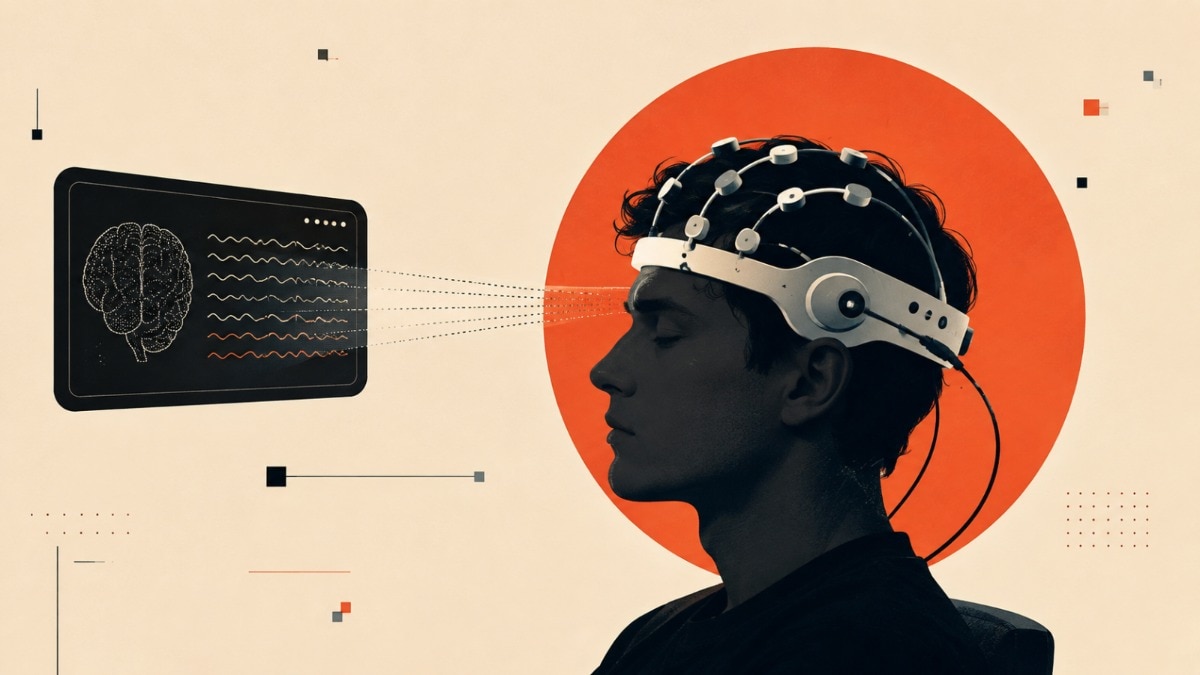
As AI tools continue to advance, companies are becoming more ambitious about what they can build. Forget automation or AI agents, AI startup Conduit now wants to make telepathy into reality, allowing you to operate AI systems just by your thoughts. But to do this, Conduit needs data, specifically human thoughts, and it is willing to pay you to read your mind. Read Full Story Before we take a look at how this would work, do note that former OpenAI researcher Naomi Bashkansky recently joined Conduit. In a blog post, she wrote, “We’re building telepathy: thought-to-text models, trained on non-invasive neural data.” Get paid for your thoughts Conduit is trying to build what it calls “telepathy at scale” through AI systems that can read minds using non-invasive technology.
That is, it does not want to use surgically implanted brain-computer interfaces such as the ones being developed at Neuralink. To gather training data its systems need, the startup is recruiting participants and paying them as much as $55 (roughly Rs 5,200). All you have to do is go to their office and spend two hours talking to AI while wearing a four-pound helmet fitted with electrodes. The only requirement is that you must be able to type without looking at your fingers, and each person can take part in up to 32 sessions. In a December blog post, the company wrote, “Sessions vary.
Some are listening and speaking with an LLM, and some are reading and typing. The goal is to maximise the amount that subjects type or say during the two-hour period, without constraining the topics they discuss.” The idea of machines reading thoughts is not new. In 1908, Columbia University professor Frederick Peterson claimed to have built a “psychometer”, which he said could read people’s thoughts using, among other parts, a mirror, While his device may have been little more than an illusion, present-day researchers believe AI could eventually record and interpret human thoughts through pattern recognition. That broader push has gathered pace in recent months.
In June, Meta unveiled the latest version of its Brain2Qwerty system, designed to translate brain scans into text. The company has described it as an early step towards helping people with neurodegenerative illnesses regain the ability to communicate. Already, those using Elon Musk’s Neuralink have shown that they are able to type on computers and even play games via their thoughts, without even having to lift a finger. Ends
 The BriefWire