Raghav Chadha Wins Praise Again — This Time For Flagging Doctor's Referral Commission
News india Raghav Chadha Wins Praise Again — This Time For Flagging Doctor's Referral Commission Raghav Chadha Wins Praise Again — This Time For Flagging
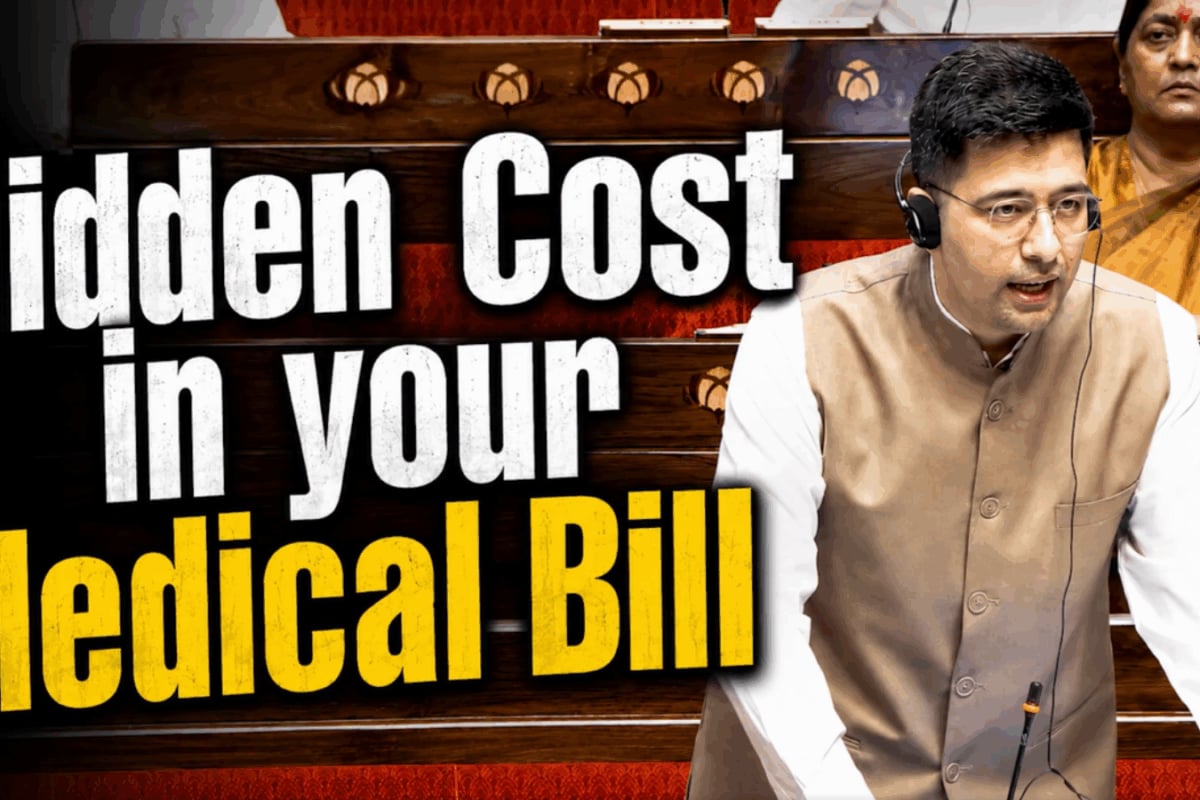
News india Raghav Chadha Wins Praise Again — This Time For Flagging Doctor's Referral Commission Raghav Chadha Wins Praise Again — This Time For Flagging Doctor's Referral Commission Published By, Last Updated: August 07, 2026, 10:29 IST Raghav Chadha's Rajya Sabha remarks on doctor-diagnostic kickbacks have reignited a decade-old debate — and X users want action, not words, from his own BJP government. BJP MP Raghav Chadha said patients often end up bearing the cost of this informal commission economy, sometimes inflating medical bills by 15-20%. BJP MP Raghav Chadha raised the issue of “referral incentives" and “cut money" arrangements between doctors and diagnostic centres in the Rajya Sabha, months after drawing praise for his push on affordable airport tea. Chadha said patients often end up bearing the cost of this informal commission economy, sometimes inflating medical bills by 15-20%. Chadha described a structured, almost institutionalised system: a set commission rate, a designated agent, and referral fees — often around Rs 3,000 per patient — booked by diagnostic centres as a “marketing expense" in their accounts. In sophisticated language, he said, this goes by the term “doctor’s referral commission." He urged patients to watch for red flags, including a pattern of repeated, seemingly unnecessary tests. In Parliament today, I spoke on the “cut money" arrangement between some doctors and diagnostic centres/ pathology labs.Diagnostic centres call it "marketing expense." Doctors call it "referral commission." All gets added to Patient's hospital bill. A silent transaction that… pic.twitter.com/Fi2CCfyGfc — Raghav Chadha (@raghav_chadha) August 6, 2026 The remarks quickly found a real-world anecdote attached to them. An X user, @VIKASKUMAR1969, responded to Chadha’s post citing his own experience: he claimed he paid Rs 20,000 in cash to a doctor’s assistant during his wife’s gallbladder surgery at a West Bengal hospital a year ago, allegedly after being told the government’s health scheme covered only that amount of the actual cost. Is This Actually A New Issue? No — and that’s precisely what makes Chadha’s remarks land differently than a fresh exposé might.
The practice, often called “cut practice" within the medical community, has been documented and debated for well over a decade. A Times of India report from 2014 noted that the debate intensified after the British Medical Journal (BMJ) published an article by Dr David Berger, an Australian physician who had volunteered at a small charitable hospital in the Himalayas. Berger wrote that referring patients for tests like ECGs at private clinics routinely attracted kickbacks of 10-15% to the referring doctor, and described a case of a patient with no structural heart disease who was needlessly sent for an echocardiogram every three months, per TOI. The same report cited Dr Samiran Nundy, then chairman of surgical gastroenterology at Sir Ganga Ram Hospital, who wrote in a BMJ editorial that corruption ran through Indian healthcare delivery “starting with capitation fees for entry into medical colleges." Nundy described “facilitation charges" of Rs 1-2 lakh for referrals tied to expensive procedures like organ transplants, and said hospital financial officers sometimes pressed doctors to justify their salaries against revenue targets — creating what he called a “temptation" toward unnecessary CT scans, MRIs, caesarean sections, and hysterectomies. How Openly Has This Been Acknowledged, Even By Hospitals? More openly than one might expect for something technically prohibited. The 2014 TOI report noted that Kokilaben Dhirubhai Ambani Hospital in Mumbai had told the Maharashtra Medical Council, in writing, that it offered doctors incentives to refer patients — reportedly ranging from Rs 1 lakh for 40 annual admissions to Rs 2.5 lakh for 75. Dr MK Mani, a senior nephrologist at Apollo Hospital Chennai, told TOI the practice was “pervasive and openly done," adding that a formal complaint he filed with the medical council in 1995 resulted in no action. Dr Sanjay Nagral of Jaslok Hospital, Mumbai, offered a structural explanation, telling TOI the phenomenon was tied to how intensely private healthcare providers compete for market share, unlike salaried, nationalised systems such as the UK’s NHS. Did The Medical Fraternity Ever Push Back Publicly?
 The BriefWire