US Midterms: The Democratic Left Is Gaining Ground. Can It Beat Republicans In November?
News world US Midterms: The Democratic Left Is Gaining Ground. Can It Beat Republicans In November? US Midterms: The Democratic Left Is Gaining Ground. Can
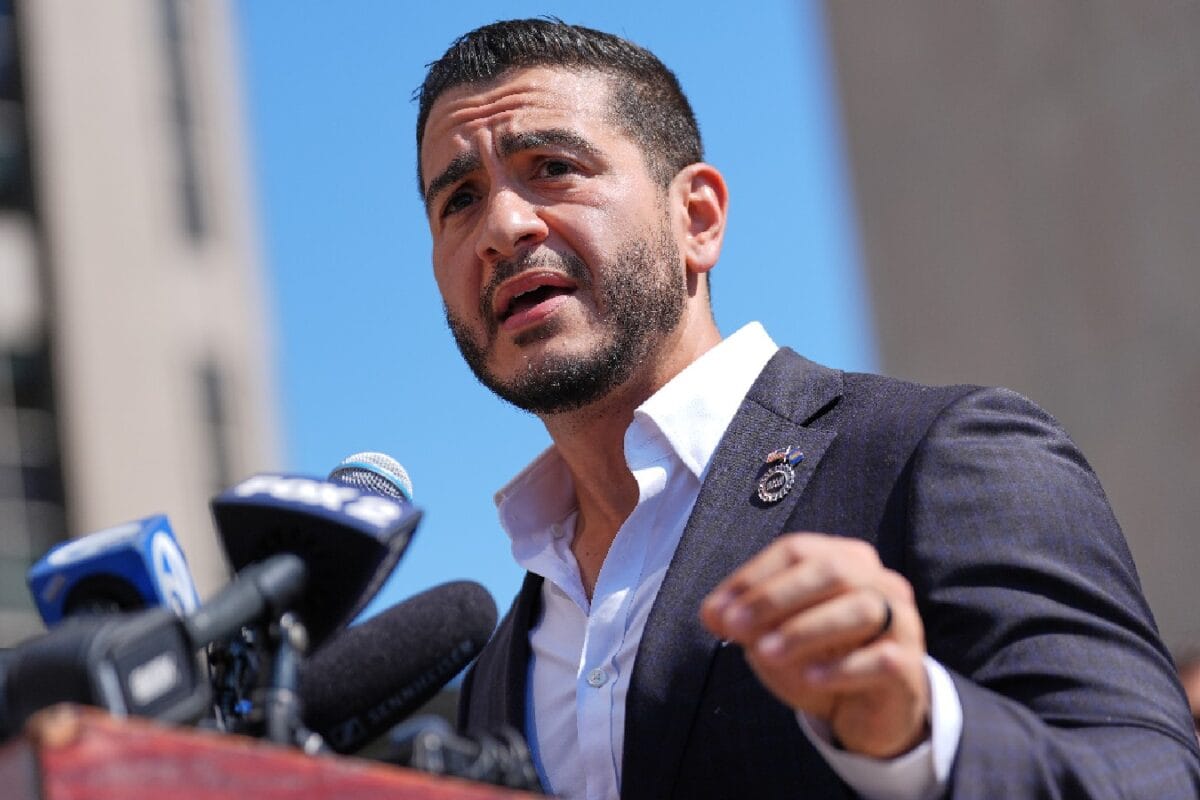
News world US Midterms: The Democratic Left Is Gaining Ground. Can It Beat Republicans In November? US Midterms: The Democratic Left Is Gaining Ground. Can It Beat Republicans In November? Published By, Last Updated: August 07, 2026, 09:44 IST Abdul El-Sayed’s Michigan win marked a breakthrough for the Democratic left, but his narrow margin also exposed the coalition-building challenge ahead. Progressive Democrat Abdul El-Sayed defeated Haley Stevens in Michigan's Democratic Senate primary and will face Republican Mike Rogers in the November election. A string of primary victories has strengthened the American left’s position within the Democratic Party. Progressive and democratic socialist candidates are no longer winning only in a handful of deep-blue urban constituencies; they are beginning to compete across broader electorates and in politically important states. The latest breakthrough came in Michigan, where Abdul El-Sayed won the Democratic Senate primary. But the November midterm elections will pose a more difficult question: can left-wing candidates who succeed among Democratic voters also build coalitions capable of defeating Republicans? The answer will help determine whether the left’s growing influence amounts to an internal Democratic shift or the emergence of a wider electoral force. What Did The Latest Primaries Show? Democratic primaries held in Michigan, Washington, Virginia, Kansas and Missouri reflected the continuing ideological contest within the party. Several of the races will feed directly into November contests that could influence control of the House and Senate. El-Sayed secured the most important progressive victory by winning the Democratic Senate nomination in Michigan. Donavan McKinney defeated incumbent Congressman Shri Thanedar in Detroit, while William Lawrence won the Democratic nomination in Michigan’s closely divided seventh congressional district. The results continued a run of Democratic primary victories for progressive candidates, following earlier successes in New York and Colorado, including Zohran Mamdani’s win in New York City. But the latest contests did not amount to a progressive sweep. Some left-wing candidates won important nominations, while others either fell short or performed less strongly than expected.
Why Was El-Sayed’s Victory So Closely Watched? Michigan was the most significant test because it is a swing state that US President Donald Trump won in 2024 and because its Senate contest could affect which party controls the chamber. El-Sayed faced moderate Congresswoman Haley Stevens, who was backed by Michigan Governor Gretchen Whitmer and Senate Democratic leader Chuck Schumer. Pre-election polling had shown El-Sayed with a firm lead, raising expectations of a comfortable victory. Instead, the contest was exceptionally close. El-Sayed won 48.5% of the vote against Stevens’s 47.5%, according to the Associated Press. The result was still a major victory for the Democratic left, but its narrowness exposed the challenge ahead. Stevens retained strong support among moderate Democrats, leaving El-Sayed with the task of winning over voters who preferred her political positioning or her views on Israel. He will face former Republican Congressman Mike Rogers, who narrowly lost Michigan’s other Senate race two years ago. How Far Has The Democratic Left Expanded? For much of the past decade, progressive candidates built influence through city councils, state legislatures and congressional seats in areas where Democrats were already dominant. El-Sayed’s statewide win suggests that their reach is widening. McKinney’s victory over an incumbent backed by groups aligned with the American Israel Public Affairs Committee, or Aipac, also showed that well-funded outside support does not necessarily protect established candidates. Lawrence’s result offered another important test. The Sunrise Movement co-founder won the nomination in Michigan’s seventh congressional district, one of the most closely divided seats in the country. His primary victory, however, came against a divided field of moderate Democrats. In November, he will need to persuade a much wider electorate to support his progressive politics. Where Did Progressives Fall Short? The results also demonstrated that the left’s momentum is not uniform. In Missouri, former Congresswoman Cori Bush failed in her attempt to win back the seat she lost two years ago.
 The BriefWire