Not 'Anti-National', Just Unheard: Why Mohan Bhagwat Is Rewriting The RSS Script For Gen Z
News india Not 'Anti-', Just Unheard: Why Mohan Bhagwat Is Rewriting The RSS Script For Gen Z Not 'Anti-', Just Unheard: Why Mohan Bhagwat Is
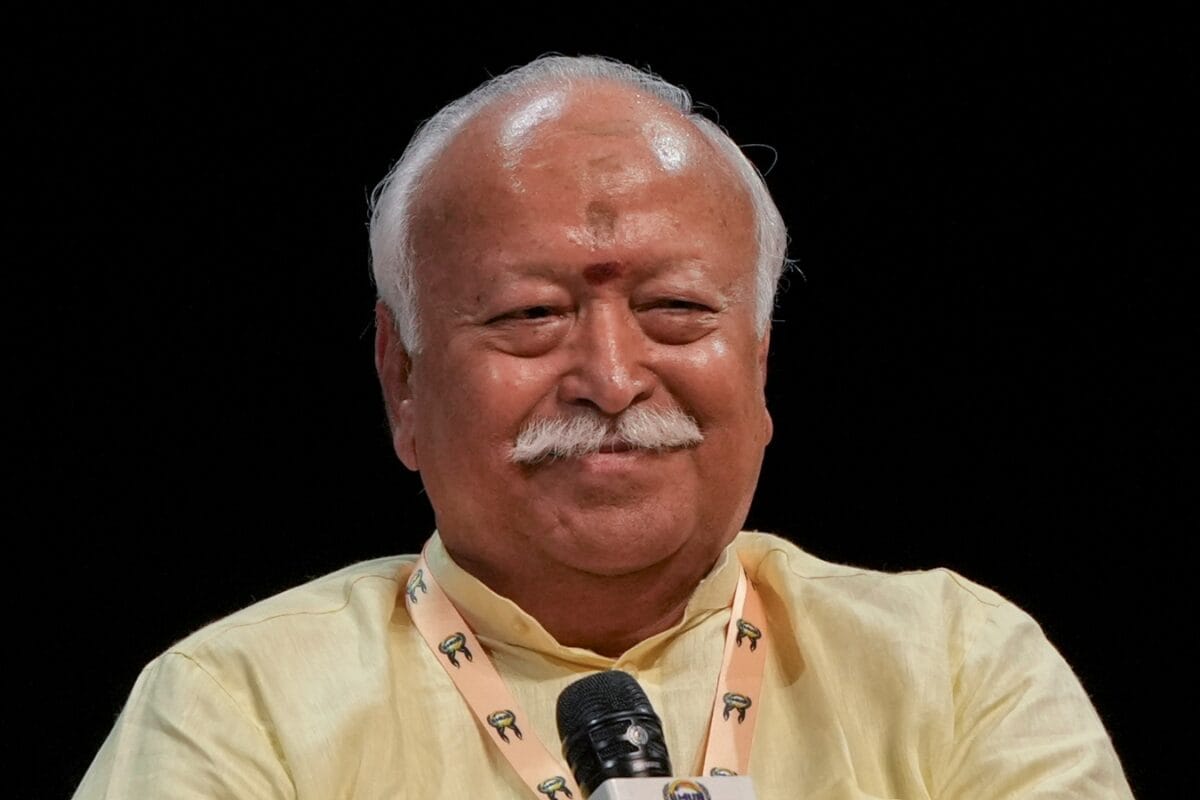
News india Not 'Anti-', Just Unheard: Why Mohan Bhagwat Is Rewriting The RSS Script For Gen Z Not 'Anti-', Just Unheard: Why Mohan Bhagwat Is Rewriting The RSS Script For Gen Z Reported By, Last Updated: August 07, 2026, 08:04 IST The Sangh appears to recognise that Gen Z cannot be approached through authority alone. They expect dialogue, transparency and participation. Rapid Read RSS Chief Mohan Bhagwat addressing the Gen Z in Mumbai. (PTI) For decades, the Rashtriya Swayamsevak Sangh’s public messaging on protests has largely revolved around discipline, nationalism and social order. On Thursday, however, RSS chief Mohan Bhagwat introduced a notable nuance. Speaking directly to Gen Z and Gen Alpha, Bhagwat did something unusual. He legitimised protest, not as an act of rebellion, but as an extension of democratic dialogue. His message was carefully layered. “In democracy, protest is also a method to build consensus," he said, adding that when dialogue fails, agitation becomes a legitimate constitutional course. But the purpose of an ‘andolan’, he argued, must be to create consensus, not division. That distinction matters. Coming at a time when student protests and youth mobilisations are increasingly viewed through political and ideological lenses, Bhagwat consciously separated dissent from disloyalty.
He did not dismiss the generation or their anxiety and angst. Instead, his clearest political-social-cultural message was perhaps this: “If Gen Z engages in agitation, they are not anti-national. They need to be engaged with and there must be a scope for dialogue." From ‘Andolan’ To Dialogue Bhagwat’s formulation marks a calibrated departure from the binary that has increasingly dominated political discourse over the last decade, where protests risk being branded as disruptive or politically motivated. Instead, he framed dissent as a democratic conversation. He acknowledged that today’s youth ask questions, demand logical answers and seek emotional engagement rather than blind obedience. Contrasting his own generation with today’s, Bhagwat said that earlier generations accepted what elders said, while Gen Z debates, questions and seeks reasoning, calling it India’s tradition of shastrarth, not confrontation. Equally significant was what he refused to do. Asked about police action, including allegations of lathi-charge and pellet firing, Bhagwat declined to pass judgement without facts. Yet he added that if asked to believe one side without evidence, “I will trust Gen Z." That statement is politically and socially loaded. It signals empathy towards protesting youth while avoiding direct criticism of governments. A Strategic Reset Before 2029 However, it is not merely about one protest.
 The BriefWire