Can't Exclude SC/ST Creamy Layer From Quotas, Centre Tells SC, Opposes Income-Based Sub-Quota Plea
News india Can't Exclude SC/ST Creamy Layer From Quotas, Centre Tells SC, Opposes Income-Based Sub-Quota Plea Can't Exclude SC/ST Creamy Layer From Quotas, Centre Tells
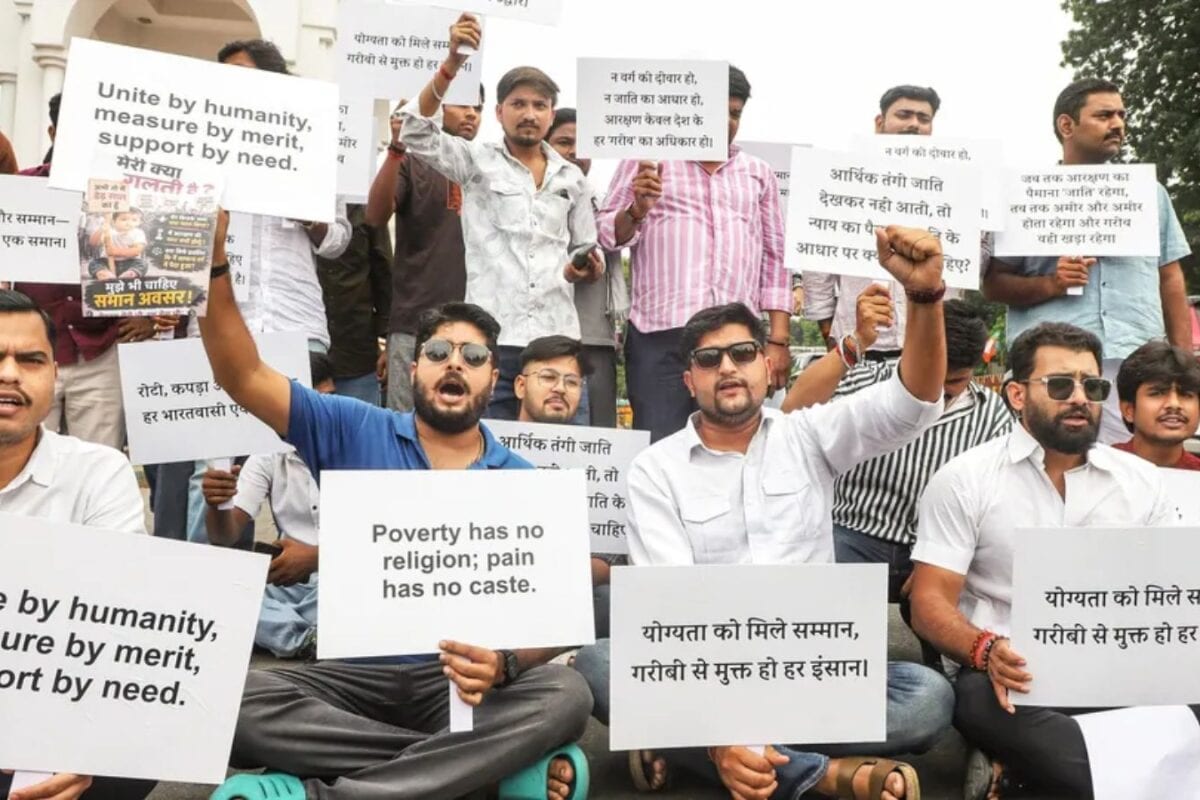
News india Can't Exclude SC/ST Creamy Layer From Quotas, Centre Tells SC, Opposes Income-Based Sub-Quota Plea Can't Exclude SC/ST Creamy Layer From Quotas, Centre Tells SC, Opposes Income-Based Sub-Quota Plea Published By, Last Updated: August 07, 2026, 07:57 IST The affidavit was submitted in response to a batch of petitions filed by Ramashankar Prajapati, advocate Ashwini Upadhyay, Samta Andolan Samiti and others. Rapid Read A group of protesters hold placards at Hazratganj Crossing in Lucknow, demanding the implementation of a reservation policy based on economic criteria. (ANI) The Union government has told the Supreme Court that reservations for Scheduled Castes (SCs), Scheduled Tribes (STs) and Other Backwards Classes (OBCs) are rooted in historical and social disadvantage and cannot be restructured solely based on income. In a counter affidavit filed through the Department of Social Justice and Empowerment, the Centre opposed a plea seeking an income-based sub-quota within reserved categories. It also rejected demands to apply the “creamy layer" principle to SCs and STs, arguing that the doctrine has, according to established Supreme Court jurisprudence, been limited to OBCs. The affidavit was submitted in response to a batch of petitions filed by Ramashankar Prajapati, advocate Ashwini Upadhyay, Samta Andolan Samiti and others. The petitioners have sought directions to introduce income-based preferences within SC, ST, OBC and Economically Weaker Sections (EWS) categories and to create sub-classifications to prioritise economically weaker beneficiaries within these groups.
According to the Centre, the petitions effectively ask the judiciary to redesign the reservation framework, a policy matter that falls within the executive and legislative sphere. It argued that such changes cannot be directed by the court through a writ of mandamus. Constitution Does Not Permit Income-Based Alteration Of Lists The government further contended that Articles 341, 342 and 342A of the Constitution do not permit changes to the notified lists of SCs, STs and Socially and Educationally Backward Classes (SEBCs) based on income alone. It maintained that these categories are identified through historical and social indicators, including caste, tribe and social backwardness, rather than economic status by itself. Explaining its position, the Centre said the criteria for identifying backward classes have developed through constitutional provisions, recommendations of bodies such as the Kaka Kalelkar and Mandal Commissions, parliamentary enactments and judicial decisions. While economic hardship may be a relevant factor, it is not the sole basis for determining backwardness, particularly for SCs and STs whose inclusion stems from long-standing discrimination, untouchability, social exclusion and geographical isolation. The affidavit also stressed that only Parliament has the authority to amend the Presidential lists of Scheduled Castes and Scheduled Tribes under Articles 341(2) and 342(2).
 The BriefWire