After quitting TMC, why Murshidabad MPs are keeping equal distance from NDA
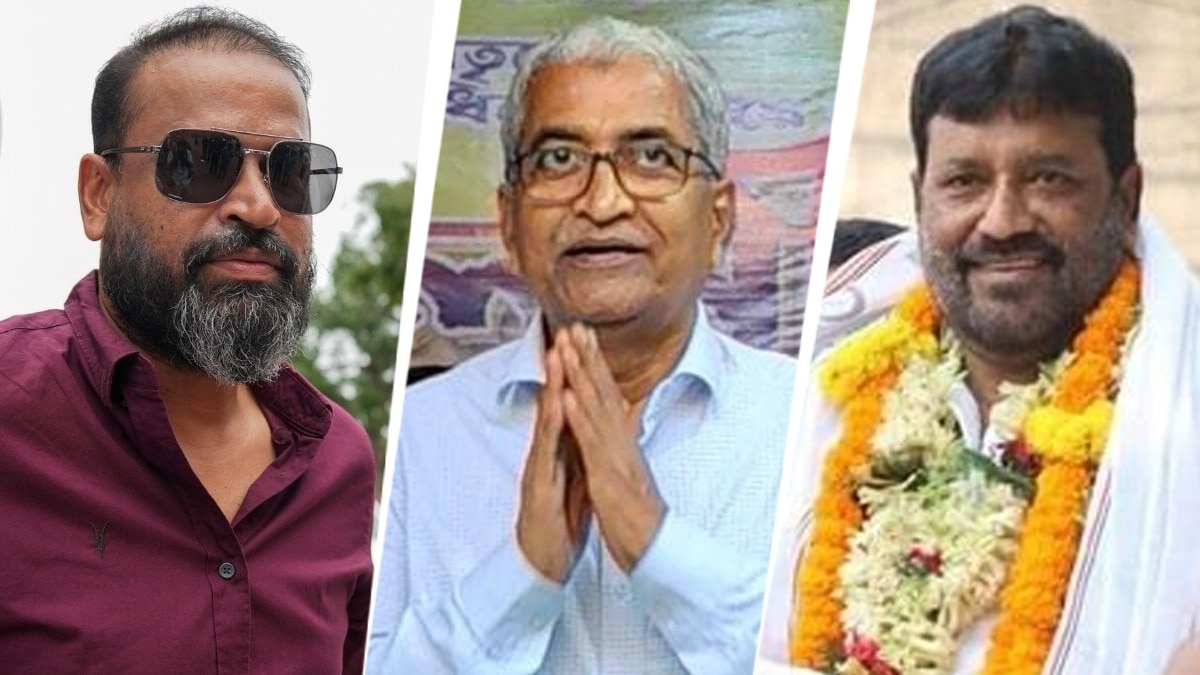
West Bengal's political landscape is witnessing a subtle yet significant shift, driven by three parliamentarians from Murshidabad – Abu Taher Khan, Khalilur Rahaman and Yusuf
West Bengal's political landscape is witnessing a subtle yet significant shift, driven by three parliamentarians from Murshidabad – Abu Taher Khan, Khalilur Rahaman and Yusuf Pathan. After leaving the Trinamool Congress (TMC) along with a larger breakaway faction to join the Nationalist Citizens Party of India (NCPI), the three leaders have refused to formally align with the BJP-led Democratic Alliance (NDA) at the Centre, signalling a calculated political strategy. Read Full Story Instead of committing to the ruling coalition, the trio has adopted a posture of measured detachment. They have stayed away from high-level NDA parliamentary meetings in New Delhi while selectively engaging with state and central leadership on administrative matters. Their strategy of deliberate political neutrality became evident when they were questioned about their long-term political plans.
Speaking to India Today, both Abu Taher Khan and Khalilur Rahaman declined to comment on possible political alliances. "We had two topics to discuss with the Home Minister, cannot say anything on any other issue," Jangipur MP Khalilur Rahaman said, indicating that the meeting was limited to specific administrative concerns rather than broader political alignments. All three NCPI MPs met Union Home Minister Amit Shah over the issue of the removal of loudspeakers from mosques in West Bengal. By restricting their engagement to constituency and governance-related matters, including voter list revisions and local administrative issues, the three MPs appear to be avoiding perceptions of ideological alignment while continuing to pursue local concerns. Their refusal to formally integrate into the BJP-led central coalition carries wider political implications for West Bengal.
Murshidabad remains one of the state's most demographically sensitive regions. For parliamentarians representing minority-majority constituencies, a formal alliance with the BJP could risk electoral alienation at the grassroots level. Their cautious approach suggests that local demographic realities continue to influence political decision-making despite developments at the national level. The emergence of an issue-focused subgroup within the 20-member NCPI contingent also reflects the challenges of maintaining a unified rebel bloc in West Bengal. While national parties often seek to consolidate breakaway factions, individual MPs appear to be prioritising political survival in their respective constituencies over collective party positioning. By maintaining communication with both the Centre on policy-related demands and the West Bengal administration on developmental issues, the three lawmakers have adopted an issue-based approach rather than committing to a fixed political alignment.
 The BriefWire