Heir Apparent To Liability? Why Revolt In TMC Is About Abhishek Banerjee, Not Mamata
Heir Apparent To Liability? Why Revolt In TMC Is About Abhishek Banerjee, Not Mamata Written By, Last Updated: June 04, 2026, 11:09 IST The issue
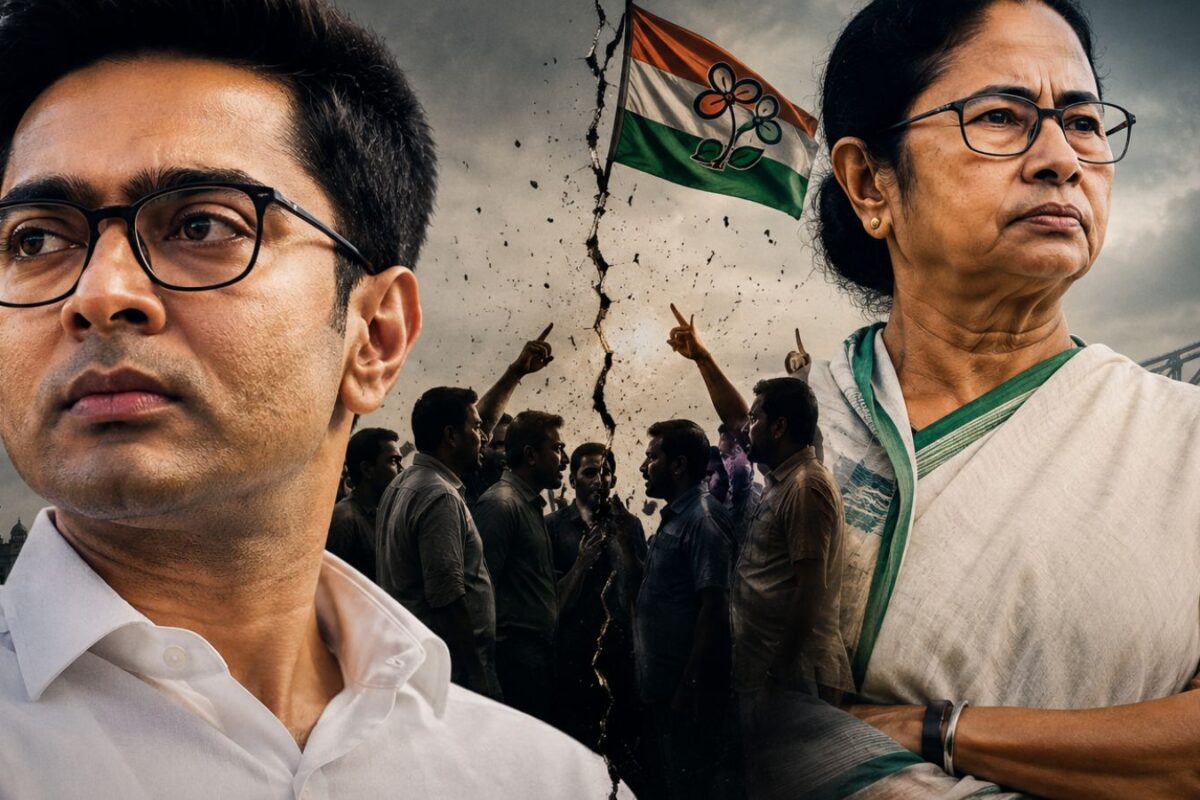
Heir Apparent To Liability? Why Revolt In TMC Is About Abhishek Banerjee, Not Mamata Written By, Last Updated: June 04, 2026, 11:09 IST The issue is not simply personal rivalry. It is also about access, influence and relevance in a party where succession planning, once unspoken of, is now impossible to ignore Rapid Read The most striking aspect of the ongoing crisis is that rebels have gone out of their way to avoid criticising Mamata Banerjee. (AI-Generated Image) For nearly a decade, Abhishek Banerjee’s rise within the Trinamool Congress appeared inevitable. As Mamata Banerjee’s nephew, one of the party’s most recognisable faces and the architect of several election campaigns, Abhishek was widely seen as the natural political heir to West Bengal’s ruling establishment. But the rebellion now unfolding inside the TMC has exposed an uncomfortable reality: while many leaders continue to accept Mamata Banerjee’s authority unquestioningly, a growing section appears unwilling to accept Abhishek as her successor. The split that erupted into public view after senior leaders Ritabrata Banerjee and Sandipan Saha challenged the party leadership is being described by several observers not as a revolt against Mamata, but as a revolt against the succession plan that many believe centres around Abhishek. Not A Revolt Against Mamata The most striking aspect of the ongoing crisis is that rebels have gone out of their way to avoid criticising Mamata Banerjee. ALSO READ | Mamata’s Real Crisis Isn’t 60 Rebel MLAs. It’s The 17 Who Could Reshape Bengal Politics News18 had also reported on Wednesday that dissenting leaders have repeatedly asserted that they remain loyal to Mamata and have no intention of challenging her leadership. Their objection, they suggest, is directed at a small leadership circle around Abhishek Banerjee and what they perceive as the growing concentration of power in his hands. This distinction became even clearer after rebel leader Ritabrata Banerjee publicly claimed support from dozens of MLAs while simultaneously insisting that Mamata Banerjee should continue leading the party.
The message was unmistakable: the battle is over succession and control, not over the party chief herself. For many veterans, Mamata remains synonymous with the TMC. Challenging her would amount to political suicide. Challenging Abhishek, however, is seen as a fight over the party’s future. The Rise Of The Crown Prince Abhishek’s ascent has been one of the most significant developments in Bengal politics over the last decade. From being elected to the Lok Sabha from Diamond Harbour in 2014 to becoming the party’s national general secretary, he steadily expanded his influence across both the organisation and the government. ALSO READ | ‘Chief Adviser And Guide’: Has Mamata Lost The Trinamool Congress Party She Had Built? News18 had reported earlier how Abhishek gradually emerged as a power centre within the TMC, often handling organisational matters, election strategy and candidate selection. His growing role was particularly visible during the 2021 assembly elections when the party successfully resisted the BJP’s aggressive challenge. Over time, many within the party came to view him not merely as Mamata’s nephew but as the leader-in-waiting. However, history has often served as a reminder of the fact that political inheritance is rarely uncontested. The ‘Diamond Harbour Model’ And The New Power Structure Abhishek’s supporters point to what has come to be known as the “Diamond Harbour Model" as evidence of his administrative and organisational capabilities. According to India Today, the constituency represented by Abhishek has been showcased by party strategists as a template for governance and welfare delivery. Ahead of the 2026 assembly election, the model had increasingly been projected as proof of a younger leadership style focused on technology, data and direct delivery mechanisms. Abhishek also cultivated an image distinct from traditional TMC politics. He often spoken about transparency, internal accountability and generational change. Party insiders had said he enjoys significant support among younger leaders and workers who believe the TMC must modernise to remain electorally dominant.
But it is exactly these efforts that may have made the old guard wary of Mamata’s heir apparent. Why The Old Guard Is Uneasy Several reports suggest that the current unrest reflects deeper tensions that have been building for years. ALSO READ | Ritabrata Once Saw Lenin In Mamata Banerjee, Now He Is Driving A TMC ‘Bolshevik Revolution’ Many senior leaders who helped build the TMC alongside Mamata Banerjee reportedly feel sidelined by the emergence of a younger leadership ecosystem centred around Abhishek. The increasing role of consultants, election managers such as I-PAC and data-driven campaign structures has also altered traditional power equations within the party. The Indian Express, quoting senior leaders, reported that dissent had been brewing over organisational decisions, appointments and the perception that key decisions increasingly flowed through channels associated with Abhishek’s camp. The issue is not simply personal rivalry. It is also about access, influence and relevance in a party where succession planning was once an unspoken subject but is now impossible to ignore. The Shadow Of Past Controversies Abhishek’s political journey has also been marked by repeated controversies. Over the years, opposition parties have targeted him over various corruption allegations, including in the coal and school recruitment cases. While Abhishek has consistently denied wrongdoing and accused central agencies of political vendetta, the investigations have nevertheless provided ammunition to his critics. Within the TMC, some leaders privately worry that making Abhishek the unquestioned face of the party’s future could hand the opposition an easy target. Can Mamata Hold The Party Together? The immediate challenge for Mamata Banerjee is preventing organisational fissures from widening. ALSO READ | As TMC Faces Headwinds, The Question Grows: Who Still Stands With Mamata? Historically, she has managed internal rebellions through a combination of authority, negotiation and strategic accommodation. Most political observers believe that as long as Mamata remains active, no rival faction can seriously threaten her position.
The larger question, however, concerns what happens after her. For years, the assumption inside Bengal politics was that Abhishek Banerjee’s succession was merely a matter of timing. The current rebellion suggests that this transition may be far more contested than previously believed. The irony is striking. Abhishek remains one of the TMC’s most visible leaders, arguably its strongest campaigner after Mamata herself, and the politician many supporters view as the party’s future. Yet he has also become the focal point of the most serious internal challenge the party has faced in years. The crisis therefore is not about whether Mamata Banerjee still controls the TMC. Few doubt that she does. The real question is whether the party is ready to accept the future she appears to have in mind. News18 Newsletter Handpicked stories, in your inbox A newsletter with the best of our journalism submit About the Author Apoorva Misra Apoorva Misra is News Editor at News18.com with over nine years of experience. She is a graduate from Delhi University's Lady Shri Ram College and holds a PG Diploma from Asian College of Journalism,... Read More First Published: June 04, 2026, 11:09 IST News explainers Heir Apparent To Liability? Why Revolt In TMC Is About Abhishek Banerjee, Not Mamata Disclaimer: Comments reflect users’ views, not News18’s. Please keep discussions respectful and constructive. Abusive, defamatory, or illegal comments will be removed. News18 may disable any comment at its discretion. By posting, you agree to our Terms of Use and Privacy Policy Loading comments...
 The BriefWire