The Mata Hari affair: Courtesan, spy, legend
Regarded the most famous female spy of all time, dancer Mata Hari had men falling at her feet — but was executed for treason. Did
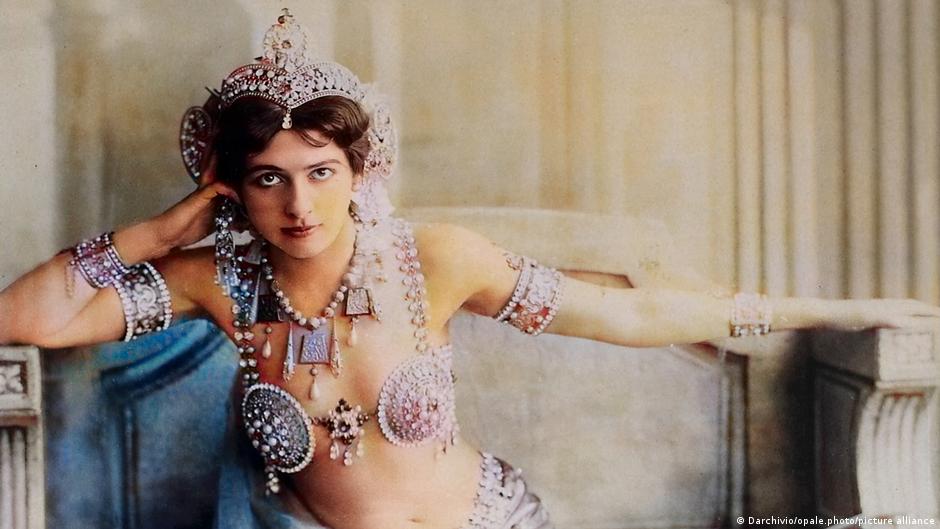
Regarded the most famous female spy of all time, dancer Mata Hari had men falling at her feet — but was executed for treason. Did she really betray state secrets? Mata Hari was already a legend in her own lifetime. When she stepped into the Parisian limelight in 1905, she swept high society off its feet. "She danced with veils and jewel-encrusted bustiers and almost nothing else," the Parisian press reported. "Never had anyone dared to appear unveiled before the gods with such trembling ecstasy. And what wonderful movements she made — both daring and demure at the same time." Mata Hari had convinced audiences and the press that she was an exotic temple dancer — but the dark-haired performer was actually Dutch. One of the hallmarks of the Belle Époque era was a heightened fascination with cultures the Parisians deemed to be exotic. Driven by financial desperation, she exploited this demand by pretending to be Indian. To make her act more credible, she fabricated a backstory claiming to be the daughter of a highly esteemed Brahmin. Mata Hari's sensual dance was her own creation Image: Scherl/SZ Photo/picture alliance "My mother, first bayadere [dancer] of the Ranganathaswamy Temple, died at the age of fourteen, on the day I was born. After the temple priests cremated her body, they adopted me and named me Mata Hari, which means 'Eye of the Day [a Malay word, Hari means sun]." She claimed to have learned the sacred temple dances from a young age. During her performances, one veil after another would fall away.
Later, she said, "I never danced well. The only reason people came to see me was that I was the first to dare to present myself naked to the public." From Dutch hatmaker's daughter to Mata Hari High society couldn't get enough of Mata Hari, unaware that her real name was Margaretha Geertruida Zelle and that she came from the small Dutch town of Leeuwarden. Born on August 7, 1876, Mata Hari was the daughter of a hatmaker who had become wealthy through stock market speculation. He often spoiled his daughter with lavish gifts. For her sixth birthday, he gave her a carriage drawn by goats. At the age of 13, Mata Hari's life of luxury ended abruptly. Her father went bankrupt and abandoned the family. Two years later, when her mother passed away, she moved in with relatives. Eventually, she met her husband through a newspaper ad: "An officer from the Dutch East Indies [now Indonesia], currently on home leave, seeks the company of a nice young woman with potential for future marriage. Financial circumstances irrelevant." The MacLeods around 1900 Image: akg-images/picture alliance Mata Hari and John Rudolf MacLeod, a Dutch nobleman of Scottish descent who was 20 years her senior, quickly became a couple. In 1897, she accompanied her husband to the Dutch East Indies. But her dream of a happy life never materialized. Frequent arguments strained their relationship. Then, their two-year-old son was tragically poisoned to death. When the MacLeods returned to Europe in 1902, their marriage fell apart. MacLeod left Mata Hari, taking their daughter with him and refusing to pay any alimony, leaving her to fend for herself.
 The BriefWire