First Mamdani, Now El-Sayed: Will The Democratic Party's Leftward Shift End Up Helping Trump?
News world First Mamdani, Now El-Sayed: Will The Democratic Party's Leftward Shift End Up Helping Trump? First Mamdani, Now El-Sayed: Will The Democratic Party's Leftward
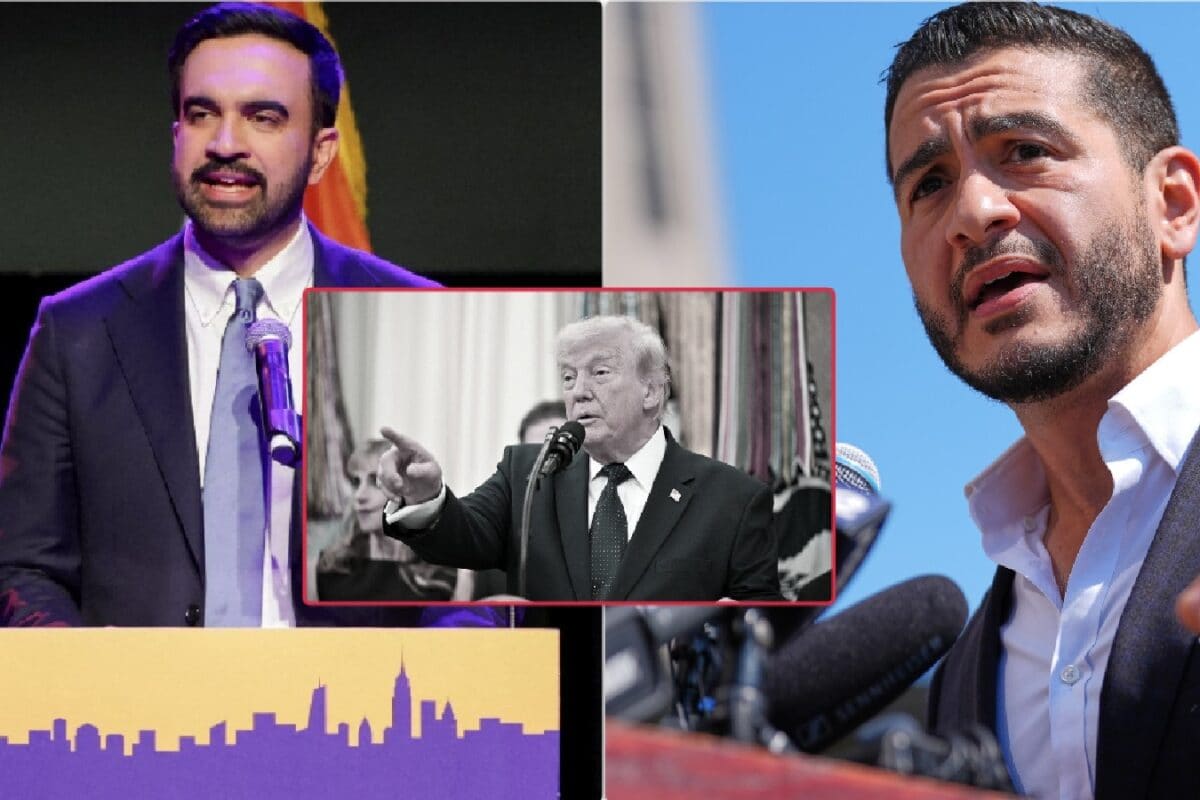
News world First Mamdani, Now El-Sayed: Will The Democratic Party's Leftward Shift End Up Helping Trump? First Mamdani, Now El-Sayed: Will The Democratic Party's Leftward Shift End Up Helping Trump? Published By, Last Updated: August 06, 2026, 19:46 IST Abdul El-Sayed and Zohran Mamdani's wins have intensified debate over whether the Democratic Party's leftward shift could reshape elections and influence Trump's prospects. Progressive victories by candidates including Abdul El-Sayed and Zohran Mamdani have intensified debate over whether the Democratic Party's leftward shift could reshape the 2026 elections and influence Donald Trump's political prospects. (IMAGE: AP/REUTERS/AFP) The Democratic Party’s progressive wing has scored a string of high-profile victories in recent months, from New York City’s Zohran Mamdani mayoral win to Michigan Senate nominee Abdul El-Sayed and left-leaning candidates in Los Angeles and Washington, D.C. The results have reignited a debate within the party: are Democratic voters demanding a more progressive platform—and could that make it harder to defeat Republicans in battleground states? Here are four reasons why El-Sayed’s victory is being viewed as more than just another primary upset. Progressive candidates are winning beyond traditional liberal strongholds El-Sayed’s narrow victory over four-term Congresswoman Haley Stevens in Michigan is widely seen as the most significant progressive breakthrough of the 2026 cycle because it came in one of America’s premier presidential swing states.
Unlike victories in heavily Democratic cities, Michigan will now become a test of whether an unapologetically progressive candidate can win a statewide general election. The trend stretches beyond Michigan. Zohran Mamdani’s mayoral primary victory in New York City, left-leaning city council member Nithya Raman advancing to the Los Angeles mayoral runoff, and Janeese Lewis George’s victory in Washington, D.C.’s Democratic mayoral primary have all been cited as signs of a Democratic electorate increasingly willing to back candidates running to the left of the party establishment. Democratic voters appear increasingly at odds with the party establishment El-Sayed’s campaign was built around frustration with Democratic leaders rather than Republicans alone. Backed by Bernie Sanders and Alexandria Ocasio-Cortez, he defeated a candidate endorsed by Michigan Governor Gretchen Whitmer, Senate Democratic leader Chuck Schumer, outgoing Senator Gary Peters and several establishment Democrats. Calling the victory historic, Sanders said, “Abdul’s victory was, in my opinion, the most extraordinary victory that I can think of in modern American politics." He added that “the new Democratic Party is going to be broad-based… that is the direction in which we are heading, and I think that is unstoppable." Israel has emerged as one of the party’s biggest fault lines One issue repeatedly connecting the new wave of progressive candidates is their stance on Israel.
 The BriefWire