No Woman In Karnataka Cabinet: How Do Indian States Fare On Women’s Representation?
No Woman In Karnataka Cabinet: How Do Indian States Fare On Women’s Representation? Published By, Last Updated: June 04, 2026, 13:58 IST After DK Shivakumar
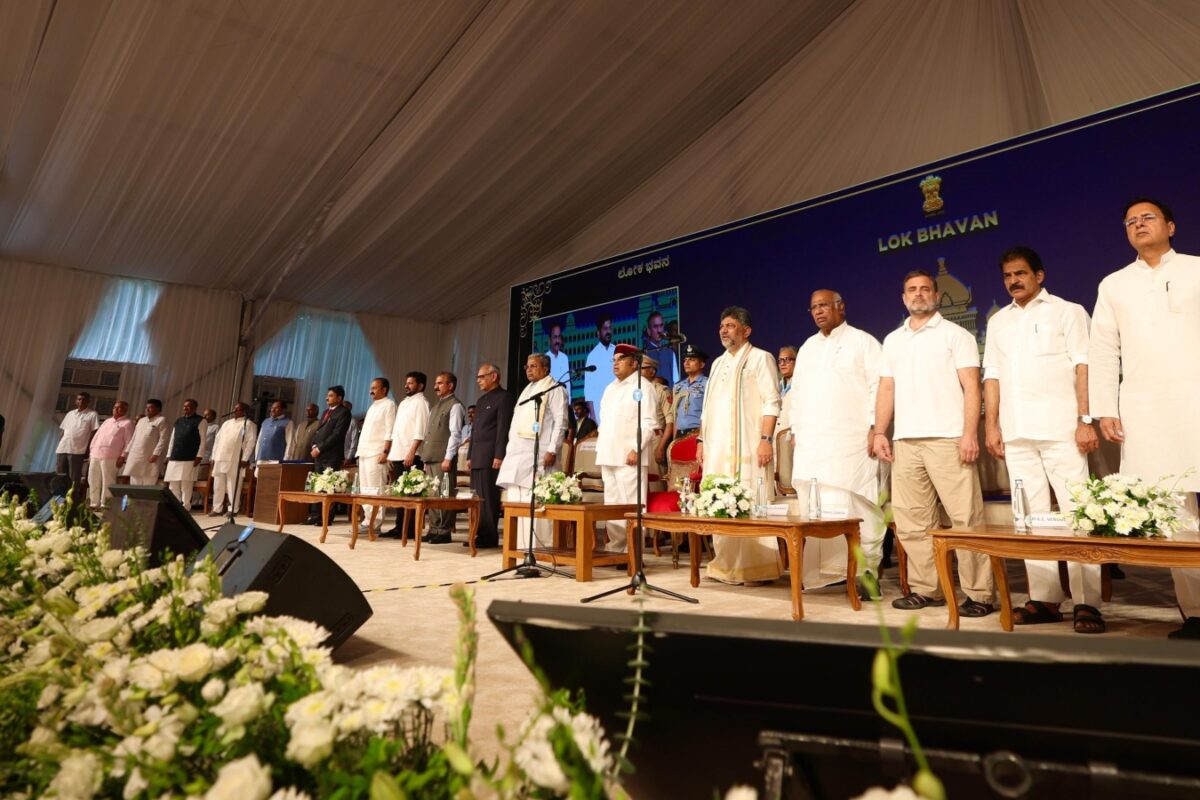
No Woman In Karnataka Cabinet: How Do Indian States Fare On Women’s Representation? Published By, Last Updated: June 04, 2026, 13:58 IST After DK Shivakumar took oath along with 13 ministers, veteran Congress leader Margaret Alva said she was 'deeply disappointed' that no woman was included in the Cabinet. Rapid Read DK Shivakumar took oath as the Chief Minister of Karnataka, Dr G Parameshwara as the Deputy CM. 12 Congress leaders joined the state cabinet as ministers. (Image: ANI) Karnataka’s new government began with a familiar claim of political balancing. Chief Minister DK Shivakumar took oath along with 13 ministers on Wednesday, with the Cabinet selection being read through the prism of caste, region, factional accommodation and community representation. But one absence stood out sharply: not a single woman found a place in the new Shivakumar Cabinet. Veteran Congress leader Margaret Alva flagged the gap soon after the swearing-in. “Congratulations to DK Shivakumar Ji on being sworn in as Karnataka CM. I wish him & his team success. I would have loved to have seen at least ONE Congress woman in the new Karnataka Cabinet that was sworn in. Deeply disappointed that there isn’t," she posted on X. The Karnataka case has reopened a larger question: how many Indian states actually have meaningful women’s representation, not just in symbolic terms, but in elected numbers and executive power? How Does Karnataka Compare With Other Recently Formed Cabinets? In West Bengal, the Suvendu Adhikari-led government formed its ministry on June 1, with 35 BJP MLAs taking oath.
Seven of them were women. In Tamil Nadu, the Joseph Vijay-led government formed its coalition ministry on May 21, inducting 23 ministers, including two from the Congress. Four women were included in the Cabinet. In Kerala, 20 ministers took oath along with Chief Minister V.D. Satheesan. The ministry included two women. In Assam, where the council of ministers is still awaiting expansion, the four ministers sworn in so far include one woman. How Low Is Women’s Representation In India’s Legislatures? The broader picture remains bleak. According to a report by the Association for Democratic Reforms, released on March 8, women remain heavily under-represented both as candidates and as elected representatives. ADR and Election Watch analysed 51,708 candidates who contested the 2024 Lok Sabha elections and the latest State/UT Assembly elections across the country. Of them, only 5,095, or 10 per cent, were women. Among 4,666 sitting MPs and MLAs across India, only 464, or 10 per cent, are women. This includes 543 Lok Sabha MPs and 4,123 MLAs. This is important because the Constitution (106th Amendment) Act, 2023, provides for one-third reservation for women in the Lok Sabha and state Assemblies. Against that one-third benchmark, the present numbers show how far India’s elected bodies remain from gender balance. Which States Have The Highest And Lowest Share Of Women MLAs? Women’s representation in state Assemblies remains low across India. According to the ADR report, only 390 of the 4,123 MLAs analysed across State and UT Assemblies are women, which means women account for about 9 per cent of MLAs.
Chhattisgarh has the highest share of women MLAs, with 19 women in a 90-member Assembly, or 21 per cent. Jharkhand has 12 women MLAs in an 81-member Assembly, or 15 per cent, while Tripura has 9 women MLAs in a 60-member Assembly, also 15 per cent. Haryana and West Bengal follow closely, with women making up 14 per cent of their Assemblies. Haryana has 13 women MLAs in a 90-member House, while West Bengal has 40 women MLAs in a 294-member Assembly. At the lower end, Himachal Pradesh has 1 woman MLA in a 68-member Assembly, or 1 per cent. Jammu and Kashmir has 3 women MLAs in a 90-member Assembly, or 3 per cent. Nagaland has 2 women MLAs in a 60-member Assembly, also 3 per cent, while Puducherry has 1 woman MLA in a 30-member Assembly, or 3 per cent. Karnataka is also in the lower range. It has 10 women MLAs in a 224-member Assembly, making women just 4 per cent of the House. Are Parties Fielding Enough Women Candidates? The low share of women MLAs is also linked to candidate selection. According to the report, women made up only 4,295 of the 43,348 candidates analysed. That is about 10 per cent. The report also found that 1,698 of 4,123 Assembly constituencies had no woman candidate at all. No state had more than 15 per cent women candidates in its Assembly election. Odisha and Delhi had the highest share at 14 per cent each, followed by Chhattisgarh at 13 per cent.
At the lower end, Nagaland had only 2 per cent women candidates, while Arunachal Pradesh and Jammu and Kashmir had 5 per cent each. The party-wise numbers show the same pattern. Among the candidates analysed by ADR, the Congress fielded 456 women out of 3,290 candidates, or 14 per cent. The BJP fielded 410 women out of 3,638 candidates, or 11 per cent. The Aam Aadmi Party fielded 127 women out of 1,553 candidates, or 8 per cent. Among major state parties, the Trinamool Congress fielded 72 women out of 465 candidates, or 15 per cent. The Biju Janata Dal fielded 42 women out of 168 candidates, or 25 per cent. Taken together, the numbers show that women remain under-represented at every stage of electoral politics News18 Newsletter Handpicked stories, in your inbox A newsletter with the best of our journalism submit About the Author Karishma Jain Karishma Jain, Chief Sub Editor at News18.com, writes and edits opinion pieces on a variety of subjects, including Indian politics and policy, culture and the arts, technology and social change. Follo... Read More First Published: June 04, 2026, 13:54 IST News india No Woman In Karnataka Cabinet: How Do Indian States Fare On Women’s Representation? Disclaimer: Comments reflect users’ views, not News18’s. Please keep discussions respectful and constructive. Abusive, defamatory, or illegal comments will be removed. News18 may disable any comment at its discretion. By posting, you agree to our Terms of Use and Privacy Policy Loading comments...
 The BriefWire