Germany: 10 years of 'Integration Act' for refugees
The German Integration Act aimed to regulate the integration of recognized refugees following high levels of immigration, facilitating access to the labor market in return
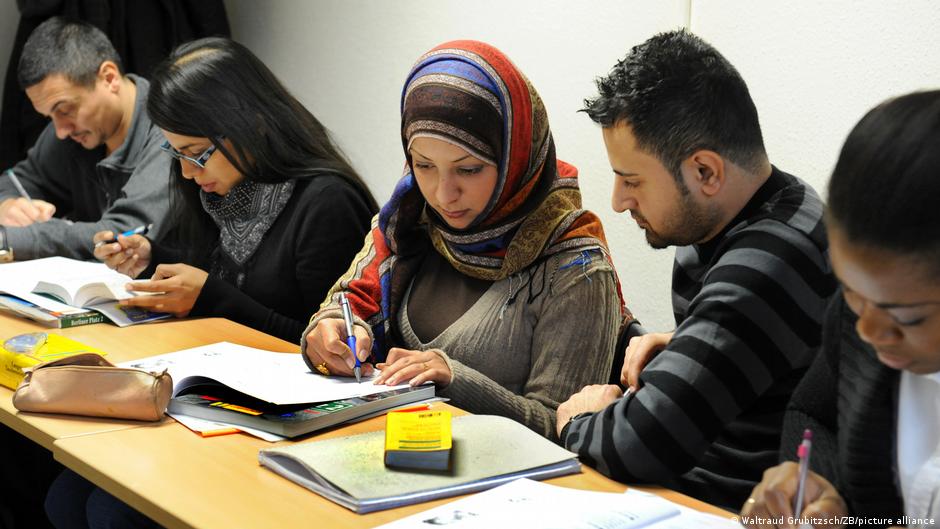
The German Integration Act aimed to regulate the integration of recognized refugees following high levels of immigration, facilitating access to the labor market in return for integration efforts. In early August 2016, a phrase began circulating in Germany that would shape political and societal discussions for many years to come: "the divided society." There were still many Germans who remained committed to welcoming thousands of refugees who had begun arriving the previous year, mainly from Syria. However, an increasing number were more skeptical of immigrants and foreigners, especially following the mass sexual assaults involving young men with immigrant backgrounds that took place in Cologne on New Year's Eve 2015–2016. Under the leadership of Chancellor Angela Merkel, the coalition government of the conservative Christian Democratic Union (CDU)/Christian Social Union (CSU) and the center left Social Democratic Party (SPD) sought to calm the polarized mood in Germany by introducing an integration act, a law designed to appeal to all sides through the guiding principle of "support and challenge" (fördern und fordern). Some thought it offered too many giveaways; others felt it imposed too many demands. Germany relies on Syrian workers amid return debates To view this video please enable JavaScript, and consider upgrading to a web browser that supports HTML5 video 'Support and challenge' means squaring the circle "For someone in favor of strong regulatory policy, the integration law offered too much assistance while demanding far too little. One example is the fact that a rejected asylum application did not necessarily lead to deportation," says Holger Kolb, of the Expert Council on Integration and Migration (SVR).
"For someone very concerned with integration policy, on the other hand, the requirements were far too high, especially regarding temporary residence permits for vocational training. They believe this creates far too many obstacles to successful integration," Kolb explains. Providing support for new arrivals meant massively expanding integration and language courses, allowing new arrivals to enter the labor market more quickly. A vocational training permit for refugees whose individual asylum applications had been rejected, but whose home countries were still categorized as unsafe, to complete a three-year vocational training program followed by two years of employment in the field they trained in. On the other hand, it was made obligatory to participate in language and integration courses. Sanctions were imposed in the form of welfare benefit cuts for those who refused to participate. Also, the refugees were distributed evenly across Germany to prevent over-concentration in major cities. German village struggles to unite amid migration challenge To view this video please enable JavaScript, and consider upgrading to a web browser that supports HTML5 video Criticisms of the residence requirement This "residency requirement" had a very negative impact on integration, says Herbert Brücker, head of the Research Department for Migration, Integration and International Labour Studies at the Institute for Employment Research (IAB). "People were distributed disproportionately to economically weak regions with high unemployment. If we restrict people to regions where the economy isn't doing so well, that naturally has negative effects on labor market integration," Brücker explained.
 The BriefWire