NITI backs easier land acquisition
New Delhi: India needs to ease the process of land acquisition for setting up industries to attract more investments, NITI Aayog Vice Chairman Ashok Kumar
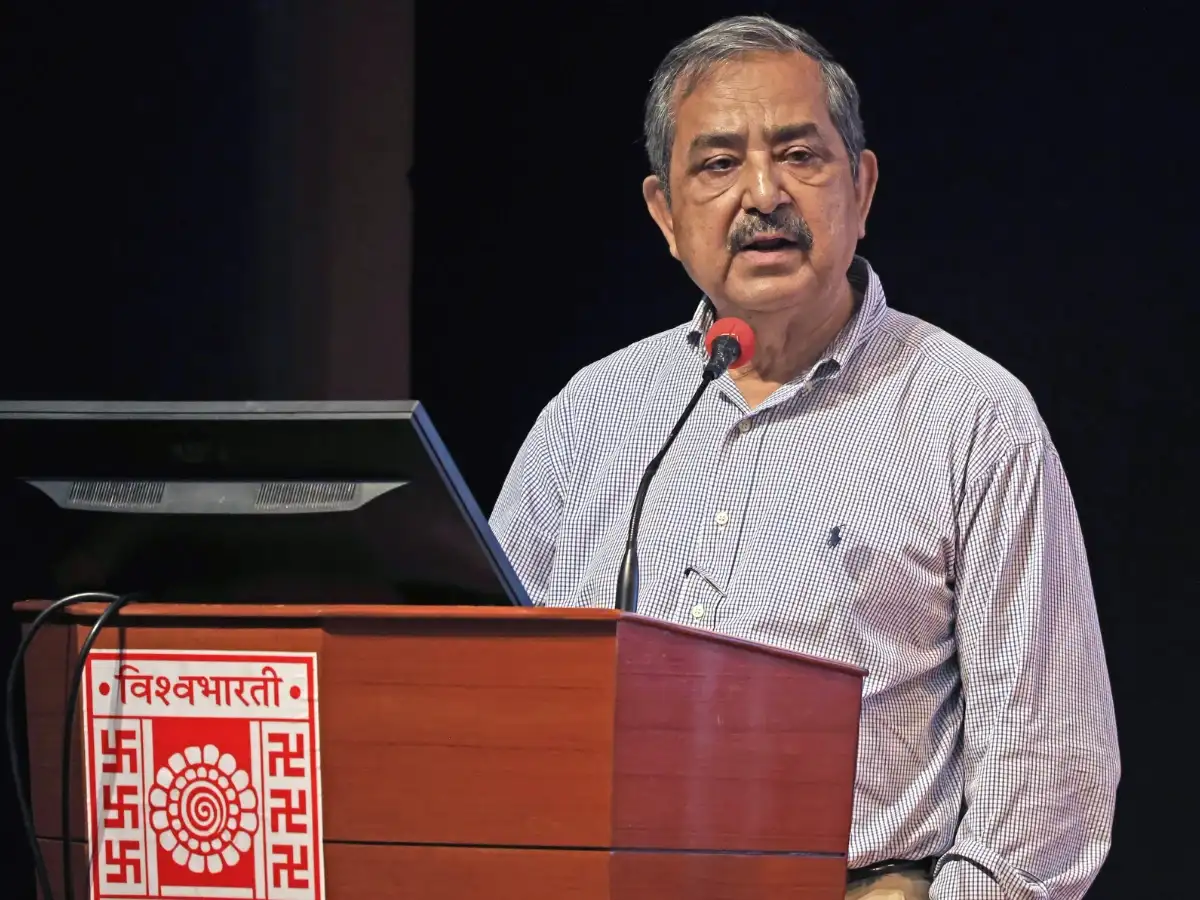
New Delhi: India needs to ease the process of land acquisition for setting up industries to attract more investments, NITI Aayog Vice Chairman Ashok Kumar Lahiri said on Thursday.Addressing NCAER 'India Policy Forum 2026', Lahiri said that a lot has been done for enhancing the ease of doing business in the country, but much more remains to be done, especially at the grassroots level."The factors holding up investment in India are mostly structural. Factor market imperfection, especially in land and capital, is a major impediment.Also Read: Lok Sabha passes Taxation and Other Laws (Amendment) Bill to boost foreign investment, electronics manufacturing"Land acquisition for not only industrial projects but even government- infrastructure projects suffers several impediments, including legal challenges," he said.Lahiri further said while foreign savings have helped India, the magnitude has been limited compared to what flowed into China and Singapore.He also noted that investment in a country is primarily funded by domestic savings.Also Read: India’s new 15-year tax break could unlock global rough diamond trade"Investment and growth potential can be frustrated by the lack of domestic savings...while a lot has been done for enhancing the ease of doing business, much more remains to be done, especially at the grassroots level," he said.On the question of what drives investment, he said that NCAER research shows that public investment in India, having crowded out private investment in the pre-1980 period, has since turned complementary, crowding it in."This suggests that well-targeted infrastructure spending, rather than acting as a drag, can itself help unlock private investment going forward," the eminent economist said.He emphasised that investment, both domestic and foreign, will flow in search of profit."So, let us make India the most attractive location for running a successful business and making profit," Lahiri said, adding that by doing so, let us remove the obstacles that pose any risks in India's journey to Viksit Bharat by 2047.India opened up for FDI only in the 1990s, and FDI inflows grew from an annual average of USD 3-7 billion during 2002 to 2005 to USD 43 billion in 2008, and crossed USD 50 billion in 2019.While gross foreign direct investments were robust in 2025-26 (USD 95 billion) on the back of strong growth prospects, net FDI flows were muted due to rising repatriation and higher outbound foreign direct investments.Net FDI is showing signs of revival with USD 7.4 billion net flows in April 2026 compared to USD 1.6 billion in the same month last year.Talking about India's goal of becoming a developed country by 2047, Lahiri said that to become a developed country by 2047, factoring in some inflation, one estimate puts the target for India's per capita income at USD 18,000 to USD 20,000."Our current per capita income in 2026 is estimated at USD 2,813 to reach USD 18,000 in 2047; India's per capita income needs to grow at an annual nominal rate of 9.25 per cent on average for the next 21 years, an increase of 6.4 times," he said.Citing examples of China, South Korea, Singapore and Japan, Lahiri said it will be possible to increase per capita income almost six and a half times in 21 years.Lahiri said the government is trying to promote entrepreneurship, invention and innovation through various schemes such as the production-linked incentive (PLI) from 2020 and the Atal Innovation Mission(AIM) from 2016.
 The BriefWire