India has read the arhar dal genome from end to end. Here is why it matters
On a plate in almost any Indian home sits a small yellow mound that rarely earns a second thought. It is pigeonpea, commonly known as
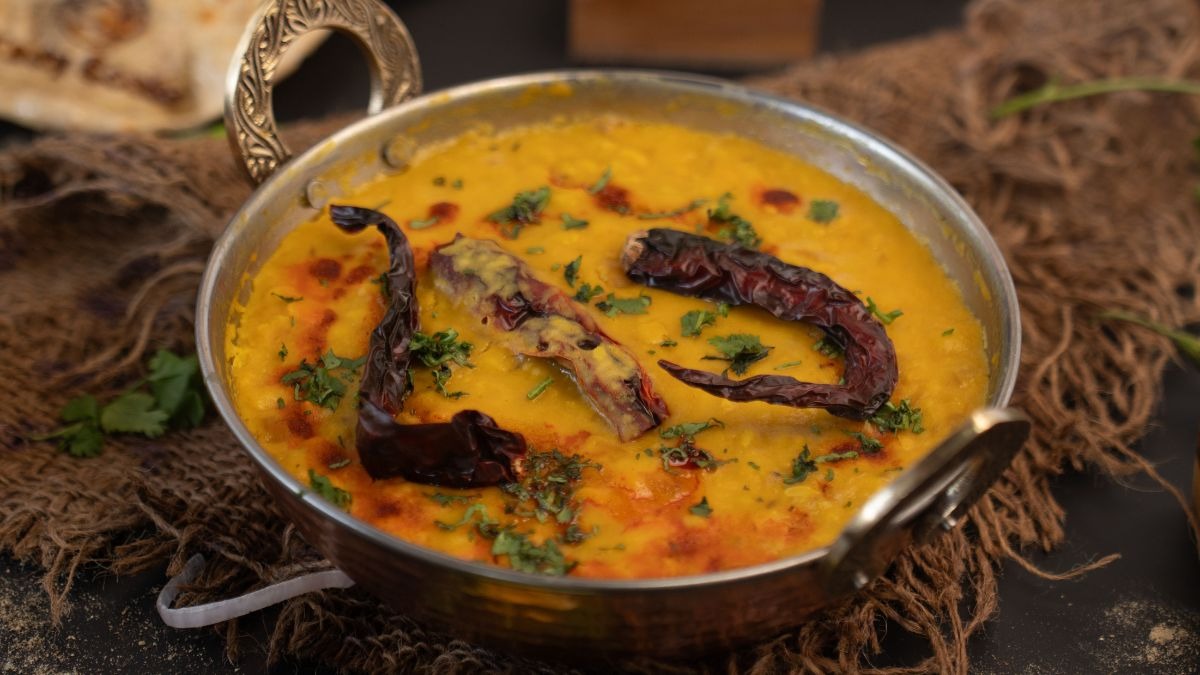
On a plate in almost any Indian home sits a small yellow mound that rarely earns a second thought. It is pigeonpea, commonly known as arhar or tur dal. It hands more vegetarians their daily protein than almost any other crop in the country. In fact, it is the sixth most important grain legume on Earth, and one of the few crops that feeds the soil as generously as it feeds people, pulling up to 235 kilograms of nitrogen per hectare out of the air and locking it into the ground through tiny root nodules. Read Full Story And for the first time, scientists have read its complete genome, or the genetic instruction book, cover to cover, without a single missing page. On April 20, 2026, the Indian Council of Agricultural Research (ICAR) quietly uploaded a file to a global scientific database. It was the finished genome of a pigeonpea variety named Asha. This is neither a rough draft, as in 2011, nor an improved sketch, as in 2017. This time, it is the whole thing. "Now we have completed a chromosome level assembly of 750 Mb, 99 per cent complete, using PacBio single molecule sequencing, organised at chromosome level, telomere to telomere," Professor Nagendra K. Singh, who led the effort at ICAR-NIPB, told India Today Digital. "Now our T2T genome assembly is recognised as the global reference by NCBI." To see why a data file counts as a national milestone, it helps to know what a genome is, and what was missing until now. WHAT IS THE ARHAR DAL GENOME, AND WHAT DID ICAR ACTUALLY DO? Every living thing carries a set of instructions written in DNA, the chemical that tells a cell how to build and run an organism. Those instructions are spelt out in just four letters, A, T, G and C, arranged in a precise order. The full set of these letters is a genome. In pigeonpea, it runs to 752.65 million letters, packed into 11 chromosomes, the tightly wound bundles in which DNA is stored. Think of the genome as a recipe book for building an entire plant. A reference genome is the master copy of that book, the version every other scientist compares their samples against. India first tried to read this book in 2011, when ICAR's Institute for Plant Biotechnology (NIPB) in New Delhi produced the first pigeonpea draft, and the first crop genome sequenced entirely in India. But like most early attempts, it was full of holes. Some chapters were torn. Others were missing altogether. "The first draft of the pigeonpea variety Asha was published by us 15 years ago," Professor Singh said. "With 511 Mb of sequence data, it had only about 60 per cent genome coverage of the pigeonpea genome, and was not organised into a chromosome level assembly." The pigeonpea genome had long been estimated at more than 800 million letters, yet those first drafts captured only about two-thirds to three-quarters of it.
 The BriefWire