Did Prashant Kishor's Bankipur victory dent RJD's Muslim vote bank?
The Bankipur Assembly bypoll has sparked a political debate that goes beyond Prashant Kishor's shock victory. In the July 30 by-election, the Jan Suraaj founder
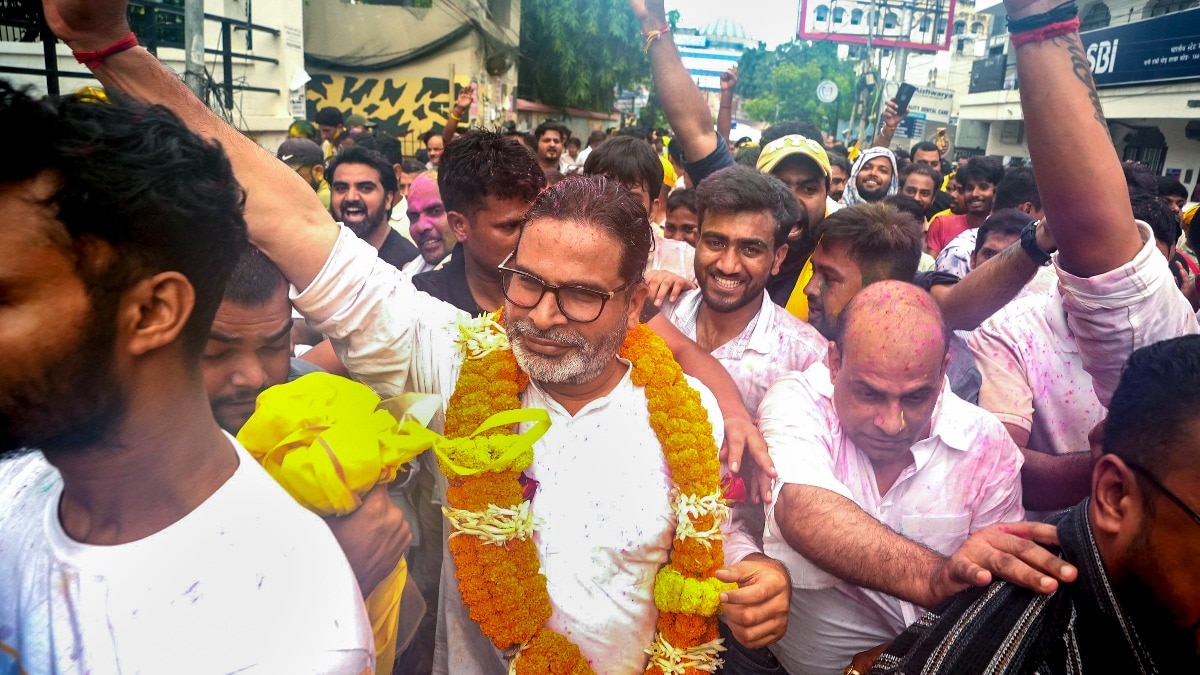
The Bankipur Assembly bypoll has sparked a political debate that goes beyond Prashant Kishor's shock victory. In the July 30 by-election, the Jan Suraaj founder defeated BJP candidate Neeraj Kumar by 19,324 votes, ending its more than three-decade hold over the seat. While Kishor's victory itself has emerged as one of the biggest political upsets in Bihar, it has also triggered a larger question: Has Jan Suraaj managed to attract a section of Muslim voters who have traditionally backed the Rashtriya Janata Dal (RJD)? Read Full Story There is no official data to answer that question. The Election Commission does not publish religion-wise voting figures, making it impossible to conclusively determine how any community voted. However, election outcomes often give rise to political speculation, and Bankipur is no exception. Bankipur has nearly 3.8 lakh voters, with Muslims estimated to account for around 7-8 per cent of the electorate. They are not a decisive voting bloc on their own, but in a closely fought contest they can influence the outcome.
After counting, booth-wise trends from Muslim-dominated localities, particularly around Anjuman Islamia Hall, became the focus of political discussion. Local reports suggested that the 49-year-old former poll strategist performed strongly in these booths, fuelling speculation that he received support from a section of Muslim voters. While these trends do not establish a community-wide voting pattern, they have become part of the broader political conversation. The debate is significant because Muslims have remained among the RJD's most dependable supporters for more than three decades. Along with Yadavs, they form the party's MY (Muslim-Yadav) social coalition. According to Bihar's 2023 caste survey, Muslims account for around 18 per cent of the state's population, while Yadavs make up about 14 per cent. Together, they continue to constitute one of Bihar's most influential electoral blocs. For years, Bihar's political landscape has operated on a simple assumption: a large section of Muslim voters tends to back the opposition candidate perceived as best placed to defeat the BJP.
That perception has traditionally worked in the RJD's favour. The question now being asked is whether that political calculation is beginning to change. The discussion gained momentum after the 2025 Bihar Assembly election, when Jan Suraaj emerged as a new political force despite failing to open an account. The Bankipur bypoll marks the party's biggest electoral success so far. More importantly, it came in a constituency that had been represented by the BJP for decades. Incumbent BJP chief Nitin Nabin had won the seat five times, making Bankipur one of the party strongest urban bastions. The bypoll also recorded a voter turnout of around 34 per cent, significantly lower than that of a regular Assembly election. For Tejashwi Yadav, the result is important even if it remains limited to one constituency. The RJD's electoral strength has depended on the MY alliance for decades. If Jan Suraaj begins attracting even a section of Muslim voters in closely contested seats, it could make the opposition contest more competitive.
 The BriefWire