Rubio Once Said Foreign Aid Must Not Bypass Govts. So Why Is India's FCRA Bill Facing US Criticism?
News india Rubio Once Said Foreign Aid Must Not Bypass Govts. So Why Is India's FCRA Bill Facing US Criticism? Rubio Once Said Foreign Aid
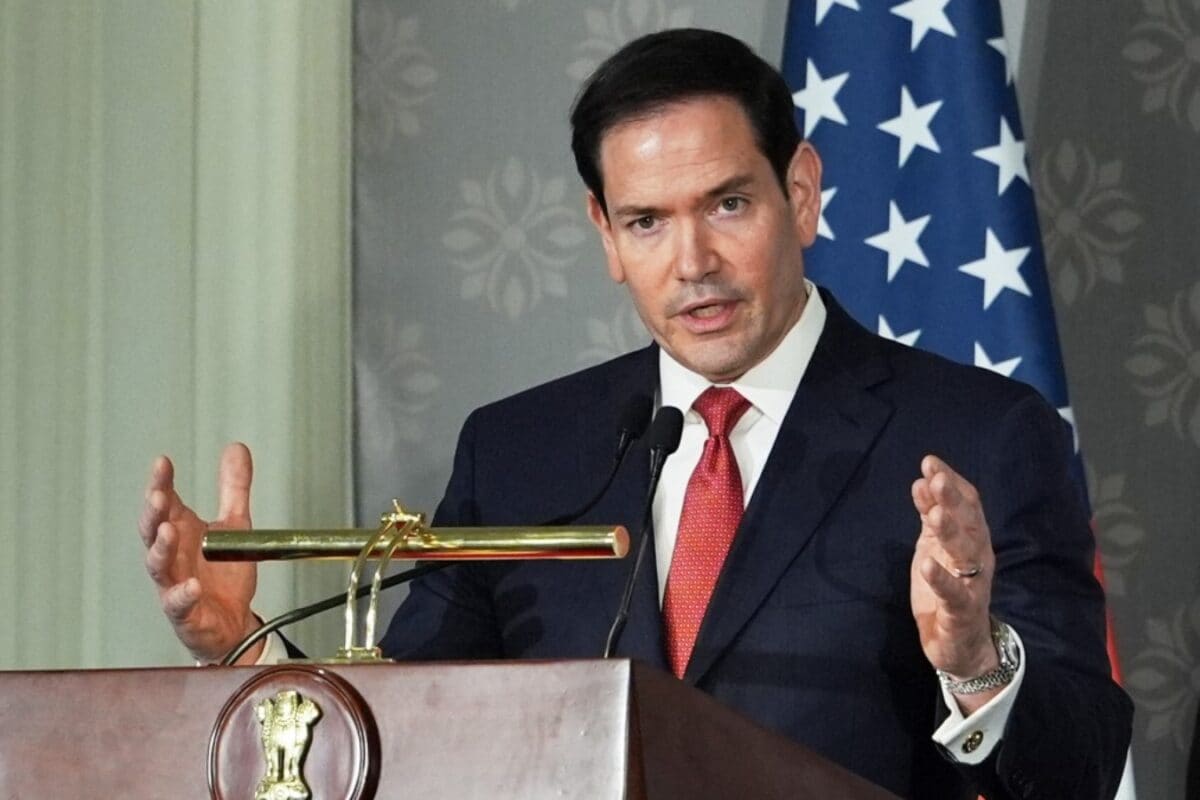
News india Rubio Once Said Foreign Aid Must Not Bypass Govts. So Why Is India's FCRA Bill Facing US Criticism? Rubio Once Said Foreign Aid Must Not Bypass Govts. So Why Is India's FCRA Bill Facing US Criticism? Written By, Last Updated: August 06, 2026, 13:58 IST US Congressman Riley Moore has opposed India’s tighter control over foreign-funded groups, even though Marco Rubio had backed that very right for host governments. Rapid Read US Secretary of State Marco Rubio. (Source: AFP) US Congressman Riley Moore’s attack on India’s proposed foreign-funding law has exposed an unusual contradiction in Washington’s position on overseas aid and non-governmental organisations. Moore, a Republican from West Virginia, has accused India’s Foreign Contribution (Regulation) Amendment (FCRA) Bill, 2026 of enabling government takeovers of churches and religious charities. Calling it a “clear attack against Christians", he warned that the legislation could become a major concern in India-US relations. Yet the criticism comes months after US Secretary of State Marco Rubio publicly argued that foreign-funded NGOs should not bypass sovereign governments, impose programmes on host countries or operate systems parallel to national institutions. Speaking in December last year while unveiling the Trump administration’s new global health partnership with Kenya, Rubio said Washington would no longer spend billions of dollars financing what he called the “NGO industrial complex" while partner governments exercised little control over how the money was used. His prescription was unambiguous: “If you want to help a country, work with that country, not work with a third party that imposes things on that country." 🚨🚨BREAKING NEWS 🚨🇺🇸🇰🇪 Secretary Rubio Attacks NGO “Industrial Complex": New U.S.-Kenya Health Deal Ends Middlemen and Gives Direct Aid On Thursday, Secretary of State Marco Rubio strongly criticized the big NGO aid system while signing a $2.5 billion, 5-year health… pic.twitter.com/JEqljqMzv4 — Corefrontline (@corefrontline) December 4, 2025 That is where the contradiction becomes hard to ignore. The US administration has argued that foreign-funded programmes must remain under the control of host governments.
Yet India is being criticised by a US lawmaker for exercising that same sovereign authority over foreign-funded organisations and assets on its own soil. What The FCRA Bill Actually Changes The Foreign Contribution (Regulation) Amendment Bill was introduced in the Lok Sabha on March 25 and remains pending in the House. It amends the Foreign Contribution (Regulation) Act, 2010, which governs the receipt and use of foreign donations by individuals, associations and organisations. The most consequential proposal is the creation of a Designated Authority to supervise, manage and, in specified circumstances, dispose of foreign contributions and assets created using them when an organisation ceases to hold a valid FCRA certificate. A certificate may cease to exist if it is cancelled by the government, surrendered by the organisation, allowed to expire without a renewal application, or not renewed after an application is rejected. The assets would initially vest provisionally in the Designated Authority. If registration is renewed, restored or freshly granted within the prescribed period, the unused contributions and assets must be returned. If it is not, the vesting becomes permanent. Once permanently vested, the assets may be used for public purposes, transferred to a central, state or local government body, or disposed of through a sale or another approved process. The proceeds, along with any unused foreign contribution, would go to the Consolidated Fund of India. The Bill also states that when an affected asset is a place of worship, its religious character must be maintained. The government says the Designated Authority cannot convert, repurpose or secularise such a religious institution. The proposed law additionally reduces the maximum imprisonment for FCRA violations from five years to one year, sets timelines for funds received through the prior-permission route and requires central approval before an investigation is initiated under the Act. Government Rejects ‘Church Takeover’ Charge The Centre has argued that the Bill does not create an entirely new power to take custody of foreign-funded assets. Section 15 of the existing law already provides for the vesting of foreign contributions and assets when an organisation’s registration is cancelled or surrendered.
 The BriefWire