‘22 Years Of Life Taken Away’: Supreme Court Acquits Man Convicted Of Murder On ‘Shaky’ Testimony
News india ‘22 Years Of Life Taken Away’: Supreme Court Acquits Man Convicted Of Murder On ‘Shaky’ Testimony ‘22 Years Of Life Taken Away’: Supreme
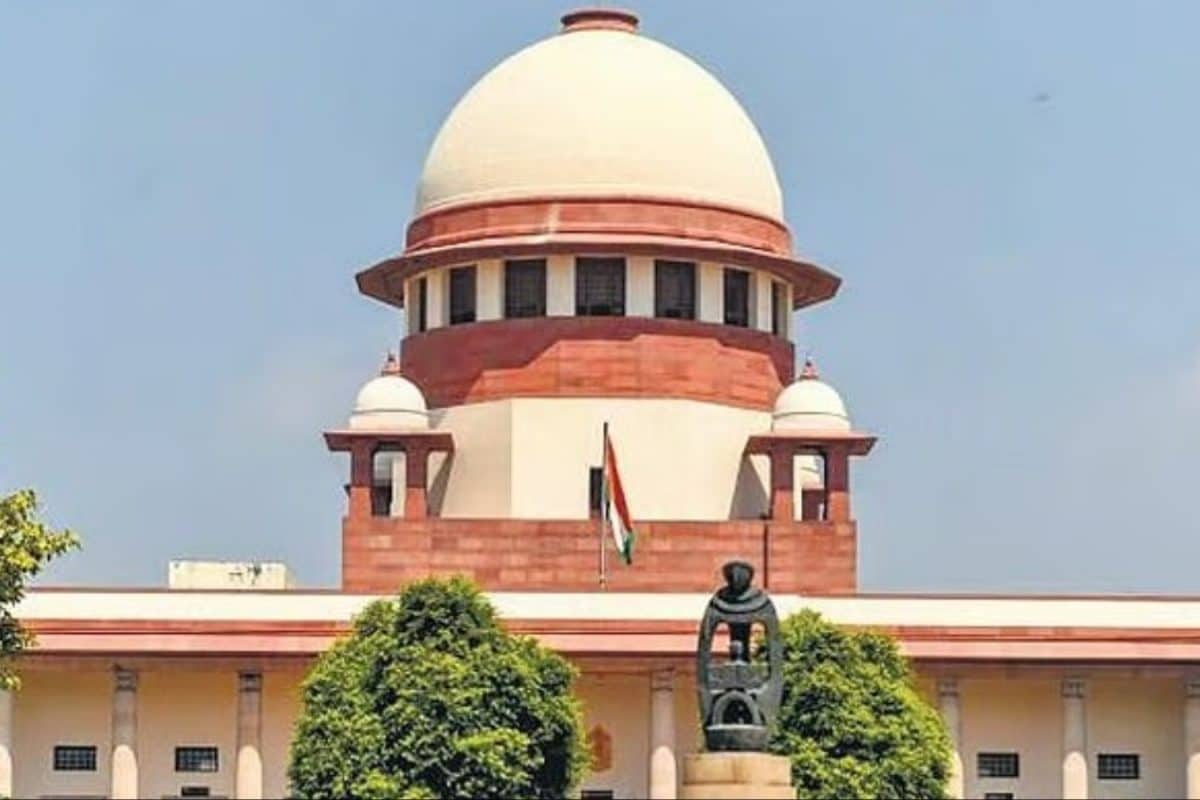
News india ‘22 Years Of Life Taken Away’: Supreme Court Acquits Man Convicted Of Murder On ‘Shaky’ Testimony ‘22 Years Of Life Taken Away’: Supreme Court Acquits Man Convicted Of Murder On ‘Shaky’ Testimony Published By, Last Updated: August 06, 2026, 12:21 IST The top court found that Jani’s conviction was based mainly on the testimony of a single eyewitness, which it described as “shaky and highly improbable”. Rapid Read Supreme Court of India (Credits: PTI Photo) In a significant ruling, the Supreme Court has acquitted an Odisha man who spent 22 years in prison after being wrongly convicted in a triple murder case, calling his prolonged incarceration a “collective failure" of the country’s criminal justice system. A three-judge bench headed by Justice S K Singh, and Justice J B Pardiwala and Justice K Vinod Chandran set aside the conviction of Arjun Jani, who had been sentenced to life imprisonment for the murder of three women in Nabarangpur district in 2004. In a strong-worded observation, the top court noted that 22 years of a man’s life were taken away without any credible evidence.
“A person taken into custody on mere suspicion from whom a confession; though not admissible was extracted employing third-degree methods, the trial court fails to evaluate the evidence properly and the High Court remains a moot spectator… cumulatively resulting in 22 years being erased out of a person’s life without any reliable evidence," the top court said in its order. The top court found that Jani’s conviction was based mainly on the testimony of a single eyewitness, which it described as “shaky and highly improbable". The prosecution had failed to provide reliable corroborative evidence to establish his guilt beyond reasonable doubt. The case took another troubling turn when the court examined Jani’s appeal history. The Orissa High Court had earlier rejected his appeal because it was filed 3,157 days late, without examining the merits of the case. By then, Jani had already spent around 12 years in prison. The bench criticised the Orissa High Court for dismissing Jani’s appeal against his conviction on the ground of delay, saying the decision had cost him an additional 10 years in prison.
“We are deeply dismayed, and equally perturbed by the order which rejected an application seeking condonation of delay of 3157 days and as a consequence dismissed the ‘jail memo of appeal’ against the order of conviction under Section 302 of the IPC, with sentence imposed of life imprisonment where the convict had, at the time of the impugned order suffered incarceration of 12 years and now a further period of 10 years; a total of 22 years," the apex court said. The prosecution case had relied heavily on an eyewitness who claimed to have seen Jani attacking one of the victims at around 1 am. However, the Supreme Court found several inconsistencies in her account and questioned why she did not notice the bodies of the other two women despite passing near the spot. The top court also noted that stones allegedly used in the murders had no blood stains, either visually or in forensic tests, and that there were contradictions over their recovery. The bench observed that while a conviction can be based on the testimony of a single eyewitness, such evidence must be credible, consistent and inspire the confidence of the court.
 The BriefWire