Germany: Court jails far-right youth terror cell members
A Hamburg court has handed down stiff prison sentences to members of the far-right terrorist group "Last Wave of Defense." Politicians are warning that those
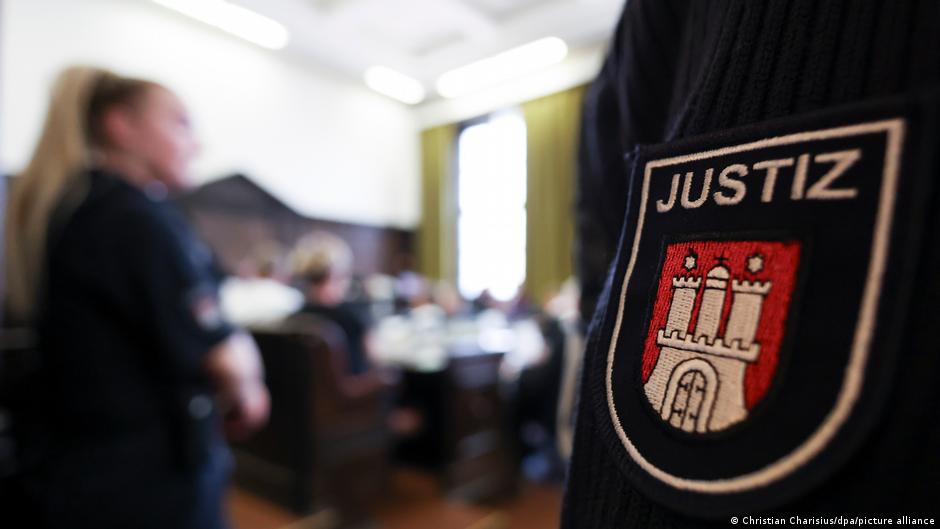
A Hamburg court has handed down stiff prison sentences to members of the far-right terrorist group "Last Wave of Defense." Politicians are warning that those drawn into extremist violence are getting younger. The seven members and one supporter of the "Last Wave of Defense" (Letzte Verteidigungswelle) group were found guilty of crimes with the aim of bringing about the collapse of Germany's political system through attacks on migrants and "political opponents." The judge in the Hamburg Higher Regional Court said the group's name reflected their deeply racist and violent mindset. "We are the wave that washes the filth out of our country," the group had written in pamphlets. The young men sentenced on Wednesday were aged between 14 and 21 when they committed the crimes. They were sentenced under juvenile criminal law to youth prison terms ranging from one and a half to five years. The sentence for the youngest defendant — one and a half years in prison — was suspended.
They had been charged with membership in, or support of, a terrorist organization. The convictions also covered offenses including attempted murder, arson, and dangerous bodily harm. In May 2025, police raided properties in Altdöbern as part of an investigation into the far-right group Image: Frank Hammerschmidt/dpa/picture alliance A cultural center was destroyed in an arson attack According to the ruling, the youths carried out an arson attack on a community cultural center in Altdöbern, a town in the eastern state of Brandenburg, in October 2024. Investigators believe the far-right group mistakenly identified the building — located in a town of only 2,300 residents — as a meeting place for left-wing activists. The building burned to the ground, resulting in property damage amounting to several hundred thousand euros. Altdöbern's Mayor, Peter Winzer of the center-left Social Democratic Party (SPD), told public broadcaster Deutschlandfunk (DLF) that he is still shocked by the attack: "An absolute catastrophe. Because it was a community hub — a place for culture and gatherings.
Every local event took place there." Two of the accused were found to have unsuccessfully attempted to set fire to accommodation for refugees in Schmölln in the eastern state of Thuringia, in January 2025. They also scrawled swastikas and slogans such as "foreigners out" on the facade of the facility. According to the indictment, three members of the group had also planned an arson attack on an asylum seeker shelter in Senftenberg in Brandenburg. 25 years after the right-wing riots: Rostock’s police chief Thomas Laum speaks to DW To view this video please enable JavaScript, and consider upgrading to a web browser that supports HTML5 video Parallels with post-reunification events Brandenburg's Interior Minister Jan Redmann of the center-right Christian Democratic Union (CDU) told DLF that he finds it particularly alarming how quickly very young people are radicalizing and banding together online. "We are also observing some surprising continuities — specifically, that the young perpetrators have relatives who had already come to the authorities' attention as right-wing extremists back in the 1990s — the era of the so-called 'baseball bat years.'" The term "baseball bat years" refers to the period of massive attacks — primarily targeting refugees — that occurred in the territory of the former East Germany in the years immediately following reunification.
 The BriefWire