Over 50 nations, 3 continents: Has World War Three already begun?
Russia's full scale invasion has become the largest war in Europe since 1945 What made World War I and II different The Treaty of Versailles
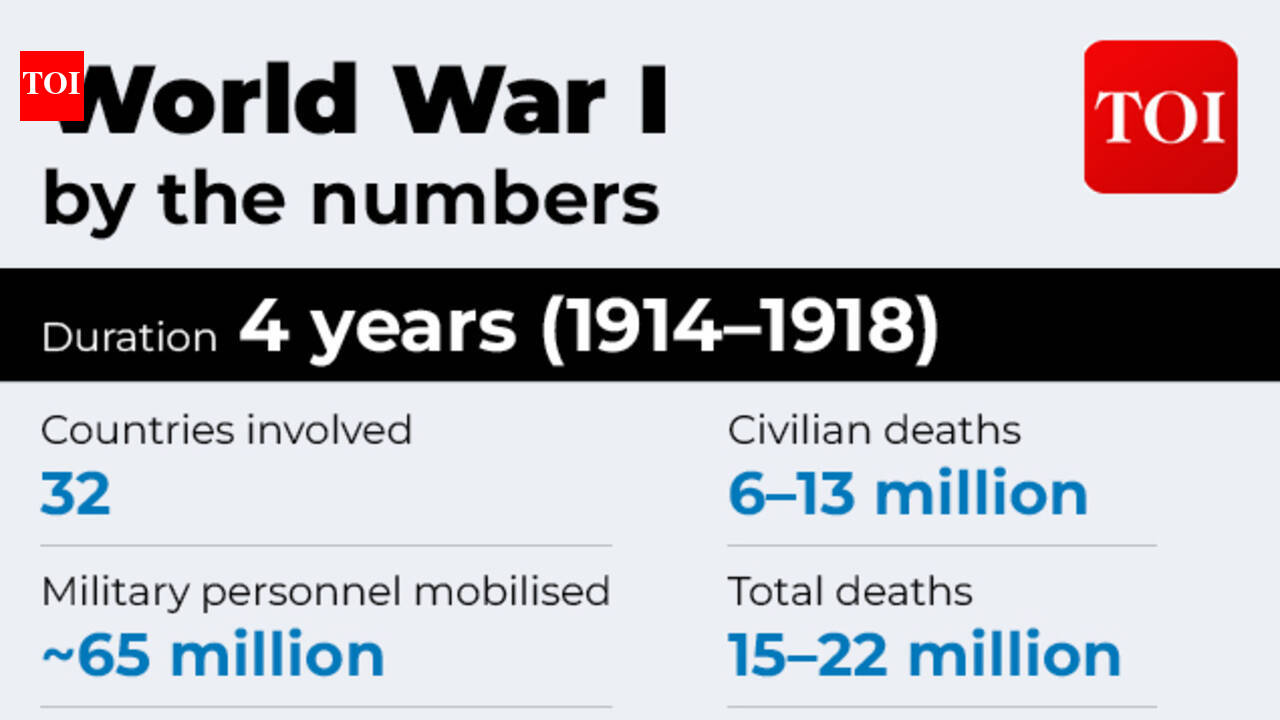
Russia's full scale invasion has become the largest war in Europe since 1945 What made World War I and II different The Treaty of Versailles that ended the war imposed harsh terms on Germany, creating tensions that contributed to the outbreak of World War II The war ended with the creation of the United Nations, while the US and Soviet Union emerged as rival superpowers, ushering in the Cold War. The two wars at the centre of it all Why so many countries are being pulled in Then and now: How war itself has changed Mass-produced drones are reshaping modern warfare by overwhelming air defences The economic battlefield Around one-fifth of the world's oil consumption passes through the Strait of Hormuz So, has world war three already begun? The world today is so well-connected and interlinked that the petrol in your car costs more because missiles are flying over the Persian Gulf, your online order is delayed because ships are avoiding the Red Sea, and soldiers who learnt to fight Russian drones in Ukraine are now training troops thousands of miles away in the Middle East.None of these events belong to the same war, yet each is shaping the others in ways that would have seemed improbable only a few years ago. Modern conflicts no longer respect geography. They leap across continents through alliances, supply chains, technology and global markets, dragging in countries that never intended to become participants.The result is a world where a battlefield in eastern Europe can influence security in the Gulf, and a strike in Iran can disrupt trade reaching Africa and Asia. So when does a collection of separate wars stop being separate? And at what point does history begin to call it something far bigger?Most wars in history stay contained. Two nations, or a small cluster of them, fight over a border, a resource or a grudge, while the rest of the world watches from a safe distance. World War I and World War II broke that pattern completely.Two definitions help explain why. A world war is generally understood as a conflict involving most of the world's major powers, fought across several regions or continents at once, rather than on a single battlefield. Total war, meanwhile, describes a conflict in which entire nations mobilise, not just their armies. Factories, farms, civilians and economies are all pulled in, and the usual line between soldier and civilian starts to disappear.Both world wars fit this because of alliances. One assassination in Sarajevo in 1914 triggered a chain reaction, because treaties meant Russia had to back Serbia, Germany had to back Austria-Hungary, and France and Britain were bound to follow. Colonies across Africa and Asia were dragged in simply because their rulers in London, Paris or Berlin were suddenly at war.
 The BriefWire