Which is the real Shiv Sena? SC's final hearings on Uddhav faction plea begin
The Supreme Court on Wednesday began final hearings on pleas filed by the Uddhav Thackeray-led faction challenging the Election Commission’s decision to recognise the Eknath
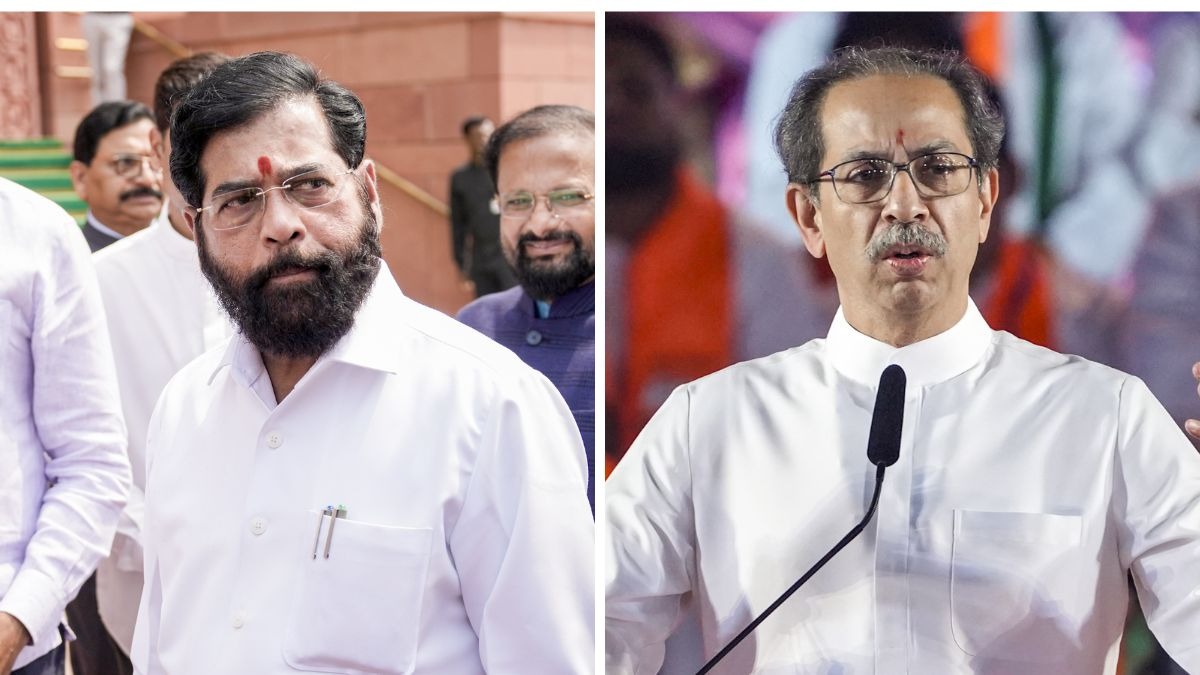
The Supreme Court on Wednesday began final hearings on pleas filed by the Uddhav Thackeray-led faction challenging the Election Commission’s decision to recognise the Eknath Shinde group as the “real Shiv Sena” and allot it the party’s ‘bow and arrow’ symbol. At the heart of the hearing was a larger question: Can a legislative party override the political organisation from which it derives its identity? Read Full Story The court orally observed that the political party retained control over its legislative wing and that any valid decision taken by the organisation must prevail, even over the wishes of a majority of its legislators. At the same time, the Bench said elected representatives should be given some “elbow room” to take political decisions when a majority of them genuinely disagreed with the direction taken by the party. The two pleas, filed in 2024, challenge the Election Commission’s February 17, 2023 order recognising the Shinde faction as the original Shiv Sena. A Bench comprising Chief Justice Surya Kant and Justices Joymalya Bagchi and V Mohana heard arguments from senior advocate Kapil Sibal, who appeared for the Thackeray faction. CAN LEGISLATURE PARTY TAKE OVER POLITICAL PARTY? Sibal argued that the central issue was whether a legislature party could overtake and assume control of the political party. His answer, he said, was an emphatic “no”.
Sibal warned that India was witnessing a new form of defection in which legislators, without the backing of their political organisation, broke away and aligned with another party. “Having contested on one symbol, its members then represent another political party on a different symbol. You are carrying this shenanigan to an absurd level where the entire electoral process becomes a farce because the electoral verdict can be changed through manipulation and defection,” he argued. He said such defections could lead to the formation of a government that voters had never elected, with serious consequences for parliamentary democracy. Justice Bagchi observed that the political party’s control continued over its legislature wing. “Any valid decision of the political party has to prevail over the will even of the majority of the legislature party,” he said. COURT FLAGS NEED FOR ‘ELBOW ROOM’ Justice Bagchi, however, raised the possibility of legislators genuinely disagreeing with a party’s political decisions, particularly in cases involving pre-poll and post-poll alliances. He gave the example of a party seeking votes as part of one alliance and later deciding to form a government with a rival formation. In such a situation, legislators opposing the decision would still have to return to the political party, the judge said. “We have to understand representative participation in a parliamentary democracy. At the same time, we must give elected representatives some elbow room to make political decisions without losing their identity,” Justice Bagchi observed.
 The BriefWire