A glowing future for nuclear power? Mini reactors explained
Mini reactors are seen as a flexible energy source. Their promise: abundant energy, cheap, clean and climate-friendly with lower water use. But do the numbers
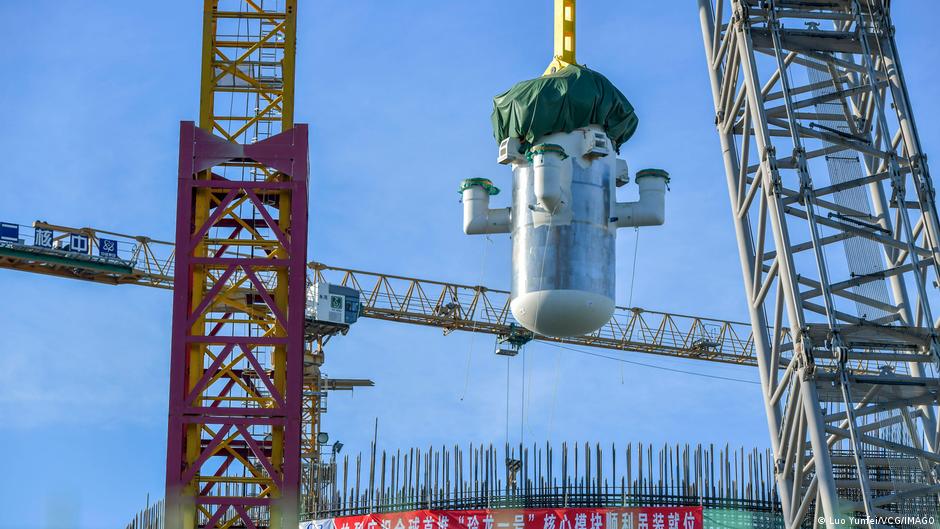
Mini reactors are seen as a flexible energy source. Their promise: abundant energy, cheap, clean and climate-friendly with lower water use. But do the numbers add up? We look at what's behind the SMR hype. Many politicians and tech companies are now pushing to build new nuclear power plants to meet the world's rapidly growing energy demands. Small reactors — known as Small Modular Reactors, or SMRs — are gaining momentum. They could be built in less time and come online faster than conventional nuclear power plants. Originally developed to power submarines and aircraft carriers, SMRs largely work the same way as larger reactors. They contain a nuclear reactor fueled by uranium, which releases enormous amounts of heat through nuclear fission. That heat turns water into steam, and the steam pressure drives turbines that generate electricity. Companies and startups are working on a wide variety of SMR designs and concepts, but the underlying principle is similar across all of them. One advantage over conventional nuclear stations is that mini reactors require a maximum of two hectares (around five acres) of land — roughly the size of two soccer fields. By comparison, conventional plants require up to 280 soccer fields, according to the industry. The Linglong One small modular pressurized water reactor after completing its factory test Image: Zhang Boqun/Xinhua/picture alliance Why use a modular design for mini nuclear plants? What makes SMRs particularly attractive is their modular construction. Individual components can be mass-produced as prefabricated modules and pre-assembled off-site — much like a prefab house that simply needs to be put together once it arrives at its location. Manufacturers promise an extremely short construction time of between one and a half to six years. Large reactors in the US can take anywhere from seven to 10 years to build. Proponents also argue that modular units could deliver low-emission power to remote regions, where grid infrastructure is often not developed enough to handle the enormous energy output of a large conventional plant.
Those advantages are also shared by renewable energy sources like solar panels and wind turbines — without the risks that come with nuclear power. The hidden cost of nuclear power To view this video please enable JavaScript, and consider upgrading to a web browser that supports HTML5 video Why less radiation can mean greater risk The output of mini nuclear reactors is significantly lower than that of conventional nuclear power plants. Depending on the design, SMRs can deliver between 10 and around 200 megawatts of power, while a conventional plant generates between 1,000 and 1,600 MW. To produce the same amount of energy as the roughly 400 high-capacity reactors currently operating worldwide, tens of thousands of small reactors would need to be built. SMRs could offer some safety advantages: they contain less radioactive material than large reactors and would be distributed across multiple sites. This means that an accident or military strike resulting in a meltdown would not be as catastrophic as a worst-case scenario at a large reactor. Nevertheless, the consequences of an SMR accident could still be severe. Germany's Federal Office for Radiation Protection points out that despite lower radiation levels per reactor, the overall risk posed by mini reactors could be many times higher. Replacing the output of existing nuclear plants with large numbers of smaller ones would require an enormous number of reactors worldwide — and that increases the likelihood that at least one of them will eventually suffer a serious incident. Nuclear accidents and radiation leaks are extremely rare — but the consequences can be catastrophic. The last major nuclear accident occurred in 2011 at the Fukushima power plant in Japan, following a tsunami. Parts of the region have been contaminated for generations to come, and nearly 170,000 people were forced to flee their homes. The core module of the Linglong One SMR being assembled at its construction site in Hainan Province Image: China Nuclear Corporation/Handout via Xinhua/picture alliance Extreme efficiency and the dream of radioactive recycling Part of the hype around some new mini reactors rests on the hope of extracting significantly more energy from the same amount of uranium.
 The BriefWire