High Court rejects Abhishek Banerjee's foreign travel plea for eye treatment
In a big setback, the Calcutta High Court on Wednesday dismissed Trinamool Congress MP Abhishek Banerjee's plea to travel abroad for eye treatment, directing him
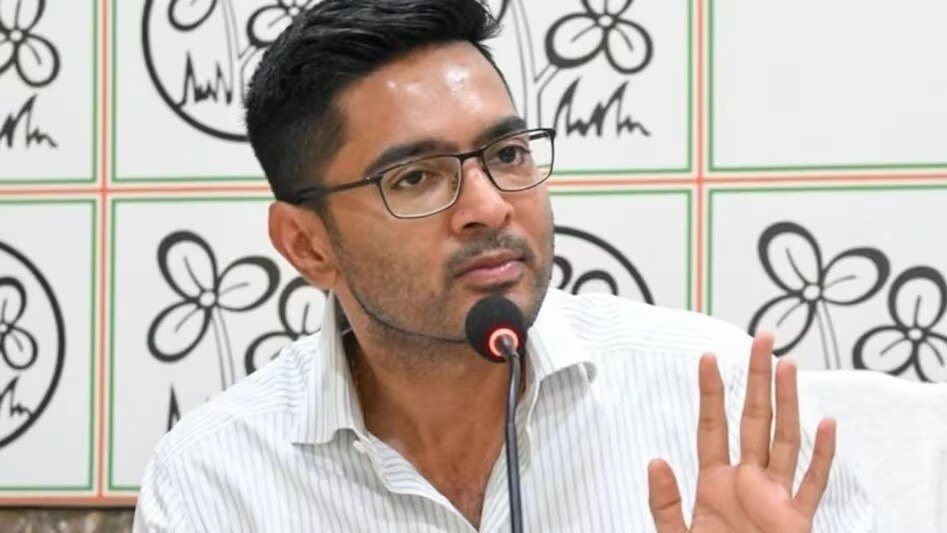
In a big setback, the Calcutta High Court on Wednesday dismissed Trinamool Congress MP Abhishek Banerjee's plea to travel abroad for eye treatment, directing him instead to undergo an examination by a specialist medical board at Kolkata's state-run SSKM Hospital. Justice Saugata Bhattacharya ordered the head of the Ophthalmology Department at SSKM Hospital to constitute a three-member expert panel to examine Banerjee at 2 pm on Thursday and submit a detailed medical report. Read Full Story The court said it would consider permitting Banerjee to travel abroad only if the medical board concludes that the required treatment is not available in India. Observing that it is not a medical expert body, the court said an independent medical assessment was necessary before deciding the plea. The court also noted that the Trinamool leader's request had to be viewed in the context of the multiple criminal cases pending against him and the ongoing investigations in those matters.
Appearing for Banerjee, senior advocate Rebecca John argued that the TMC MP required specialised treatment for his left eye at Johns Hopkins Medicine in the US, where he had been undergoing treatment, and sought permission for a three-week visit. She contended that Banerjee had a fundamental right to choose his medical treatment, highlighting that he possessed a valid passport, has family in Kolkata and had travelled abroad 12 times between 2023 and 2025 without violating any court conditions or attempting to evade the law. She also pointed out that he had represented the Government of India abroad following the terror attack in Kashmir. The defence further submitted that the Supreme Court had granted Banerjee similar travel permission in July 2023 and, on August 3, had directed the High Court to dispose of the present plea within a week.
Opposing the request, State Additional Advocate General Rajdeep Majumder argued that Banerjee was facing around 15 criminal cases, including one registered by the Bidhannagar Cyber Crime Police Station, and had been directed by the High Court to cooperate with investigating officers in multiple cases. He also contended that the medical documents produced by Banerjee did not indicate that the treatment was urgently required. Counsel for the complainant in the Bidhannagar case also questioned the medical records submitted before the court, arguing that certain documents lacked essential details, including the treating doctor's registration number. While considering the plea, the court observed that Banerjee's medical claims could not be examined in isolation and had to be balanced against the pending criminal proceedings and his compliance with previous court directions. The judge also referred to instances where he had failed to comply with court orders requiring him to provide voice samples during investigations.
 The BriefWire