British have returned. This time, through school gates
A number of heritage schools have set up base in India. But the central question is rarely asked: How much of the British school will
A number of heritage schools have set up base in India. But the central question is rarely asked: How much of the British school will actually travel? The Indian branch may carry the same name but without reproducing the same institution MUMBAI: In Gurgaon, a school carrying the name of Queen Elizabeth is preparing to open its gates. In Bengaluru, pupils already walk beneath the banner of Harrow. Pune has Wellington; Bhopal, Shrewsbury. In Hyderabad, Sagebrook, in partnership with Whitgift, has completed its first round of admissions. Another British grammar school, founded nearly five centuries ago, is now drawing up plans for Bengaluru. And Highgrove Education is going to Uttar Pradesh.The British have returned to India. This time, through school gates.There is no colonial officer at the blackboard. The new intermediaries are Indian education companies, real-estate developers and investment groups partnering with some of Britain's oldest schools."The transaction is wrapped in the language of global learning, leadership, heritage and international exposure," said an expert watching the sector. But what is being imported is not merely a curriculum. It is a name and the history, prestige and the social aspiration that come with it.Queen Elizabeth's School, established in Barnet in 1573, is scheduled to open its Gurgaon campus this month.
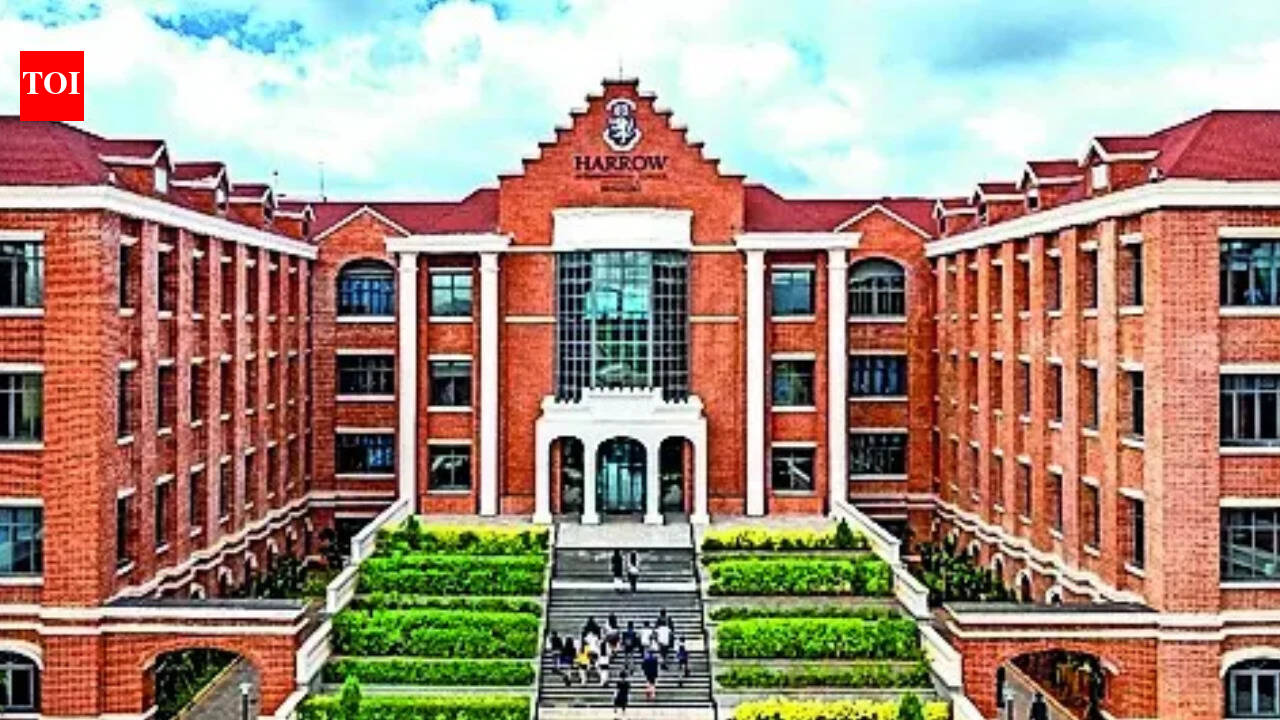
The original institution is especially notable because it is a state-funded grammar school in England.But a school supported by public money at home will, in effect, lend its centuries-old heritage to a premium institution overseas.It is a curious reversal of history.Francis Joseph, India CEO of Dubai-based GEMS Education which operates schools in 10+ countries, calls arrival of British school franchises interesting, but says it carries an obligation. "Every global education brand entering India must remember one fundamental truth: schools are local learning communities, deeply rooted in culture, traditions, local languages and aspirations of the communities they serve," he said.Swati Popat Vats, director of Inspirenext Learning Foundation, points to colonial education's long shadow. One of colonialism's most enduring legacies, she said, was the belief that imported knowledge was inherently superior to indigenous capability.Independent India has spent decades building confidence in its own education. "It would be unfortunate if education once again created a hierarchy in which foreign is assumed to mean better and Indian is viewed as needing validation from elsewhere," she said.In Bengaluru, Harrow International School has placed one of British education's most recognisable names on Indian soil. Even the uniform carries the weight of tradition: it includes a hat.Harrow's appeal lies partly in its 450-year history.
 The BriefWire