South Sudan: How climate change can result in toxic water
Years of flooding have resulted in disastrous water pollution in South Sudan's main oil region. As communities, scientists and health workers scramble for solutions, the
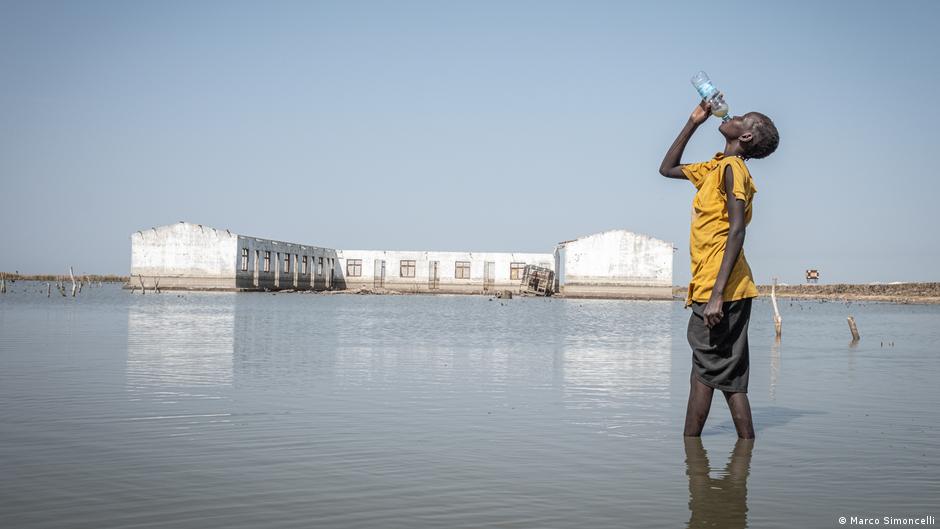
Years of flooding have resulted in disastrous water pollution in South Sudan's main oil region. As communities, scientists and health workers scramble for solutions, the long-term impacts of the crisis is yet to emerge. The village of Bentiu has seen it all: Located in the north of South Sudan near the border with Sudan, the capital of Unity State used to have a population of merely several thousand people. But war, violence and other crisis have resulted in an additional 140,000 displaced persons seeking shelter there since 2013, resulting in the establishment of a massive camp for internally displaced persons (IDPs). Several UN bodies including the International Organization for Migration (IOM), the UN Refugee Agency (UNHCR) and the United Nations Children's Fund (UNICEF) are active on the ground, running what is known as the Protection of Civilians (POC) camp, which by now feels more like a permanent structure. In South Sudan, usable water is increasingly becoming a rare commodity Image: UIG/IMAGO At a makeshift pier, children are seen playing, countless canoes bring in fish to feed scores of people at the camp, where food insecurity remains a chief concern. Immediately, each day's yield is separated into two categories: One stock with fresh, healthy fish, and another for those believed to be contaminated. Simon Gatkuoth, a camp resident in his early forties, lifts a fish from a wheelbarrow, explaining that fish that are caught near the oil fields are contaminated: "When we cook them, the soup sometimes smells like penicillin," he says. "But there is no option. We have to eat. We cannot stop eating because there is no alternative." Fish in the polluted waters are often discarded if they show signs of contamination Image: Marco Simoncelli Flood waters that just won't recede Viewed from the sky, the POC Camp resembles an artificial island in the midst of a region that has been transformed into what appears to be a gigantic lake. Here, the largely nomadic communities of South Sudan's Unity State have long adapted their lives to the seasonal floods that shape life in what is one of the world's largest wetlands known as the Sudd. But in 2021, and unprecedented deluge of floods linked to climate change submerged farmland across the region, destroying livelihoods and killing thousands of cattle. Just one year earlier, authorities in neighboring Uganda had issued a warning that rising levels in Lake Victoria, situated roughly 1,000 kilometers (650 miles) to the south, would require the release of large volumes of water into the White Nile river, which flows past Bentiu. But South Sudan, one of the poorest countries, lacked the dams, flood-control systems and water-management infrastructure needed to cope with the flooding, leaving many communities highly vulnerable to flooding.
 The BriefWire