Cauvery Storage Levels Explained: What Karnataka’s 77.5 TMC & Tamil Nadu’s 35.5 TMC Mean For Delta Farmers
News explainers Cauvery Storage Levels Explained: What Karnataka’s 77.5 TMC & Tamil Nadu’s 35.5 TMC Mean For Delta Farmers Cauvery Storage Levels Explained: What Karnataka’s
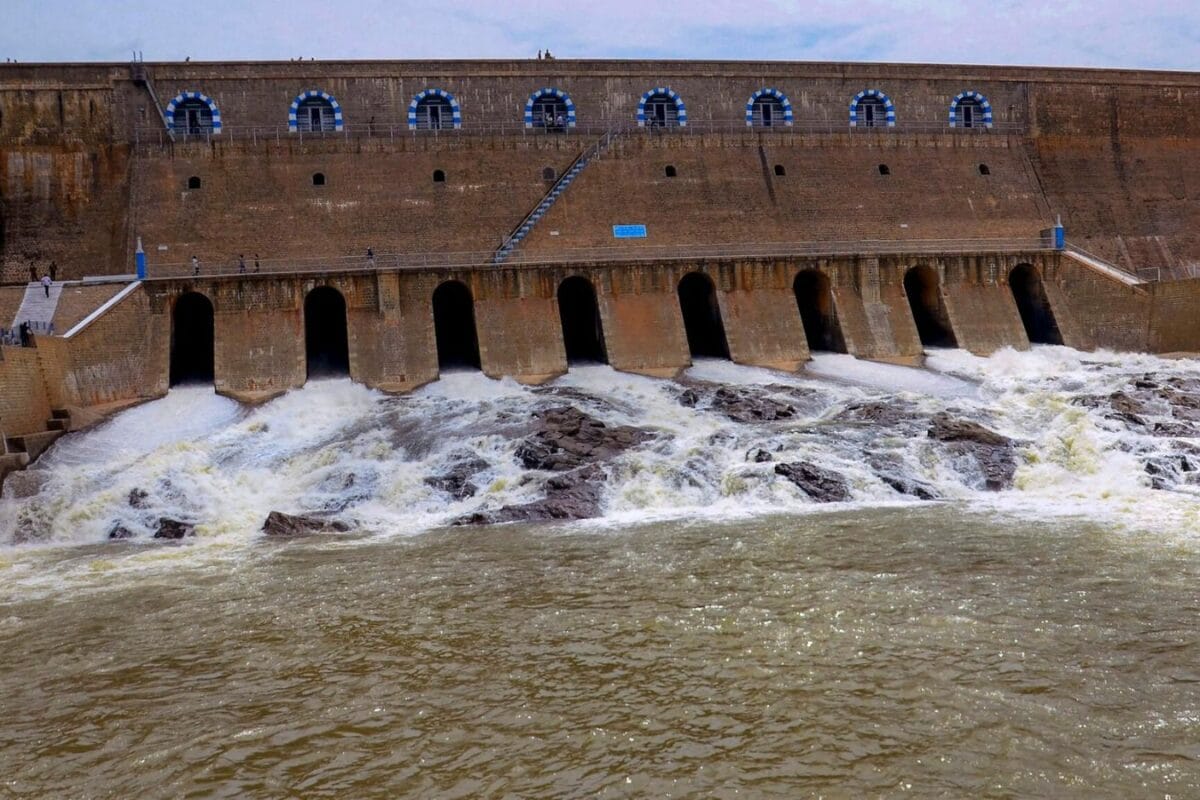
News explainers Cauvery Storage Levels Explained: What Karnataka’s 77.5 TMC & Tamil Nadu’s 35.5 TMC Mean For Delta Farmers Cauvery Storage Levels Explained: What Karnataka’s 77.5 TMC & Tamil Nadu’s 35.5 TMC Mean For Delta Farmers Published By, Last Updated: August 04, 2026, 19:32 IST Cauvery Storage Levels Explained: What these capacities mean, how they affect canal water release, and the impact on the ongoing agricultural season, News18 explains Rapid Read The short-term Kuruvai paddy cultivation cycle relies on water being released from Mettur by mid-June. (PTI File) The current Cauvery storage figures — 77.5 TMC in Karnataka’s reservoirs and 35.5 TMC at Tamil Nadu’s Mettur Dam — highlight the critical, precariously balanced water status for the Delta farmers waiting to save their crops What these capacities mean, how they affect canal water release, and the impact on the ongoing agricultural season, News18 explains. WHAT THE NUMBERS MEAN The available storage dictates whether water can be spared for long-distance canal irrigation or must be legally locked for drinking purposes. Karnataka’s 77.5 TMC: This represents the combined holding of Karnataka’s four key upper-riparian reservoirs: Krishnaraja Sagara (KRS), Kabini, Hemavathy, and Harangi.
At around 67% of total capacity, Karnataka is moving past its severe initial drought panic. It has secured local drinking water safety margins, enabling recent controlled outflows of roughly 25,000 cusecs downstream. Tamil Nadu’s 35.5 TMC: This is the current volume locked inside the Mettur Dam (Stanley Reservoir), the primary distribution node for Tamil Nadu’s agricultural belt. Out of this 35.5 TMC, at least 10 TMC must be withheld as un-usable “dead storage" and reserved exclusively for regional drinking needs. This leaves a net usable volume of only ~25.5 TMC. THE THRESHOLD FOR OPENING THE CANALS For the Tamil Nadu Water Resources Department to pull the shutters and flood the Delta canal networks, the Mettur Dam’s physical water level must typically cross the 90-foot mark (heading toward a maximum of 120 feet). Currently, the water level hovers at ~73 feet. The state government will not authorise wide-scale canal irrigation until the dam gains another 15 to 20 feet of depth. This rise is completely dependent on sustained heavy rainfall in the Kodagu catchment zones of Karnataka pushing consistent massive inflows across the border.
REALITY CHECK FOR DELTA FARMERS The sluggish start to the southwest monsoon has profoundly disrupted the traditional farming calendar in the rice bowl of Tamil Nadu. The Kuruvai Crop is Largely Lost The short-term Kuruvai paddy cultivation cycle relies on water being released from Mettur by mid-June. Because the dam opening was indefinitely delayed, fields across several lakh acres have withered, and overall cultivation coverage has shrunk dramatically. For most Kuruvai farmers, any water arriving now is too late to rescue this season’s investment. Salvaging the Samba Season The entire focus has shifted to saving the upcoming long-term Samba (and Thaladi) crop cycles starting in August. To successfully nurture these crops, the Delta requires a staggering minimum of 180 TMC of water over the next few months. Reliance on Interstate Inflows Because the remaining live storage in Mettur (~25.5 TMC) satisfies less than 15% of the total seasonal Samba demand, farmers are entirely dependent on Karnataka respecting the Cauvery Water Management Authority (CWMA) mandates to deliver consistent daily flows. Surplus spillover volumes entering Biligundlu once Karnataka’s KRS dam fills to its maximum limit.
 The BriefWire