Isro has nothing to do with clothes, yet a textile giant is behind it's sucess
At first glance, Lakshmi Machine Works (LMW) and the Indian Space Research Organisation (ISRO) appear to belong to two entirely different worlds. One builds machinery
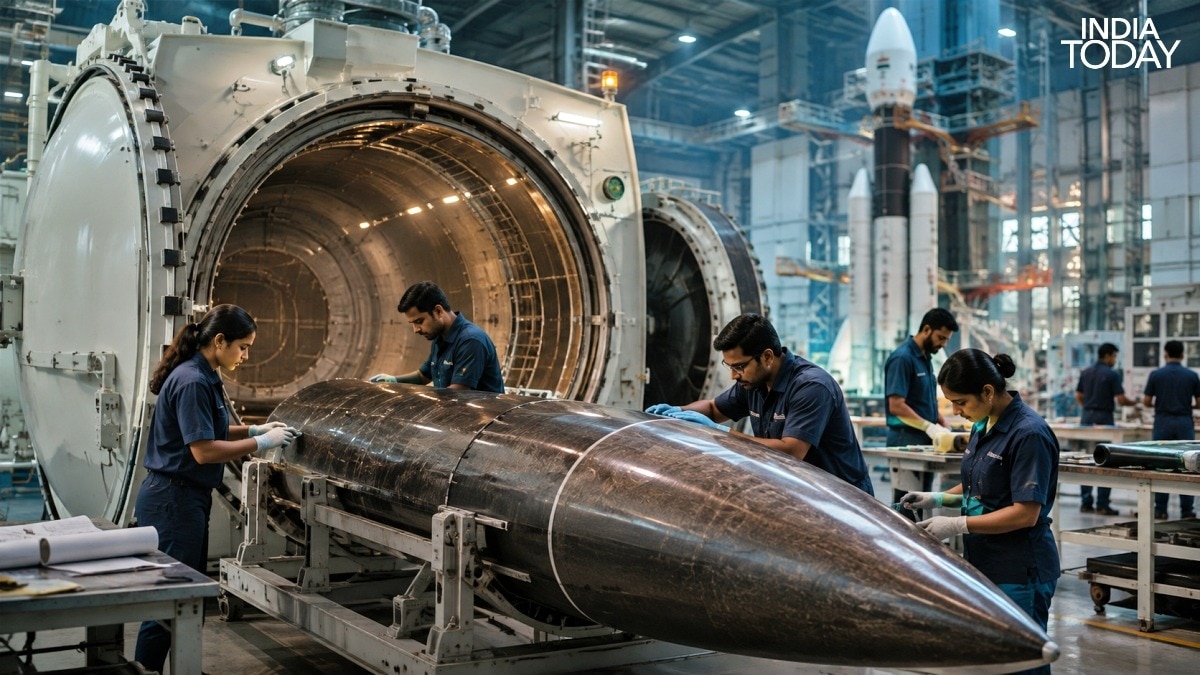
At first glance, Lakshmi Machine Works (LMW) and the Indian Space Research Organisation (ISRO) appear to belong to two entirely different worlds. One builds machinery that powers India's textile industry, while the other launches satellites and heavy payload into space. Yet, the two are linked by one of the most critical components aboard India's heaviest rockets. Founded in 1962 in Coimbatore, LMW is one of only three companies in the world that manufactures the complete range of textile spinning machinery. Its carding machines and ring frames are used in more than 60% of India's textile mills, processing raw cotton into yarn. Read Full Story But hidden within the company's sprawling campus is the LMW Advanced Technology Centre (ATC), an aerospace manufacturing facility that produces high-performance carbon-fibre composite structures for ISRO. The centre manufactures the 10.75-metre-tall, 5-metre-diameter payload fairing, the aerodynamic nose cone fitted atop ISRO's LVM3 (formerly GSLV Mk-III) rocket.
This massive carbon-composite structure protects satellites from intense aerodynamic forces, acoustic vibrations and extreme heating as the rocket races through Earth's atmosphere at hypersonic speeds. Without this protective shield, delicate satellite payloads could be damaged or destroyed long before reaching orbit. Once the rocket climbs above the dense atmosphere, at an altitude of about 110 kilometres, the fairing separates cleanly, allowing the spacecraft to continue its journey into space. LMW's contribution extends beyond the payload fairing. IT BAKES THE ROCKETS BEFORE LAUNCH For ISRO's OneWeb missions aboard the LVM3 and the SSLV-D2 launch, the company also manufactured composite equipment bay shrouds, which protect the rocket's sensitive navigation and guidance systems, along with lightweight composite structural members connecting the liquid oxygen and cryogenic hydrogen tanks. The engineering team at LMW Advanced Technology Centre designs and manufactures a wide range of advanced carbon-fibre composite structures for India's aerospace and defence sectors.
Its portfolio includes payload fairings, composite interstage structures, radomes for space, airborne and ground applications, antenna reflectors, solar panel substrates, pressure vessels, motor cases, and missile launcher tubes. Supporting this manufacturing capability are two state-of-the-art, computer-controlled autoclaves that cure composite components under precisely controlled conditions. A computer-controlled autoclave is a giant industrial pressure oven used to manufacture aerospace-grade carbon-fibre components. After layers of carbon fibre and resin are laid into a mould, the component is placed inside the sealed chamber, where computers precisely regulate temperature, pressure and curing time. The heat hardens the resin while high pressure compresses the layers and removes air pockets, creating an exceptionally strong and lightweight structure. At LMW, the autoclave operates at temperatures up to 250°C and pressures of 10 bar, ensuring every payload fairing and rocket component meets the stringent quality, strength and reliability standards required for ISRO's space missions.
 The BriefWire