Iran: Is Reza Pahlavi's political star fading?
Once seen as a leading opposition figure, Pahlavi now faces questions about his political relevance in Western capitals and inside Iran. An investigation by Reuters
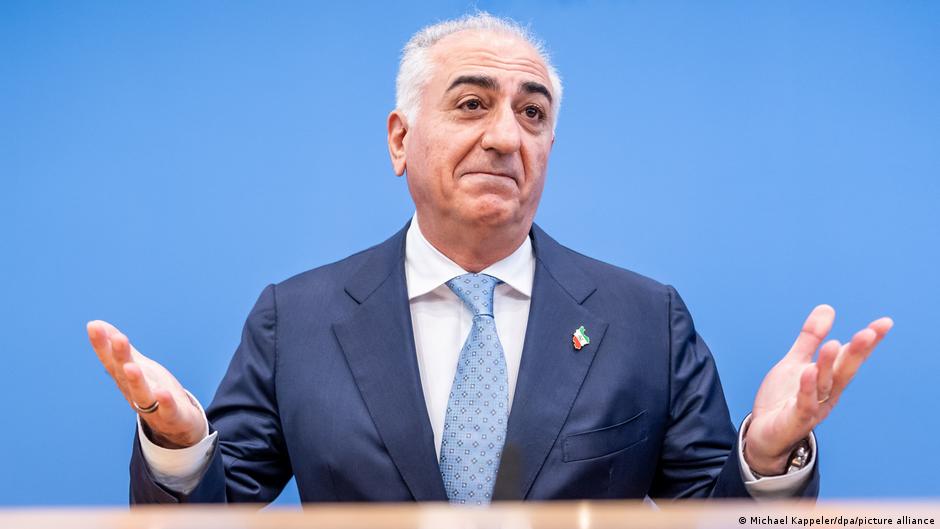
Once seen as a leading opposition figure, Pahlavi now faces questions about his political relevance in Western capitals and inside Iran. An investigation by Reuters news agency into Reza Pahlavi, the son of the last shah of Iran, has raised a question: has Iran's most prominent opposition figure abroad lost credibility and influence among Western policymakers and Iranians? Reuters reported in July that Pahlavi's candidacy had "sputtered" after appearing to reach its high point earlier this year. Although he has repeatedly declared his readiness to lead Iran through a transitional period, senior US officials have publicly distanced themselves from the prospect of a US-backed effort to bring Pahlavi to power. The Reuters report notes that critics accuse Pahlavi of relying too heavily on foreign military intervention and failing to build a lasting political coalition. A shift in Pahlavi's rhetoric During periods of heightened tensions, Pahlavi welcomed international pressure on the Islamic Republic. In January 2026, he told Iranians that the international community had entered the stage of action and echoed US President Donald Trump's message that help was "on its way." "Great nation of Iran, the eyes of the world are upon you. Take to the streets, and as a united front, shout your demands," Pahlavi wrote on X. After the military conflict failed to bring about the collapse of the Iranian government and criticism intensified over the consequences of war, Pahlavi said that "the final victory will still be forged by our hands" and that it was the Iranian people who would "finish the job." The main responsibility, he said, remained with the Iranian people themselves. Some critics argued that this emphasis on the role of the Iranian people marked a retreat from his earlier messaging about international help. How the West views Pahlavi Mojtaba Najafi, a researcher focusing on political and social movements in Iran, argues that Western governments have never regarded Pahlavi as a truly viable option.
Calls for regime overhaul boost exiled heir to Iran monarchy To view this video please enable JavaScript, and consider upgrading to a web browser that supports HTML5 video "A serious alternative would need the capacity to gain and manage power, influence existing power structures and offer a realistic prospect of structural political change," Najafi said. "Western governments have never considered Pahlavi to have met these criteria." Najafi distinguishes between Europe and the United States. "European governments primarily approach Iran from the perspective of stability," he said, pointing to migration, geopolitical and security concerns, and the containment of radicalism and terrorism. The researcher argues that, in the United States, pragmatic forces favor an accommodation with elements of the Islamic Republic. "Their main concern is ending the regime's anti-American orientation and protecting US interests," Najafi said. "From this perspective, Washington is not necessarily seeking a transition led by a figure such as Pahlavi." Israel's position is different Israel's approach differs from that of the United States and Europe because Israel and the Islamic Republic have been enemies for the past few decades. Najafi argues that some Israeli officials may view an opposition movement such as Pahlavi's as a useful source of pressure on the Islamic Republic. Arash Azizi, a researcher at Boston University, is more critical. He argues that Pahlavi has failed to demonstrate the political skills necessary for his ambitions. "Pahlavi has failed to demonstrate the political skills necessary for the ambitions he has set for himself," Azizi said. "His strategy has relied heavily on foreign powers that have shown little willingness to support him decisively." "Pahlavi has cultivated ties with Western and, more recently, Israeli figures, but these efforts have not translated into decisive political backing," Azizi added. Washington remains divided Amir Taheri, a Paris-based political activist and supporter of constitutional monarchy, offers a more favorable assessment. He argues that Pahlavi leads a movement that has managed to connect different groups within the opposition and has been the most visible Iranian opposition figure abroad over the past year.
 The BriefWire